Meat And Milk In Connection With The Development Of Cancer
 Author: Mark Velov
Time for reading: ~1
minutes
Last Updated:
August 08, 2022
Author: Mark Velov
Time for reading: ~1
minutes
Last Updated:
August 08, 2022
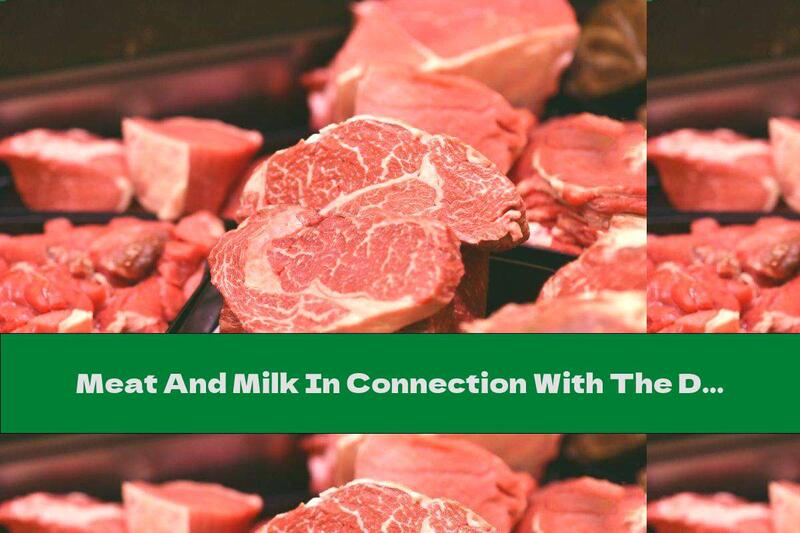
It is due to the release of antibodies in the body after eating meat and dairy products.
A link between the consumption of red meat and dairy products and the development of cancer was discovered by scientists from Shmunis University of Biochemistry and Oncology, Tel Aviv.
When eating different foods in the body, different reactions occur, some of which are immunogenic due to the content of certain compounds. This is also the case with the sugar molecule Neu5Gc, which is found in red meat and dairy products but cannot be found, for example in fish. The molecule in question causes antibodies to be released in childhood, when we start eating different types of food, and it is believed that these antibodies increase the risk of cancer, especially colon cancer .
NutriNet-Santé is a very extensive nutritional study conducted in France. Its results were used to calculate the daily intake of the molecule among 19,621 adults over the age of 18 who recorded the foods consumed over a period of time. A representative sample of 120 people was taken a little later to determine the level of antibodies against Neu5Gc - the molecule.
The so-called Gc-emic index was prepared based on the results by Dr. Padler-Caravan's team and it is used to determine foods in which increased consumption leads to an increase in antibodies against the molecule, leading to an increased risk of cancer. . The index was high, especially for red meat and various types of cheese. Their consumption leads to an increase in the concentration and types of antibodies in the blood, potentially increasing the risk of cancer, such as colorectal cancer.
"We found a relationship between taking red meat, and with it Neu5Gc, and raising antibodies. Scientists have been working for many years to find a similar link between food and cancer , but so far no one has been found. We were able to find a molecular bond, thanks to the accuracy of the methods used, to determine the amount of anti-Neu5Gc antibodies and detailed information from French food studies, "said Dr. Padler-Caravani, head of the study, for Medical Xpress .
Related Articles
- Nutrition for Respiratory Health: Supporting Your Lungs with the Right Foods
- The Power of Milk: Nutritional Benefits for Health and Wellness
- The Ultimate Guide to Milk Powder in Nutrition: Benefits, Recipes, and More
- The Ultimate Guide to Shaken Espresso Oatmilk: Benefits and Recipe
- The Importance of Breast Milk Color in Nutrition: Understanding Nutritional Insights
Top Nutrition Articles Today
- . Nutrition in 2025: Trends, Technologies, and Future Outlook
- . High Flavonoid Cocoa Powder
- . The Power of Bella: Health Benefits, Recipes, and More
- . How To Reduce Appetite
- . How To Cook Stuffed Chicken With Dried Fruits, Walnuts And H...
- . Nutritional Benefits of Champignons: A Healthy Addition to Y...
- . Persimmons - Benefits And Harms To Health
- . The Role of Acidity in Nutrition: Understanding pH Levels an...
- . The Role of K12 in Nutrition: Benefits, Sources, and Recomme...
- . Sea Buckthorn: Health Benefits And Harms