Nutrition In Childhood - What Are The Rules? Continuation
 Author: Alexander Bruni
Time for reading: ~2
minutes
Last Updated:
August 08, 2022
Author: Alexander Bruni
Time for reading: ~2
minutes
Last Updated:
August 08, 2022
CHAPTERS (Table Of Contents)
Nutrition in childhood is very important for the overall health of the child, for immunity, growth and development.
Nutrition in childhood is essential for the health of the child , both in the short and long term. The menu must be complete to provide all the necessary substances to meet metabolic needs.
If this condition is met, it is not necessary to give additional nutritional supplements, vitamins, immunostimulants with controversial composition and effect.
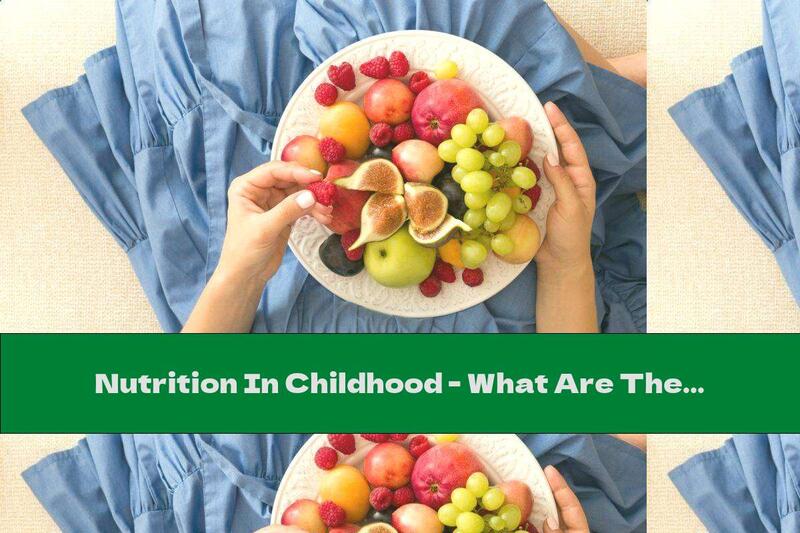
Fruits and vegetables
They occupy a very important place in the proper nutrition of the child and should be an integral part of his daily menu. Fruits and vegetables contain fiber, vitamins (eg vitamin C, folic acid), trace elements .
The recommendations are that fruits and vegetables should be present in every meal. They do not "burden" the menu with extra calories, but enrich it with their other useful ingredients.
It is preferable to consume the majority of them raw . In addition, they should be fresh and fresh, so the recommendation is to use seasonal fruits and vegetables.
Liquids, including water
In children, optimal fluid intake is especially important because the percentage of water in the child's body is higher than in adults.
In special situations, such as during the summer heat, during physical activity, during illness, the daily need for water is higher.
The best source of fluids is clean water . Juices, especially store-bought ones, contain large amounts of sugars, stabilizers and preservatives. Therefore, the consumption of freshly squeezed juice is recommended.
Proteins
They are the main building block of the body and are essential for growth and development.
- Milk and milk products
They are a very important source of calcium and therefore should be present in the daily menu fully. In addition, they contain important proteins, fats, and some vitamins. It is recommended to consume milk and / or dairy products twice a day . These are whole milk and yogurt, cheese, cheese, butter.
- Meat, fish, meat products
It is recommended to eat meat two or three times a week, fish at least once a week and 2 eggs a week. This provides the necessary amount of protein, but also enough iron, zinc, B vitamins.
However, the meat diet has some negatives - depending on the type of meat it contains less or more fat, and the meat diet itself reduces the consumption of fruits and vegetables. For this reason, it is recommended not to eat meat two or three times a week .
Sea fish is a very important part of the menu. It also contains a sufficient amount of iodine, which meets the current needs of the body, but also important unsaturated fatty acids and proteins. Therefore, it should be present at least once a week in the menu.
Fat
Fats, especially unsaturated fats, are essential for building cell membranes, for example. This is extremely important for a fast-growing organism.
However, fat is often abused. Much of the food cooked "hastily" or bought from fast food restaurants contains a lot of saturated fatty acids, which are unhealthy . Taking them increases the risk of obesity, and in the long run can lead to the development of atherosclerosis, diabetes, heart attack, stroke, hypertension and others.
The daily intake of fat should not exceed 25-30 grams, which is equal to an average of one tablespoon . It is recommended to use vegetable fat, which contains a larger amount of unsaturated fatty acids. Margarines are not recommended because they contain a large percentage of harmful trans fatty acids .
Related Articles
- The Ultimate Guide to Hickory Smoked Bacon in Nutrition and Healthy Eating
- Fruitskewers in Honey Syrup: Nutritional Benefits and Recipes
- The Ultimate Guide to Buffer 500 in Nutrition: Benefits and Usage
- Nutritional Benefits of Fruit Skewers in Honey Syrup: A Delicious and Healthy Recipe
- Nutrition Guide: Fruitskewers in Honey Syrup - Benefits, Recipes, and More
Top Nutrition Articles Today
- . How To Cook Watermelon And Melon Salad With Mozzarella And H...
- . 6 Week Challenge Meal Plan: Benefits, How to Create, and Sam...
- . Foods Containing Carrageenan: A Comprehensive Guide for Your...
- . The Impact of Acidity on Nutrition: Maintaining a Healthy pH...
- . Wendy's Allergen Menu
- . The Role of Raising Agents in Nutrition: Types, Effects, and...
- . The Role of Sodium in Soups: Impact on Health and Tips for H...
- . How To Reduce Appetite
- . Carbs to Sugar Conversion Chart: Monitoring Carb and Sugar I...
- . The Surprising Benefits of Chalk in Nutrition: A Complete Gu...