Passion Fruit - Health Benefits
 Author: Ivan Red Jr.
Time for reading: ~3
minutes
Last Updated:
August 08, 2022
Author: Ivan Red Jr.
Time for reading: ~3
minutes
Last Updated:
August 08, 2022
CHAPTERS (Table Of Contents)
In this article, learn more about Passion Fruit - Health Benefits. Passion fruit - nutritional value, health benefits and safety profile.
Pleasantly sweet and tart, the passion fruit is also known as the "fruit of passion". In addition to its taste, it has numerous health benefits for our body. Passion fruit originates from Paraguay and is characteristic of the subtropical wilderness of South America. The shrub is creeping and grows around anything it can hold on to. The exotic fruit belongs to the family Passifloraceae, genus Passiflora, and its scientific name is Passiflora edulis.
Passion fruit shrub requires well-drained and fertile soil, as well as good moisture to grow optimally. Once germinated, it grows rapidly, reaching a height of about 4-6 meters in 1 year. The average life expectancy is 5-7 years.
There are over 500 species of passion fruit, but only 2 of them are widely cultivated - yellow and purple passion fruit. During each season, the bush is filled with green and white fragrant flowers, which subsequently turn into fruit.
The shape of the passion fruit fruit varies from round to oval, and the average weight is from 30 to 50 grams. The outer shell is hard and the diameter varies from 4 to 8 centimeters.
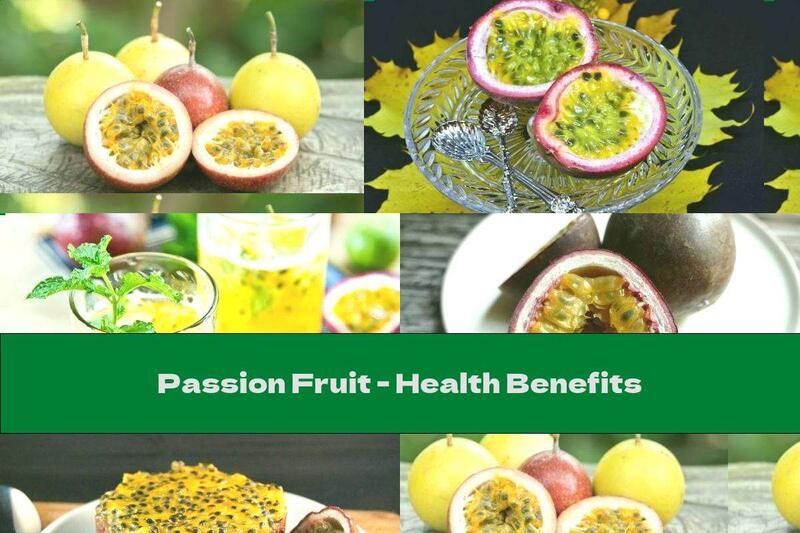
The inner part consists of light orange fleshy and juicy pulps with numerous small, hard, dark brown or black seeds. In general, the fruits of yellow passion fruit are larger, but the fleshy part of the purple is not so sour, is richer in aroma and taste and is much juicier.
What are the health benefits of passion fruit?
In addition to being delicious, passion fruit is a rich source of antioxidants, minerals, vitamins and fiber. 100 grams of fruit contains 97 calories.
The fruit is a very good source of dietary fiber. 100 grams of pulp contains 10.4 grams or 27% of the recommended daily intake. A good amount of fiber in the diet helps lower bad cholesterol in the blood. Passion fruit is a natural laxative that protects the lining of the colon by significantly reducing the deposition of toxic substances that cause cancer.
The passionate fruit also contains a good amount of vitamin C / 100 grams provide about 30 milligrams /. Ascorbic acid is a powerful water-soluble antioxidant. Consumption of fruits rich in vitamin C helps the body develop resistance to influenza-like infectious agents and captures harmful free radicals.
Passion fruit also contains vitamin A, which is vital for the health of mucous membranes and skin. Consumption of fruits that are rich in vitamin A and flavonoids protects the body from lung and oral cancer.
Fresh fruit is extremely rich in potassium. 100 grams of fruit pulp contains about 348 milligrams of potassium. It is an important component of cells and body fluids and helps regulate heart rate and blood pressure.
In addition, passion fruit is a good source of minerals such as iron, copper, magnesium and phosphorus.
How to choose passion fruit and how to store the fruit?
Passion fruit is available year-round in supermarkets in the United States, but in other parts of the world their availability is seasonal.
When buying a passionate fruit, choose one that is well ripened and heavy for its size. Keep in mind that fruits with a wrinkled surface are more fragrant and sweet.
Avoid overripe fruits. Often, small cuts and spots are noticed on the surface of passion fruit, which usually do not negatively affect the taste.
At home, store them in a basket in a dark and cool place for up to 1-2 days or in the refrigerator for up to 1 week. You can also freeze the pulp by adding a small amount of sugar.
Culinary use
The fruit is definitely very exotic and many of you certainly wonder how to eat passion fruit?
Wash the fruits under cold running water and dry them with kitchen paper. Cut them lengthwise into two equal parts and scrape the juicy pulp with a spoon. Discard the shell.
Passion fruit has a unique texture, sweet taste and aroma. The fruits of the purple variety are smaller, but more fragrant and sweet.
The inside of the fruit can be eaten fresh, especially when well ripened. Its shell is hard and unfit for consumption. You can make passion fruit juice, add it to a fruit salad, make sauce, jelly, ice cream, cake, mousse, etc.
Safety profile
Not recommended for people prone to various types of allergies.
Related Articles
- The Power of Honeysuckle: Health Benefits and Recipes
- The Ultimate Guide to Hickory Smoked Bacon in Nutrition and Healthy Eating
- Fruitskewers in Honey Syrup: Nutritional Benefits and Recipes
- The Ultimate Guide to Buffer 500 in Nutrition: Benefits and Usage
- Nutritional Benefits of Fruit Skewers in Honey Syrup: A Delicious and Healthy Recipe