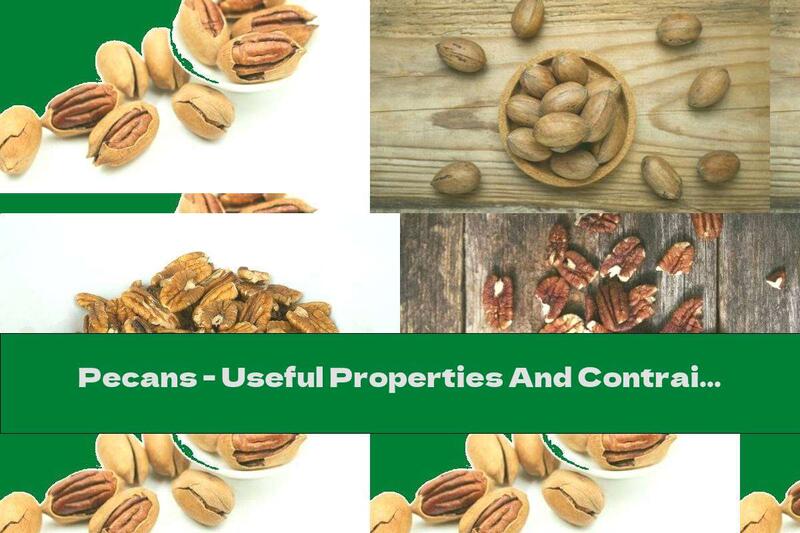
Pecans - Useful Properties And Contraindications
 Author: Alexander Bruni
Time for reading: ~6
minutes
Last Updated:
August 08, 2022
Author: Alexander Bruni
Time for reading: ~6
minutes
Last Updated:
August 08, 2022
CHAPTERS (Table Of Contents)
Pecans have unique healing properties: they improve the functioning of most systems and organs, and the oil from it gives youth and beauty. Vitamins: A, B1, B2, B3, B4, B5, B6, B9, C, E, K.
Pecans are a type of tree nut that grows on lush, green trees in the southeastern and south central regions of the United States, as well as in Mexico. One similarity between pecans, walnuts and other common varieties of nuts is that they are botanically classified as stone fruits. This means that they contain a small seed inside, which is wrapped in a shell.
Pecans first appeared in American history around 1500, and their name comes from the Algonquins - a North American Indian tribe. The word "pecan" means "a nut that must be broken with a stone."
In the early 17th century, the French saw the financial potential in exporting these delicious nuts and began sending them to the West Indies. Since then, pecans have been an important and common food in American culture. They are added to salads and desserts. In Texas, the pecan tree is recognized as a state tree. Albany (a city in Georgia) is considered the capital of pecans in the United States.
Pecans are a common ingredient in confectionery such as pies and biscuits. These nuts are rich in useful fats, proteins and fiber, as well as useful nutrients - manganese, copper and vitamin B1 (thiamine). They are associated with remarkable benefits for heart health and brain function.
Nutritional value of pecans
In addition to providing an abundance of heart-healthy fats, pecans also contain vital vitamins and minerals that protect against nutritional deficiencies and maintain overall health. One serving of pecans (about 19 halves) contains:
- 195 calories;
- 4 grams of carbohydrates;
- 2.7 grams of fiber;
- 2.5 grams of protein;
- 20 grams of fat;
- Macronutrients: potassium, calcium, magnesium (34.2 mg - 9% of DP *), sodium (116 mg - 3% of DP *), phosphorus (78.2 mg - 8% of DP *);
- Trace elements: manganese (1.3 mg - 64% of DP *), copper (0.3 mg - 17% of DP *), zinc (1.3 mg - 9% of DP *), iron (0.7 mg - 4% of DP *), selenium, fluorine;
- Vitamins: A, B1 (0.3 mg - 12% of DP *), B2, B3, B4, B5, B6 (0.1 mg - 3% of DP *), B9, C, E, K.
DP * - daily requirement
In addition to all the above vitamins, micro- and macronutrients, pecans contain tannins and monounsaturated fats. Its nuts are rich in gamma tocopherols, which prevent the oxidation of fats, proteins and DNA cells; also of phytosterols - they reduce the level of "bad" cholesterol in the blood and prevent the development of varicose veins, atherosclerosis, ischemic heart disease.
Useful properties of pecans
Pecans have unique healing properties: they improve the functioning of most systems and organs, and the oil from it gives youth and beauty.
The product is characterized by pronounced anti-cancer properties. It is effective in beriberi and anemia. Nuts stimulate appetite, reduce fatigue, improve the activity of the hormonal and reproductive systems.
1. Help in the fight against excess weightThe useful fats in pecans provide the human body with energy for a longer time and fight excess weight. They help to empty the stomach more slowly and give a feeling of fullness for a longer time.
Most of the carbohydrates in pecans are made up of fiber that passes through the intestinal tract undigested, thus reducing the feeling of hunger and appetite.
According to a US study, it is believed that eating nuts as part of a healthy diet may be associated with lower weight. Another French study also found that higher nut intake helped fight excess weight and reduced the risk of obesity and overweight.
2. Protect against oxidative stressPecans are a rich source of antioxidants, which play an important role in protecting the body from oxidative stress and inflammation. Some studies show that antioxidants play a key role in overall health and can help prevent chronic conditions such as heart disease, cancer and diabetes.
A study by the University of California, Loma Linda, found that eating pecans increased levels of antioxidants in the blood within 24 hours of consumption.
3. Improves heart healthStudies have found that eating nuts may be associated with a lower risk of developing heart disease and cancer.
A 2018 study found that eating pecans helps reduce some of the markers used to measure the risk of developing heart disease, including cholesterol levels and blood pressure. Another California study has similar findings - a diet rich in pecans is effective in lowering blood cholesterol and triglyceride levels.
4. Reduce inflammationAlthough acute inflammation is an important immune process, maintaining high levels of inflammation can worsen the symptoms of autoimmune diseases and contribute to conditions such as heart disease and cancer.
Eating foods rich in antioxidants is an effective strategy to reduce inflammation and combat the damage caused by free radicals. The antioxidant compound superoxide dismutase relies on the presence of manganese to function. Therefore, eating pecans can provide the necessary amounts of manganese for the proper functioning of this antioxidant and to reduce inflammation levels.
The element honey contained in pecans can also help reduce the pain and stiffness caused by arthritis. That's why pecans and other anti-inflammatory foods can be a great addition to arthritis diets.
5. Prevent bone lossManganese, copper and zinc - trace elements found in pecans - are used to treat the symptoms of osteoporosis - a condition characterized by weak and brittle bones. Studies have found that these nutrients are especially helpful in increasing bone mass and preventing bone loss.
6. Improve brain functionMany of the minerals found in pecans can promote proper brain function. Thiamine is used, for example, in patients with Wernicke-Korsakov syndrome, a common brain disorder in alcoholics caused by thiamine (vitamin B1) deficiency.
Copper is another important nutrient needed for good brain function, as it affects the brain's pathways, including dopamine and galactose. Helps prevent damage caused by free radicals and protects against neurodegenerative conditions such as Parkinson's and Alzheimer's.
The synaptic processes of the brain also depend on the content of manganese, which is in large quantities in pecans. Element deficiency can contribute to the development of mood problems, impaired focus, inability to learn, mental illness and epilepsy.
7. Reduces PMS (premenstrual syndrome)Due to the high content of manganese, the addition of these nuts to the diet can reduce PMS, such as mood swings and cramps. When manganese is consumed with calcium, it seems to have a significant effect on PMS and can help improve mood and reduce pain during menstruation.
8. Helps in the treatment of diabetesManganese, as we have mentioned many times, has many useful properties. It acts as an antioxidant to protect the body from free radicals. Some studies have found that supplementing the diet with manganese-rich foods, such as pecans, can help manage diabetes by improving insulin secretion and glucose tolerance.
Application of pecan oil
Pecan oil is used both internally and externally.
- It is taken internally for colds, headaches, loss of strength. It replaces almost all the necessary fats, increases immunity and slows down the aging process.
- External application (in cosmetics) - to eliminate a number of skin diseases (from sunburn to insect bites and fungal problems). The oil is also used for massages because it moisturizes, nourishes and rejuvenates the skin.
Risks and contraindications from the consumption of pecans
Nuts should be consumed in moderation as part of a healthy diet for weight loss. It is important to know that they have a high energy density. This means that they contain a large amount of calories per serving. For this reason, their consumption should not be overdone. You should not eat more than 100 grams per serving, because it can disrupt digestion, as a result of difficult absorption of nuts by the body. Sufferers of fatty liver and allergic reactions should limit their consumption.
Some people may be allergic to pecans or other tree nuts. The most common symptoms appear within the first hour after eating pecans and can range from hives and swelling to vomiting and loss of consciousness.
If you suspect you are allergic to pecans or other nuts, it is important to test with an allergist before consuming them. If you experience any of the allergy symptoms, you should stop consuming them immediately and seek medical attention.
Pecans are not suitable for consumption by pets because they contain an ingredient called juglon (juglon), which can be toxic to some animals, including dogs and horses. It can also cause stomach problems or blockage, contributing to the development of serious side effects if left untreated.
Related Articles
- The Role of Sodium Methyl Para-Hydroxybenzoate in Nutrition: Preservative Properties & Health Concerns
- The Role of Functional Properties in Muffins: Nutrition, Diets, and Recipes
- The Functional Properties of Muffins in Nutrition: A Comprehensive Guide
- Nutritional Benefits of Functional Properties in Muffins: A Comprehensive Guide
- Functional Properties of Muffins in Nutrition: A Complete Guide