Thin Pizza Crusts - Unhealthy
 Author: Marko Balašević
Time for reading: ~1
minutes
Last Updated:
August 08, 2022
Author: Marko Balašević
Time for reading: ~1
minutes
Last Updated:
August 08, 2022
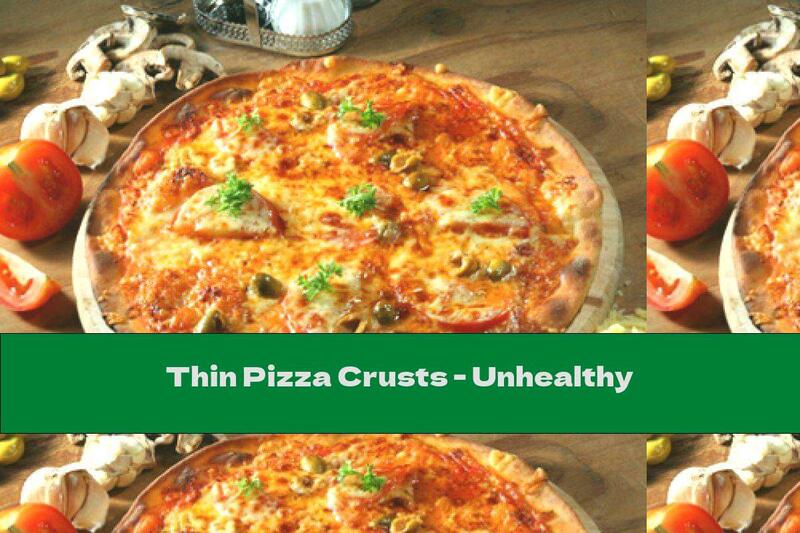
Thin crusts may not be the best healthy choice when it comes to pizza. It turns out that the "ultra-thin" base contains twice as much fat per 100 grams, compared to one that has a thicker crust.
Thin crusts are not the necessary healthy choice when it comes to pizza. Pizzas offered in supermarkets and home food companies may actually contain less fat and salt, a study shows. It examines the content of mainly spicy pizzas and those with cheese.
For example, a pizza with an "ultra-thin" base contains twice as much fat per 100 g as one that has a thicker crust.
Even if it sounds surprising, frozen pizzas are also healthier than "fresh" ones sold in supermarkets, scientists say.
The findings come from "Which?" Food consumption experts . 'who insist on labeling the packaging of products, both in supermarkets and on the websites of companies offering food for home, so that pizza lovers can make the best and healthiest choice.
Experts also found that Dr Oetker's thin-skinned pizza contained more fat than other similar products, causing clogged arteries at 15.9 g of fat per 100 g of product.
The spokesperson for "Which?" Said: "We found a number of pizzas with huge portions, which are often unrealistic. They are also very different from the established product packaging schemes - even from the same manufacturer, which makes them very difficult to compare. "
The most calories in cheese pizzas and tomato pizzas available in stores are found in fresh pizza, which has a thick crust.
Related Articles
- Nutritional Benefits of Pizza: Key Nutrients, Healthier Options, and Recipes
- Nutritional Benefits of Pizza: Key Nutrients, Healthier Options, Recipes
- The Nutritional Value of Pizza: Key Nutrients, Healthier Options, and Recipes
- The Nutritional Value of Pizza: Key Nutrients, Healthier Options, and Homemade Recipes
- The Ultimate Guide to Nutritious Pizza: Recipes, Benefits, and Tips
Top Nutrition Articles Today
- . Steak Label
- . THE EATING ORDER – FOOD SEQUENCE IS IMPORTANT
- . List of Foods that Contain Carrageenan: A Guide to Avoiding...
- . Nutrition and Albinism: Managing the Condition Through Diet
- . Understanding E476 in Nutrition: Benefits, Foods, Concerns,...
- . Diet for Fatty Liver and Alcohol-Induced: A Comprehensive Gu...
- . The Power of 100% Cocoa Dark Chocolate: Benefits and Uses
- . The Truth About Potato Chips: Health Effects and Alternative...
- . Nutrition and Aneurysm: Reducing Risk Factors and Supporting...
- . Hydrochloric Acid in Nutrition: Importance, Effects, and Sup...