What Makes Pistachios A Special Nut?
 Author: Leticia Celentano
Time for reading: ~2
minutes
Last Updated:
August 08, 2022
Author: Leticia Celentano
Time for reading: ~2
minutes
Last Updated:
August 08, 2022
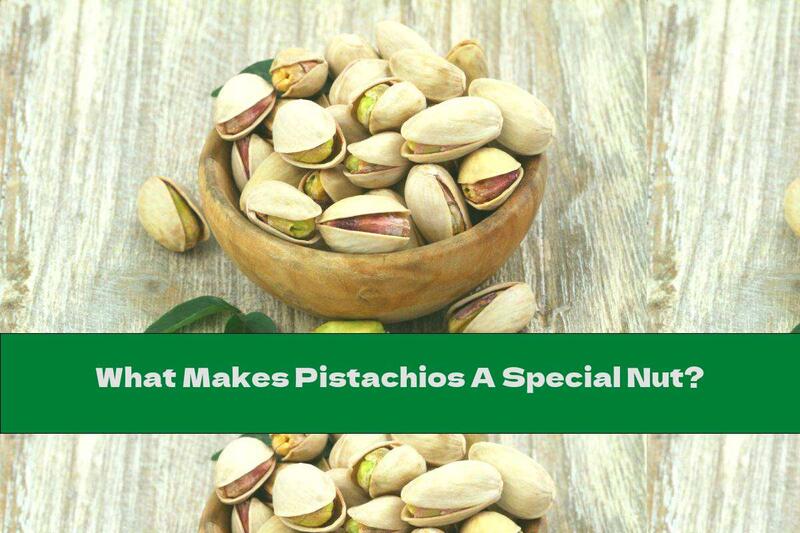
Pistachio is a special nut according to the content of useful substances in it ...
Experts constantly recommend eating nuts . This breakfast option is preferably far away from a sandwich or other fast food. And we don't always eat sweets, such as fruit, between main meals. Especially in winter, when you have the feeling that a juicy apple or orange will finish you off with the feeling of cold.
Pistachio is one of the lower-calorie nuts. It contains about 565 kcal per 100 g in raw form. In this column are approximately peanuts, sunflower seeds, almonds, cashews. For comparison, hazelnuts and walnuts provide about 646/654 kcal. There are also far more caloric than macadamia nuts.
Like all nuts, pistachios are rich in fiber and trace elements, which is why they are recommended for consumption.
Pistachios are naturally sweet - it contains 3-4 grams of sugar per 100 g, in addition to other carbohydrates, which is why it is obviously and successfully used in confectionery. Good examples are pistachio ice cream and pastiche.
Its proteins are half the fat content, which, unlike other nuts, does not create such a strong feeling of heaviness when we have exceeded the usual amount for breakfast of 30 grams and at the same time perfectly satisfies - we can not overeat with pistachios.
So, what useful substances does it contain besides the ones mentioned? Magnesium, copper, vitamin E, folic acid and phytosterols. In combination with fiber and useful mono and polyunsaturated fatty acids, pistachios, in the long run, support cardiovascular health by positively affecting cholesterol levels - lowering the levels of bad LDL cholesterol and increasing those of good HDL. When acting in the direction of improving cardiovascular health, it inevitably has a positive effect on the cognitive function of the brain. Naturally, with its qualities, pistachio is a food that we can use to help control body weight.
What is surprising about its content is that it contains lutein. It gives the nut its specific greenish color. Lutein is a carotenoid that is associated with beta-carotene and vitamin A. It is thought to be valuable for good eyesight.
Pistachio is one of the few nuts in which anthocyanin can be found. This glycoside and pigment gives a specific blue color that we usually know in berries: blueberries, blackberries, raspberries, but also grapes and others. The color is found in the protective membrane between the shell and the nut, which is dark pink-purple-purple.
Both lutein and anthocyanin are serious antioxidants with pronounced anti-inflammatory and anti-cancer properties.
Surprisingly, pistachios also contain melatonin and it is one of its rich sources. And melatonin is the sleep hormone. So it can be considered that this is the nut of sleep - do not eat it before the exam, but if you want to relax after a weekday, fall asleep quickly and sleep soundly - here is a solution to achieve it naturally.
Related Articles
Top Nutrition Articles Today
- . Calcium In Lentils
- . The Power of Red Foods: Health Benefits and Nutrition Guide
- . How To Cook Puff Pastry Hot Dog Pie - Recipe
- . The Nutritional Benefits of Scotch: Improving Cardiovascular...
- . Diet After Surgery Of The Small And Large Intestine
- . Nutrition Boost: Functional Properties in Muffins for Health...
- . The Ultimate Guide to Using Ammonium Carbonate in Baking
- . The Ultimate Guide to Non Starchy Carbs: Benefits, Examples,...
- . The Ultimate Guide to Creating a Well-Structured Diet Plan f...
- . The Ultimate Guide to Hormone Type 6 Diet Plan for Weight Lo...