Which Breast Pump To Choose
 Author: Ivan Red Jr.
Time for reading: ~7
minutes
Last Updated:
August 08, 2022
Author: Ivan Red Jr.
Time for reading: ~7
minutes
Last Updated:
August 08, 2022
CHAPTERS (Table Of Contents)
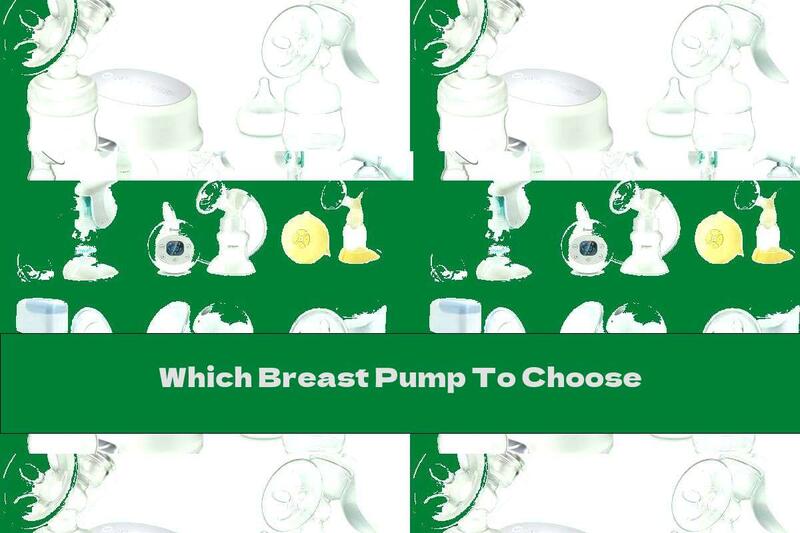
The choice of the ideal pump should be made after considering many options and taking into account your needs.
One of the key decisions you need to make after you have decided to breastfeed is choosing a breast pump.
However, before you decide to buy one, you should know that if you do not have to be away from home for a long time and take full care of the newborn, you may not need it at all.
For cases where you will have to go out for a long time without the baby, manual pumping is an effective and economical option.
However, if you have decided that you need a pump, you need to know a number of things.
Every mother has a unique lifestyle and attitude towards breastfeeding. Therefore, a wide range of pumps is available that are designed to suit a particular lifestyle or situation. There are many options to choose from: manual, battery operated or electric; single or double pump; are you buying a new or used one? With the number of options available, choosing the most suitable one will be very difficult.
Keep in mind that different types of pumps reflect the many individual needs of breastfeeding women, and what is best for your girlfriend may not be right for you. The choice of the ideal pump should be made after considering many options and taking into account your needs.
There are several factors to consider when choosing. If you have, seek advice from a breastfeeding consultant.
How often will you use a pump?
If you will be away from the baby from time to time and milk production is already regulated, a hand pump may be all you need.
If you return to work full time or plan to be away from your baby for more than a few hours a day, the electric pump is a better option.
Will you have a time limit for breastfeeding?
The time for expressing breast milk varies with different types of pumps. Squeezing usually takes about 10 to 15 minutes on the breast. If you intend to express breast milk at work and do not have much time, you may want to consider an electric or battery-powered pump. The use of a double reduces the pumping time by half, as both breasts are squeezed at the same time. And also stimulates milk production.
Does the pump need to be easy to assemble and transport?
If possible, review the instructions supplied with several different pumps and choose the one that is easy to install, use and clean. Because if you find it difficult to use, it is possible to reduce and disappear your desire to squeeze.
Make sure that you can remove all parts of the pump that come in contact with the skin and milk so that they can be cleaned well after use.
If you work with the pump every day or travel with it, look for a light model. Some are placed in a briefcase with an insulated section for storing expressed milk. Also keep in mind the noise level. There are electric models that are quieter than others. If it is important to be discreet, make sure that the noise level of the pump is acceptable.
If you travel frequently or plan to express breast milk at work, consider buying a lightweight pump that is easy to transport. You will also need a briefcase or a convenient bag in which to carry the pump and expressed milk.
Is vacuum suction adjustable?
What looks good to one visitor may not be so great to another. If you choose an electric pump - the better option would be one that allows you to control the speed and degree of suction.
Is the silicone pump seal the right size?
Silicone sealants (cushions) are cone-shaped cups that fit your breasts and nipples. If you're worried that the standard size isn't right for you, check with the manufacturers for other options. Larger or replaceable such nozzles are often available.
Where will you use the pump?
Manual and battery-powered pumps can be easy to transport and use in small spaces. In contrast, electric ones are larger and heavier, more difficult to transport and need a source of electricity.
Note that power pumps require you to have Plan B in the event of an emergency or when access to electricity is not possible. In such situations, a manual backup pump or an electric model that can be fitted with batteries can help.
Manual breast pumpsThese pumps allow you to control the speed of pumping and many women say that the sensation most closely resembles the sucking of a baby. Hand pumps are ideal if you use them sometimes at night or for short periods when you are away from the baby. They are much cheaper, more compact and easy to transport. And, of course, you don't have to worry about electricity or noise - most hand pumps are silent.
The use of a hand pump is much more intensive and is not suitable for regular pumping. Working with them requires muscular strength and the involvement of both hands, which makes them more time consuming.
Some women find that the rubber bands on and around the handle wear out relatively quickly, so pay attention to this as well (choose a pump with an ergonomically designed handle). Squeezing will probably be difficult at first and will take longer until you master the rhythm that is best for you, but with a little practice, that will happen. Hand pumps are easier to use when the chest is full. Look for a 2-phase model - stimulation and squeezing phase - to make squeezing easier, faster and more efficient. In addition, there are now models that are compatible with feeding bottles.
Battery breast pumpsThese pumps are more expensive than manual ones, but cheaper than electric ones. Their advantage is that they are easy to carry and do not require power. If you do not need the pump for regular draining, this model is suitable for you. Expressing breast milk will take longer with this pump than with an electric one. You also need to always have spare batteries on hand.
Electric breast pumpsElectric pumps are the preferred option if: you will express regularly, have a baby requiring special care or return to work. They are also extremely useful if you have very limited time, as they are faster than manual ones. Look for an electric pump that has adjustable suction levels, as this will allow you to choose settings that most closely resemble the way your baby sucks. As with manuals, a two-phase pump is a better option. Some of the electric models are surprisingly light. You can also keep in mind that some can be used with batteries (this is an advantage in cases where you do not have access to electricity).
Another advantage of electric pumps is that some of the models can be used with a car adapter (if you have to express breast milk on the go). Like manual and electric, there are models compatible with feeding bottles.
A good option for working nursing mothers is a specially designed bra that allows you not to use your hands when expressing breasts. At this time you can work (work on a computer or talk on the phone).
If you do not plan to drain regularly and do not want to invest in expensive pumps, you can opt for manual or battery-powered.
Single or double electric breast pumpAll mothers know how important it is to save time. That is why the double electric pump will be useful for you. With it, expressing breast milk is in a much shorter time, because you use it on both breasts at the same time. The session with this pump takes about 10 minutes, compared to the single one it takes 20 to 30 minutes. It has been found that expressing both breasts simultaneously stimulates prolactin levels and increases milk production more efficiently than pumping with a single pump.
The double pump is a good option if you have twins, if breastfeeding is delayed after birth, or if you need to be regularly separated from your baby for long periods of time.
A single electric pump is ideal if you are draining at the same time. Other advantages are that it is more affordable than the dual and more portable.
Important for your safety!
If you decide to use a second-hand pump, you need to choose a model well. It is extremely important to disassemble it completely so that all its parts can be sterilized. If this is not possible, you better not take the risk. Bacteria and viruses can be transmitted through breast milk - including HIV and cytomegalovirus, which can contaminate the pump and transmit infection to you and your baby.
Models designed for multiple users, such as those in hospitals, are designed to prevent breast milk from entering the pump.
Clean the pump parts after each use!
Related Articles
- The Importance of Breast Milk Color in Nutrition: Understanding Nutritional Insights
- The Ultimate Guide to Fatburners: Benefits, Risks, and How to Choose
- Nutritional Benefits of Baked Chicken Breast: A Healthy Choice for Your Diet
- The Importance of Breast Milk Color in Nutrition: Insights and Benefits
- The Power of Pumpkin Seeds: Nutritional Benefits and Uses
Top Nutrition Articles Today
- . Steak Label
- . Hydrochloric Acid in Nutrition: Importance, Effects, and Sup...
- . The Role of Carbohydrates and Lipids in Nutrition: Importanc...
- . Eating 5 Meals A Day
- . The Truth About Potato Chips: Health Effects and Alternative...
- . Winter Nutrition: Importance, Key Nutrients, Diet Tips & Rec...
- . Nutrition In Urethritis (inflamed Urethra / Urethra)
- . Understanding E476 in Nutrition: Benefits, Foods, Concerns,...
- . Breastfeeding A Baby With Low Blood Sugar
- . List of Foods that Contain Carrageenan: A Guide to Avoiding...