Broccoli And Cabbage Strengthen Health
 Author: Ivan Red Jr.
Time for reading: ~2
minutes
Last Updated:
August 08, 2022
Author: Ivan Red Jr.
Time for reading: ~2
minutes
Last Updated:
August 08, 2022
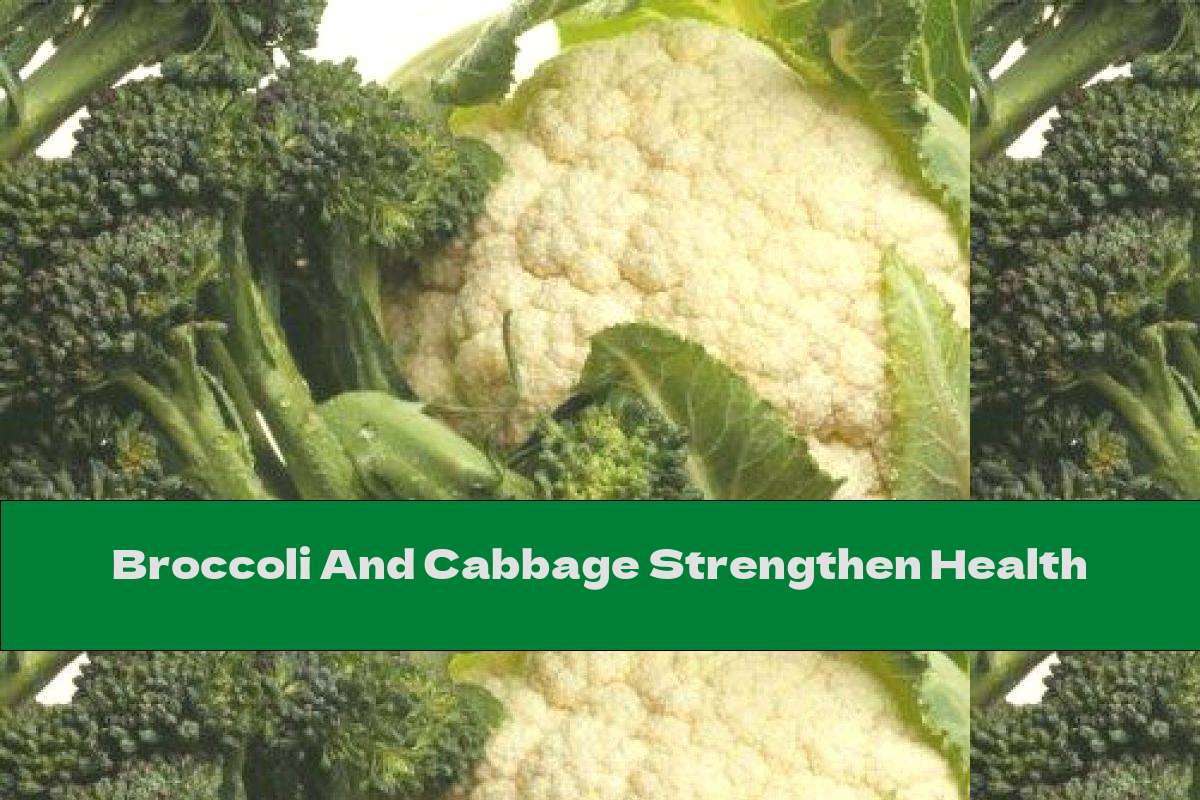
Biologists believe that vegetables such as cabbage and broccoli are a source of many healthy phytochemicals, vitamins and minerals.
Dutch medics from the University of Leiden advise us to add cabbage or broccoli to our menu every day. Biologists believe that these vegetables are a source of many healthy phytochemicals, vitamins, minerals.
Researchers have analyzed various properties of vegetables and found that cabbage has a high nutritional value and can even prevent the development of some cancers. Cabbage, rich in nutrients, has a positive effect on the body, thanks to the natural compounds in its composition, namely a variety of antioxidants that interfere with oxidative and inflammatory processes in cells, experts explain.
Most antioxidants are found in broccoli and cauliflower, but in the leaves of "ordinary" cabbage there are many useful components. In addition to anti-cancer functions, all types of cabbage are able to prevent respiratory and heart diseases, strengthen immunity.
According to experts from the University of Warwick, the damage that diabetes causes to the whole body can be overcome to some extent through the consumption of broccoli. This is due to the substance sulforaphane contained in vegetables. It induces the activity of enzymes with protective properties for the vessels.
Broccoli and other similar vegetables have been discussed in the fight against heart attack and stroke . Among diabetics, the risk for the latter is particularly high, as elevated blood glucose levels cause serious pathological changes in the vessels.
Broccoli is one of the vegetables that can help us in the fight against incurable skin diseases. They contain the substance Sulforaphane. It in turn is known for its anti-carcinogenic properties. Sulforophane also reduces the level of free oxygen radicals caused by hyperglycemia. On the other hand, it activates some proteins with catalytic function in the production of antioxidants as well as detoxifying enzymes.
However, at John Hopkins Hospital, doctors have found that another use of the substance can be found - in the treatment of a type of genetically determined bullous dermatosis - epidermolysis bullosa simplex (EBS). With it, blisters filled with clear liquid appear on the skin in places subjected to friction. So far, the disease is not curable.
Although there is still a long way to go before testing Sulforaphane in patients, it has already been shown that a broccoli extract containing the substance is safely applied to the skin.
It turns out that broccoli is a source of sulforaphane, which has the ability to protect skin cells from UV rays. Its role is to increase the level of a protective enzyme in these cells. Although it takes days for it to take place, even after washing off the rubbed substance, it continues to work.
An experiment was performed with 16 volunteers exposed to UV rays, after which the degree of redness was measured. Areas with rubbed sulforaphane and without were compared. It turns out that it reduces the degree of erythema to 83%, but still different in different individuals. Scientists attribute this difference to the influence of genetic factors.
Of course, Prof. Talalai, who conducted the study, does not advise rubbing your skin with broccoli and going out in the sun. However, he acknowledged that this would be a good way to fight the most important carcinogen. A number of studies in this area are still pending.
Experts have noticed that the concentration of vitamins in vegetables can vary depending on the conditions for their cultivation. They warn that those that contain high levels of nitrates can be dangerous to health.
Related Articles
- The Power of Honeysuckle: Health Benefits and Recipes
- The Ultimate Guide to Hickory Smoked Bacon in Nutrition and Healthy Eating
- Nutritional Benefits of Fruit Skewers in Honey Syrup: A Delicious and Healthy Recipe
- Nutritional Benefits of Fruit Skewers in Honey Syrup: A Healthy and Delicious Snack
- Nutrition for Respiratory Health: Supporting Your Lungs with the Right Foods
Top Nutrition Articles Today
- . The Importance of Carotene in Nutrition: A Complete Guide
- . Cochineal Extract Food List: Nutritional Value, Health Benef...
- . The Truth About Potato Chips: Health Effects and Alternative...
- . The Ultimate Guide to Lean Meat in Nutrition: Benefits, Type...
- . Camel Meat
- . The Role of Water in Nutrition: Importance and Benefits
- . The Nutritional Benefits of Figs: A Fiber-Rich Fruit Packed...
- . 7 Foods For Bigger And Firmer Breasts
- . List of Foods that Contain Carrageenan: A Guide to Avoiding...
- . Foods For A Regular Stomach