Chemical Contaminants And Food Additives
 Author: Nia Rouseberg
Time for reading: ~3
minutes
Last Updated:
August 08, 2022
Author: Nia Rouseberg
Time for reading: ~3
minutes
Last Updated:
August 08, 2022
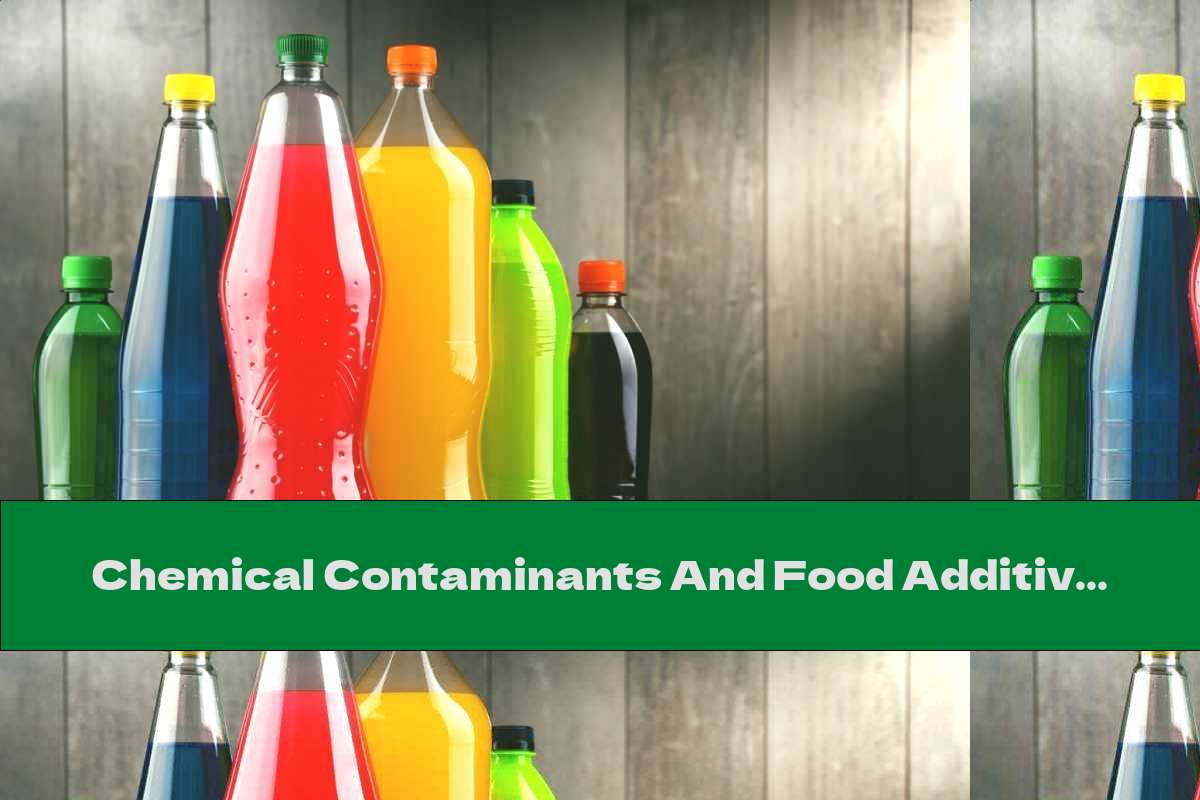
Chemical food additives aim to improve their organoleptic properties and increase their shelf life
Chemical contaminants are substances that are uncharacteristic of the composition of food products, which fall from the external environment or are formed in them in the processes of extraction, processing and storage.
Some of the contaminants fall into the cultivation of plant and animal products such as pesticides. Others pass from the equipment, facilities and packaging in their production and processing (polymeric materials). Third fall from the environment (air and water pollutants), and fourth are formed during the culinary processing of products (oxidized substances in fat burning, for example).
In some cases , some substances are regularly added to the products in order to improve their properties, in others, under certain conditions, harmful substances accumulate, and in others, the product initially contains harmful substances.
Enhancers, preservatives and colors are most often added to foods . They are added to improve the organoleptic properties of foods or to extend their shelf life. Their use is monitored by the European Scientific Committee for Food in Europe.
About 3,500 food additives are currently used in EU countries. They are mainly used for the following purposes:
- Keep food fresh before eating;
- To improve some organoleptic properties of the food product;
- To ensure the stability of the food product during its storage;
- To facilitate the production process of food;
- To guarantee some economic benefits.
These additives may be used in certain amounts that do not exceed the maximum levels set for them.
Here are some of the main additives: preservatives, antioxidants, acids and bases, emulsifiers, flavors, gelling agents, stabilizers, flavorings, enzymes, colorants, sweeteners.
Dyes. They are denoted by code E from 100 to 180.
Natural colors: riboflavin (yellow) - E 101, in the production of cheese; chlorophyll (green) - E 140 for canning fats, dried vegetables; carbon (black) - E153, in jams.
Synthetic dyes. Tartrazine (yellow) - E 102, in soft drinks; Amaranth (red) - E 123, red currant products; erythrosine (red) E127, in the production of fruit products; indigo carmine (blue) - E 132, for coloring soft drinks, ice cream, biscuits, cakes, etc.
Flavors. These are different essences that improve the aroma of some foods. Natural aromatic substances are used - essential oils, extracts of spices and fruits and synthetic (vanillin), monosodium glutamate (E621).
Sweeteners. They are used as sugar substitutes. They are subdivided into caloric sweeteners - mannitol (E 421), sorbitol (E 420), xylitol (E 976) and non-caloric sweeteners - aspartame (E951), saccharin (E954). In addition, they can be divided into synthetic and natural. Of the synthetic ones, the most used are aspartame and saccharin.
Aspartame is a sweetener composed of amino acids. It is 200 times sweeter than sugar. It has practically no effect on the energy value of food. Due to the proven adverse effects on the human body, the use of aspartame as a sweetener was severely limited.
Saccharin. It is 300 to 350 times sweeter than sugar. When exposed to heat, it changes its taste and gives the food a bitter taste. Until a decade ago, it was considered safe, but many studies claim that its use is not completely harmless. Ironically, saccharin is used by people who want to reduce energy intake and reduce their body weight, but regular intake of saccharin has the exact opposite effect - gaining weight.
Acids and bases. The former are used to acidify some products. Acetic, citric, tartaric, lactic and malic acids are used. Sodium and ammonium bicarbonate are among the bases approved for use in the food industry.
Preservatives. They have code E from 200 to 290. Traditional preservatives are salt, vinegar, alcohol. Other commonly used preservatives are: sorbic acid (E 200 - 203), for cheese, yogurt, soft drinks, lactic acid (E 270), for margarines, benzoic acid (E 210-219), soft drinks, fruits, jams, nitrates (E 249, 250), sausages, meat products, nitrites (E 251, 252), bacon, ham, cheese.
Related Articles
- Nutrition for Respiratory Health: Supporting Your Lungs with the Right Foods
- The Ultimate Guide to High Gluten Foods: Benefits, Sources, and Recipes
- The Ultimate Guide to High Gluten Foods: Effects, Benefits, and Recipes
- The Role of Additives in Nutrition: Types, Common Additives, Regulations, and Health Concerns
- The Ultimate Guide to Lactic Acid in Nutrition: Benefits, Food Sources, and Recipes
Top Nutrition Articles Today
- . Steak Label
- . Healthy Food For Modern Man
- . Sea Buckthorn: Health Benefits And Harms
- . The Importance of Micronutrients in Chicken: A Complete Guid...
- . The Diet �������� 7: A Comprehensive Guide to Nutrition and...
- . The Truth About Potato Chips: Health Effects and Alternative...
- . How To Know The Real Ice Cream?
- . Amino Acids in Nutrition: Importance, Types, and Optimizatio...
- . The Role of BHT in Nutrition: Benefits, Safety, and Common F...
- . The Ultimate Guide to Calcium Inosinate in Nutrition: Benefi...