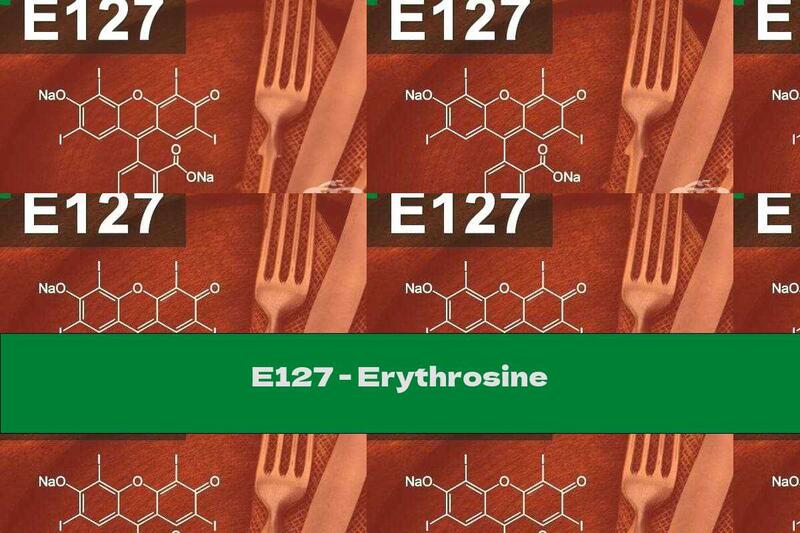
E127 - Erythrosine
 Author: Alexander Bruni
Time for reading: ~1
minutes
Last Updated:
January 27, 2026
Author: Alexander Bruni
Time for reading: ~1
minutes
Last Updated:
January 27, 2026
CHAPTERS (Table Of Contents)
Characteristics: Erythrosine is a chemical substance, a colorant of synthetic origin. It is a white powder or granules that dissolve well in water, alcohol and do not dissolve in vegetable oils.
Characteristic
Erythrosine is a chemical dye of synthetic origin. It is a white powder or granules that dissolve well in water, alcohol and do not dissolve in oils of vegetable origin and fats. It can also be in the form of aluminum varnish, which is insoluble in water, alcohol and grease. The color of the colorant is bluish-pink. Refers to hazardous substances.
Use
Erythrosine is used in the food industry for coloring fruit products. It is not used in the making of juices, because in an acidic environment, insoluble acids and sediments are formed. The additive can be used in the production of biscuits and candied cherries.
The permissible daily amount is 0.6 mg / kg body weight. It is used both alone and in combination with other dyes. For many foods there are specific amounts of erythrosine, for example: in canning apples and pears, in the preparation of jellies and marmalades - 200 mg / kg, in canning strawberries and raspberries - up to 300 mg / kg, in fresh frozen or canned shrimp - up to 30 mg / kg, and for yogurt products - up to 27 mg / kg.
In addition to the food industry, the additive E 127 is also used in medicine and cosmetics (toothpastes). Water-soluble dye is used for dyeing wool, cotton and silk fabrics.
Effects on the human body
Erythrosine can be hazardous to health if exceeded. The substance increases agitation and hyperactive behavior in children, causes asthma, adversely affects many internal organs such as liver, thyroid, heart, stomach, causing various diseases associated with them and their malfunction. E 127 does not have a good effect on the reproductive function of the body. Erythrosine has a carcinogenic effect. The colorant is used in EU and US countries. In Russia it is not used in medicine.
- E150 (d) Ammonium sulphite caramel
- E124 Ponso 4R, Cochineal red A
- E133 Blue shiny FCF
- E120 Cochineal, Carminic acid
Top Nutrition Articles Today
- . Steak Label
- . Black Chickpeas Nutrition
- . Large Chicken Breast Calories
- . 4 phases of digestion
- . Ligament Vitamins: Signs Of Deficiency And Daily Value
- . Fructose In Strawberries
- . One Meal a Day Menu: Benefits, Meal Planning, and Sample Men...
- . List of Foods that Contain Carrageenan: A Guide to Avoiding...
- . Carbs to Sugar Conversion Chart: Monitoring Carb and Sugar I...
- . Nutrition Guide for Thyroidectomy Patients: Tips for a Healt...