E161 (g) - Canthaxanthin (Xanthophylls - Canthaxanthin)
 Author: Mark Velov
Time for reading: ~0
minutes
Last Updated:
August 08, 2022
Author: Mark Velov
Time for reading: ~0
minutes
Last Updated:
August 08, 2022
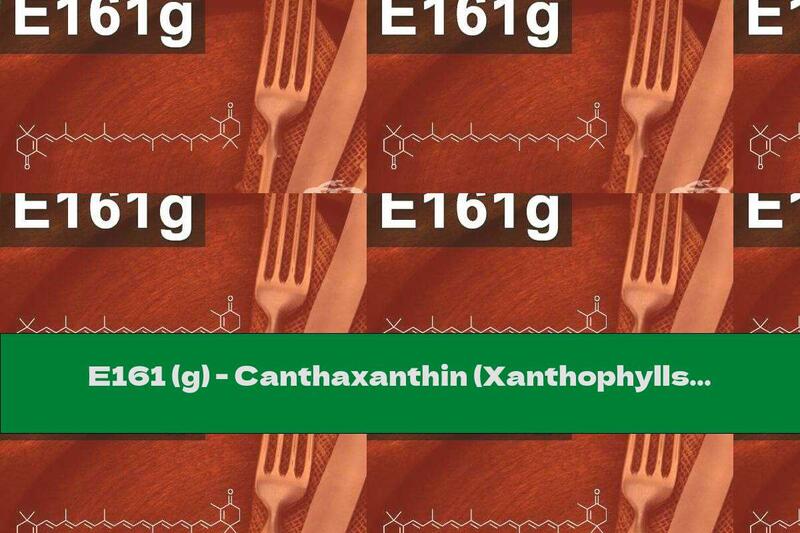
Cantaxanthin (E-161g) is a food coloring of natural origin, it has an orange color. It was first found in edible mushrooms, and is also found in bacteria, green algae and crustaceans. The substance
Cantaxanthin (E-161g) is a food coloring of natural origin, it has an orange color. It was first found in edible mushrooms, and is also found in bacteria, green algae and crustaceans. The substance is in the form of crystalline powder or violet crystals. When dissolved, it turns orange or red.
The additive E-161g dissolves well in chloroform, does not dissolve completely in vegetable oils, and does not dissolve at all in ethyl alcohol and water. The substance is not dangerous to human health, so it is approved for use in most countries around the world.
Cantaxanthin is used in the food industry in products such as: vegetable, animal fats, oils; also in the production of jam, jellies, canned fruit; can be found in frozen shrimp; used in margarines, mayonnaise and confectionery.
The maximum daily dose of the substance in food is 80 mg per 1 kg of finished product. Studies show various side effects of the dye on the human body: inability to see in the dark, discoloration of the skin; urticaria and retinopathy have been reported in some people.
Related Articles
- The Ultimate Guide to E161 in Nutrition: Sources, Benefits, and Risks
- The Ultimate Guide to E161 in Nutrition: Health Benefits, Uses, and Regulations
- The Ultimate Guide to E161Blutein: Benefits, Uses, and Recipes
- The Ultimate Guide to E161 in Nutrition: Sources, Benefits, and Recipes
- The Ultimate Guide to E161 in Nutrition: Benefits, Sources, and Recipes