E211 - The Indispensable Ingredient Of Every Delicious Pickle
 Author: Ivan Red Jr.
Time for reading: ~2
minutes
Last Updated:
August 08, 2022
Author: Ivan Red Jr.
Time for reading: ~2
minutes
Last Updated:
August 08, 2022
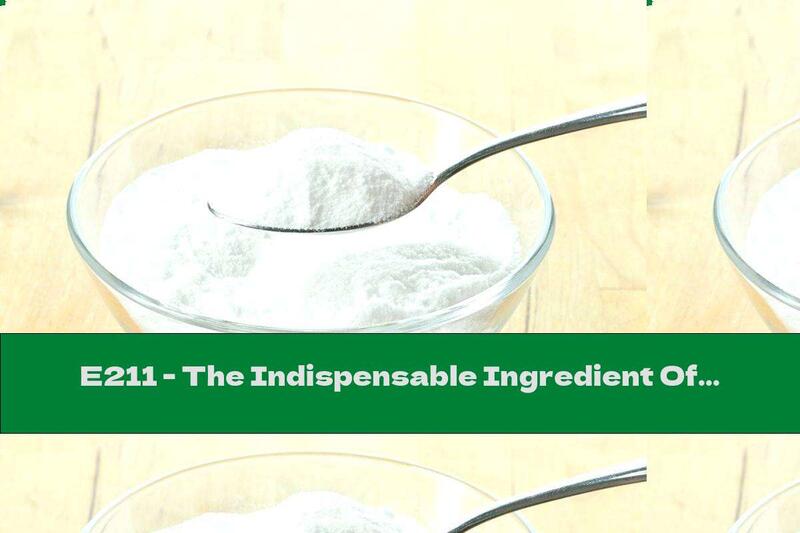
In this article, learn more about E211 - The Indispensable Ingredient Of Every Delicious Pickle. E211 is added to most canned and pickled foods to keep them fresh..
Like any food additive labeled "E" and the first digit 2, E211 is a preservative . This code, in fact, means one of the most common preservatives in the food industry - sodium benzoate.
Sodium benzoate is the sodium salt of benzoic acid obtained after neutralization of the acid with sodium hydroxide. Benzoate is very stable after dissolving in water. This is the reason why E211 is most widely used in the food industry in marinades, especially in the production of pickles and other canned foods. Sodium benzoate is one of the few preservatives found naturally in nature. Its rich sources are berries - black and cranberry.
E211 is used as a means of preserving the fresh appearance of canned fruits and vegetables. Its main action is related to the interruption of the fermentation process of these foods and the death of microorganisms, which would lead to a deterioration in the quality of food. This effect is achieved due to the powerful bactericidal and yeast-like action of sodium benzoate.
E211 is an officially approved additive for the food industry in the European Union and the United States. However, its consumption in large doses is associated with certain health risks . Therefore, the dose at which it is administered in foodstuffs is strictly regulated and monitored by regulatory authorities. The permitted dose of sodium benzoate in the composition of food is up to 0.1% of their total weight.
The risks of excessive consumption of E211 come from the possibility of sodium benzoate to be transformed in the body to benzene - a pronounced carcinogen . It has been shown that such a reaction can occur very easily in the presence of ascorbic acid (vitamin C). Therefore, the use of sodium benzoate in the production of foods containing high doses of vitamin C is subject to extremely strict quantitative control. Although most of the tested foods do not show dangerously high concentrations of benzene, the mixing of sodium benzoate and vitamin C in the food industry or in the preparation of pickles and other products is not desirable.
There are also reports of adverse effects from the mixing of E211 and certain colorants used in the food industry as additives. Concomitant use of these products is associated with hyperactivity in childhood and other behavioral changes.
The human body has the ability to excrete sodium benzoate very quickly after consumption by binding it to the amino acid glycine . However, the consumption of foods labeled E211 should not be excessive in order to save the risk of adverse effects.
Related Articles
- Nutritional Benefits of Fruit Skewers in Honey Syrup: A Delicious and Healthy Recipe
- Nutritional Benefits of Fruit Skewers in Honey Syrup: A Healthy and Delicious Snack
- Nutritional Benefits of Millionaires Shortbread: A Delicious and Balanced Treat
- The Power of Mushrooms: Nutritional Benefits and Delicious Recipes
- Healthy Cupcake Recipes: Nutritious and Delicious Treats
Top Nutrition Articles Today
- . Camel Meat
- . Bacon Egg Bites Nutrition
- . How To Freeze Quince
- . The Ultimate Guide to Food Combining in Nutrition: Principle...
- . The Role of Disodium Diphosphate in Nutrition: Functions and...
- . How To Grind Horseradish Without Tears
- . Nutrition and Aneurysm: Reducing Risk Factors and Supporting...
- . Nutrition In Lymphedema (lymphostasis, Elephantiasis, Elepha...
- . Iodine in Nutrition: Importance, Sources, Deficiency Signs,...
- . The Importance of Calcium Carbonate in Nutrition: Benefits a...