E232 - Sodium Orthophenyl Phenol
 Author: Mark Velov
Time for reading: ~1
minutes
Last Updated:
August 08, 2022
Author: Mark Velov
Time for reading: ~1
minutes
Last Updated:
August 08, 2022
CHAPTERS (Table Of Contents)
Characteristic: The food additive E 232 is an organic compound which consists of two interconnected benzene rings and phenolic hydroxyl groups. In appearance, the substance is blood
Characteristic
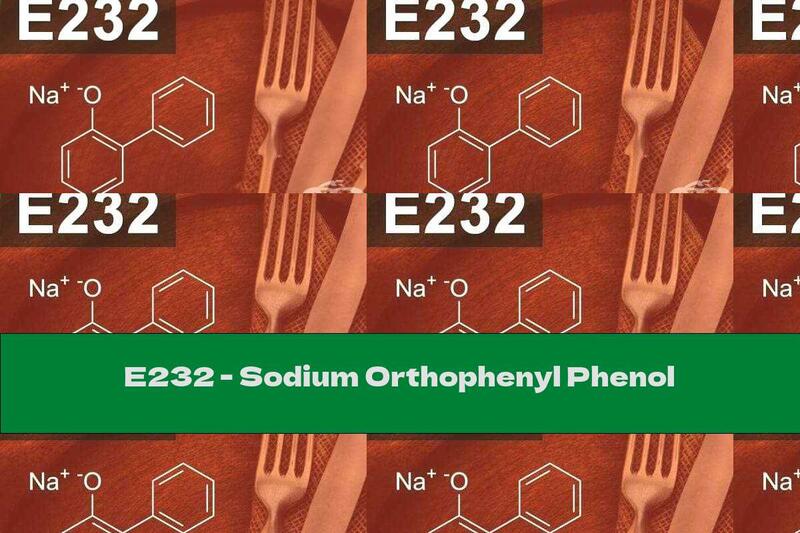
Food additive E 232 is an organic compound consisting of two interconnected benzene rings and phenolic hydroxyl groups. In appearance, the substance is a white crystalline powder. Often used in solutions. The sodium salt is obtained synthetically in the laboratory from orthophenyl phenol E231 and sodium hydroxide immediately before use.
E 232 belongs to the group of preservatives that prevent the spread of fungi and bacteria in fruits and vegetables. This is a substance with a medium level of danger to humans.
Use
The additive is used in the food industry as a preservative for external processing of fruits, prevents their rot, protects them from fungi, mold, bacteria. Citruses and exotic fruits and vegetables are mainly treated before long transportation to keep them fresh for a longer time. In such processing E 232 falls inside the product, so you should not overdo the consumption of fruits and vegetables delivered from afar.
In addition to the food industry, the preservative is used in agriculture for the treatment of seed boxes, in the chemical industry - for the production of fungicides and as a reagent, in perfumery - in the composition of deodorants and sprays, for disinfection of public places and institutions: hairdressing salons, hospitals, laundries and others.
Effects on the body
Sodium orthophenyl phenol causes seizures, vomiting, very severe skin irritation, can seriously damage the eyes, leads to burns. In small concentrations irritates the mucous membranes of the eyes and upper respiratory tract. As the preservative has not been fully studied, the consumption of products containing it is not recommended for children. To prevent the additive from entering the human body, it is necessary to wash fruits and vegetables thoroughly before consumption. The maximum daily dose of E 232 per kilogram of body weight is 0.2 mg. In some countries, sodium orthophenyl phenol is prohibited.
- E231 Orthophenyl phenol
- E211 Sodium benzoate
- E223 Sodium metabisulfite
- E250 Sodium nitrite
Related Articles
- The Role of Sodium Methyl Para-Hydroxybenzoate in Nutrition: Preservative Properties & Health Concerns
- The Role of Sodium Methylparaben in Nutrition: Uses, Controversy, and Safety
- The Ultimate Guide to Disodium Diphosphate in Nutrition
- The Nutritional Value of Potato Chips: Calories, Fat, and Sodium Content
- The Role of Sodium Tripolyphosphate in Nutrition: Uses and Considerations
Top Nutrition Articles Today
- . Foods High In Folate And B12
- . Chicory: 15 Health Benefits, How To Drink, Contraindications...
- . Dishes From Neighboring Countries That We Love: Potato Panca...
- . What To Cook With Sweet Potato
- . The Ultimate Guide to Vitamin E in Nutrition: Sources, Benef...
- . The Essential Role of Copper (Cu) in Nutrition: Sources, Ben...
- . The Role of Sodium Malate in Nutrition: Benefits, Concerns,...
- . The Role of Samarium in Nutrition: Benefits and Food Sources
- . Nutritional Benefits of Pizza: Key Nutrients, Healthier Opti...
- . The Delicious and Nutritious World of Minibrownies: A Guide...