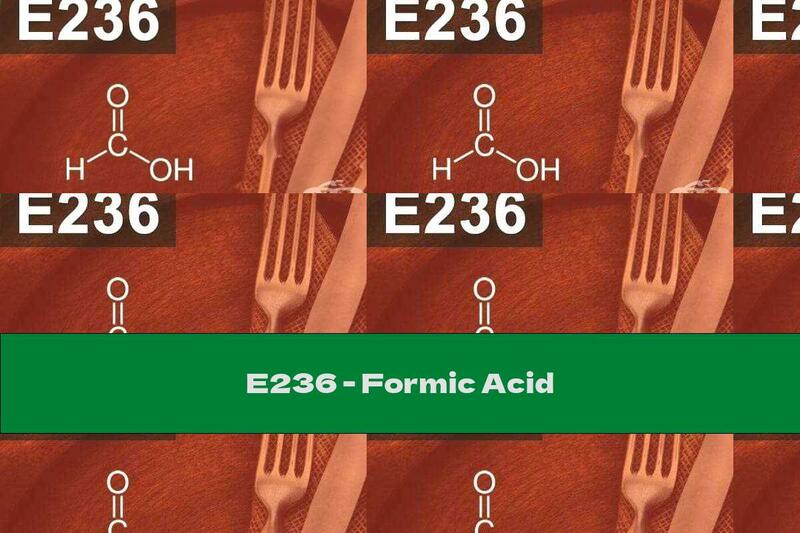
E236 - Formic Acid
 Author: Mark Velov
Time for reading: ~1
minutes
Last Updated:
January 27, 2026
Author: Mark Velov
Time for reading: ~1
minutes
Last Updated:
January 27, 2026
CHAPTERS (Table Of Contents)
Characteristics: Formic acid (E236) belongs to the group of preservatives. It is available in many plants (nettles, needles), fruits, insect secretions (ants, bees and others). It is obtained once
Characteristic
Formic acid (E236) belongs to the group of preservatives. It is available in many plants (nettles, needles), fruits, insect secretions (ants, bees and others). It is obtained in various chemical ways, in the normal state it has the appearance of a colorless liquid. The food supplement is very dangerous for humans in the form of a concentrate, because in direct contact it can cause severe chemical burns, as it has the ability to burn the oily layer of the skin. E 236 is particularly dangerous if it gets into the eyes or into the respiratory tract. In these cases, if the concentration is high, the supplement will damage the optic nerve, lead to blindness and severe necrotic gastroenteritis. With prolonged use, diseases of the kidneys and liver develop. Formic acid is quickly processed and excreted from the body.
Use
The substance is authorized for use in the food industry. It is mainly used for canning, in the production of soft drinks and confectionery (in cooking), as a preservative and antibacterial substance in the preparation of feed for domestic animals (in agriculture), in the fight against parasites (in beekeeping), as solvent (in the chemical industry). Actively used in medicine, it is characterized by weak anti-inflammatory, intoxicating (local anesthetic) and irritating properties. E 236 is also used to stimulate compounds that dilate blood vessels and affect blood clotting. Derivative derivatives of the additive are also used, the main of which is formaldehyde (methanal).
Impact on humans
Nutritional supplement E 236 is characterized by the following pharmacological properties: dissipative, local anesthetic, anti-inflammatory, local irritant, improves metabolism in tissues. The drug is able to cause reflex reactions due to irritation of the sensitive nerve endings of the skin, muscles. This process helps in the formation and release of neuropeptides and enkephalins, which regulate the pain and permeability of all vessels. Formic acid stimulates the release of quinine, histamine and other biologically active compounds that dilate blood vessels, strengthen the immune system, affect blood clotting.
Related Articles
- The Ultimate Guide to Lactic Acid in Nutrition: Benefits, Food Sources, and Recipes
- The Role of Fatty Acids in Nutrition: Benefits, Sources, and Intake
- The Complete Guide to E952 (Cyclamic Acid) in Nutrition
- The Nutritional Benefits of Blubber: Omega-3 Fatty Acids and Vitamin D
- The Ultimate Guide to E330 (Citric Acid) in Nutrition