E402 - Potassium Alginate
 Author: Maryam Ayres
Time for reading: ~1
minutes
Last Updated:
August 08, 2022
Author: Maryam Ayres
Time for reading: ~1
minutes
Last Updated:
August 08, 2022
CHAPTERS (Table Of Contents)
Characteristics: Potassium alginate is a stabilizer that is used to preserve the consistency and viscosity of the product. E 402 is a salt of alginic acid, used as a thickener and sta
Characteristic
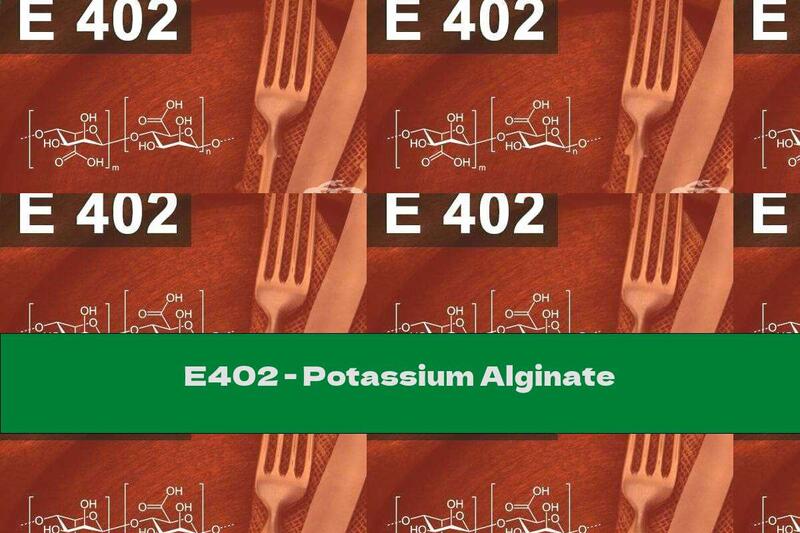
Potassium alginate is a stabilizer that is used to maintain the consistency and viscosity of the product. E 402 is a salt of alginic acid, used as a thickener and stabilizer. The substance is yellow or grayish tiles or granules. It occurs naturally in the composition of the walls of cellular seaweed. Alginic acid is obtained by treating them with an alkaline solution. The finished substance may contain impurities from the algae themselves and a small amount of seawater.
Use
Alginates and alginic acid are used in medicine and as thickeners in the food industry. E 402 is used as a gelling agent in the production of: various desserts, processed cheeses, home-made cheeses, some sauces, canned vegetables, meat and mushrooms, bakery products, ice cream.
It is widely used in the manufacture of soluble capsules.
Impact on humans
Additive E 402 helps to form insoluble salts of iron and potassium, which reduces the ability to absorb and absorb potassium alginate. In the human body, the acid formed by alginates is not absorbed, but may decompose slightly in the existing intestinal microflora.
The permissible daily dose of the supplement is not more than 10 g / kg. The use of potassium alginate is permitted only in combination with other similar alginates. They are used in pharmacology in the preparation of antacids.
E 402 is able to remove heavy metals such as mercury and lead from the body. The main and useful properties of sea kelp are explained by the presence of alginic acid in its composition. Given the impossibility of absorption in the intestine, people with diseases of the gastrointestinal tract should be careful when using products containing the substance.
Potassium alginate is not an allergen, does not cause irritation in direct contact with the skin.
Related Articles
- The Role of E 202 (Potassium Sorbate) in Nutrition: Benefits, Sources, and Concerns
- The Role of E924 (Potassium Bromate) in Nutrition: Health Risks, Regulations, and Alternatives
- The Essential Role of Potassium Carbonates in Nutrition
- The Power of Potassium Malate: Benefits for Nutrition and Health
- The Role of E 202 (Potassium Sorbate) in Nutrition: Benefits, Usage, and Recipes
Top Nutrition Articles Today
- . Steak Label
- . Healthy Food For Modern Man
- . Sea Buckthorn: Health Benefits And Harms
- . The Importance of Micronutrients in Chicken: A Complete Guid...
- . The Diet �������� 7: A Comprehensive Guide to Nutrition and...
- . The Truth About Potato Chips: Health Effects and Alternative...
- . How To Know The Real Ice Cream?
- . Amino Acids in Nutrition: Importance, Types, and Optimizatio...
- . The Ultimate Guide to Calcium Inosinate in Nutrition: Benefi...
- . The Role of BHT in Nutrition: Benefits, Safety, and Common F...