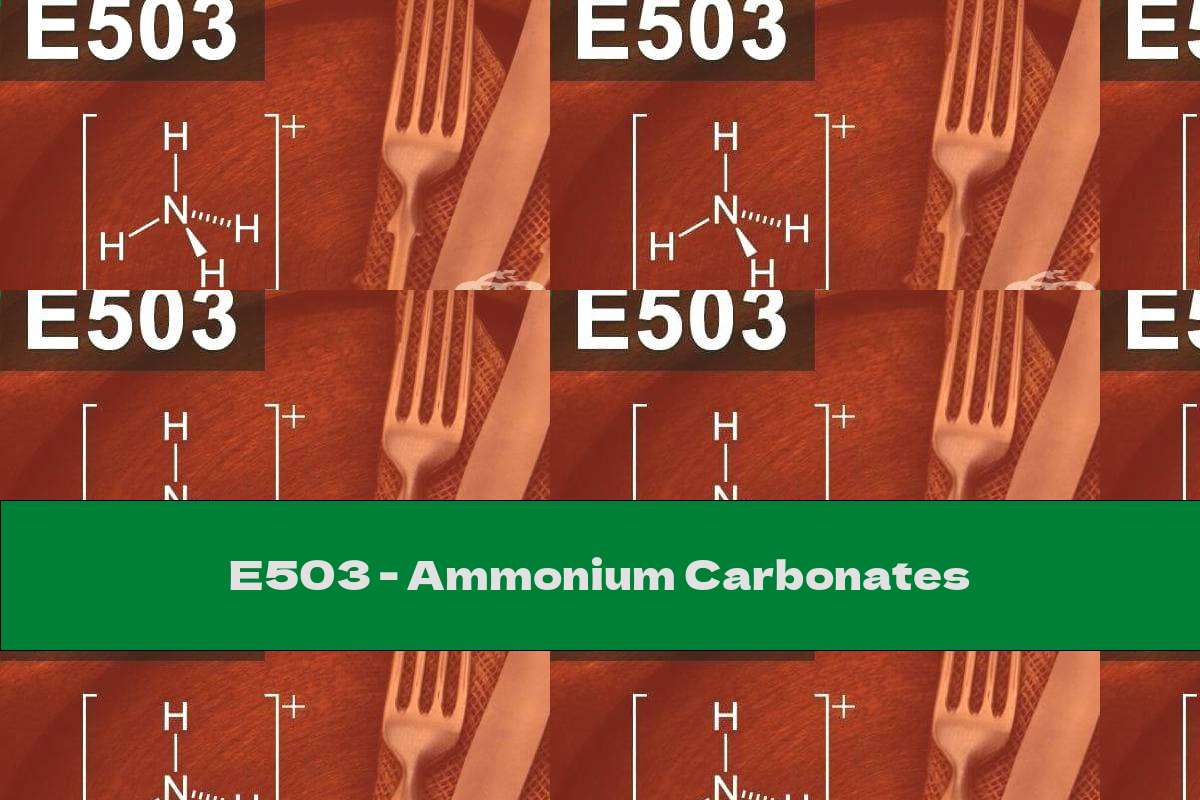
E503 - Ammonium Carbonates
 Author: Victoria Aly
Time for reading: ~1
minutes
Last Updated:
August 08, 2022
Author: Victoria Aly
Time for reading: ~1
minutes
Last Updated:
August 08, 2022
CHAPTERS (Table Of Contents)
Characteristics: Ammonium carbonate is a white, pink, gray or colorless crystal that emits a pronounced ammonia odor. The substance is obtained synthetically. E 503 dissolves well in water
Characteristic
Ammonium carbonate is a white, pink, gray or colorless crystal that emits a pronounced ammonia odor. The substance is obtained synthetically. E 503 dissolves well in water, is unstable in air and solution, and at a temperature of 18-24 degrees begins to emit ammonia and turn into ammonium bicarbonate. At a temperature of 60 C it decomposes into water, carbon dioxide and ammonia.
Ammonium carbonate was obtained from organic nitrogenous products (nails, horns, hair) by distillation at high temperature. Today, E 503 is produced in industrial quantities by heating a mixture of ammonium chloride or by reacting water with ammonia under rapid cooling conditions.
Use
In the food industry E 403 is used as a substitute for soda and yeast in the manufacture of bakery products and confectionery (biscuits, cakes, chocolates, pretzels, etc.). In addition, ammonium carbonate is used in pharmaceuticals in the production of cough syrups, ammonia. Many cosmetic companies include in the composition of decorative cosmetics (makeup) ammonium carbonate, which acts as a stabilizer of color saturation. E 503 is often used in winemaking, it is also added to fire extinguishers.
Impact on humans
Food additive E 503 is considered potentially dangerous due to the possibility of releasing ammonia. At the same time, there is an opinion that since ammonia and carbon dioxide evaporate during heat treatment of the product, only one ingredient remains in the finished product of the complex substance - water, therefore the damage from ammonium carbonate is not relevant. The substance is harmful and dangerous only in its initial state.
Related Articles
- The Essential Role of Potassium Carbonates in Nutrition
- The Ultimate Guide to Ammonium Bicarbonate in Nutrition and Baking
- The Role of Ammonium Sulfate in Nutrition: Benefits, Sources, and Recipes
- The Ultimate Guide to E503 in Baking: Benefits, Usage, and Health Considerations
- The Role of Triammonium in Nutrition: Benefits, Sources, and Recipes
Top Nutrition Articles Today
- . The Role of K12 in Nutrition: Benefits, Sources, and Recomme...
- . Pertussis And Pertussis Nutrition
- . The Ultimate Guide to Gatorade in Nutrition: Benefits, Usage...
- . List of Foods that Contain Carrageenan: A Guide to Avoiding...
- . Omega 3 Foods
- . The Role of Hormones in Nutrition: Understanding How Hormone...
- . Nutritional Benefits of Lasagna: Why It's a Healthy Choice
- . Carbohydrates and Lipids in Nutrition: Importance, Functions...
- . The Nutritional Benefits of Curd: Protein, Calcium, Vitamin...
- . Sources Of Carbohydrates: Excess And Deficiency In Food