Guava - Properties And Health Benefits
 Author: Maryam Ayres
Time for reading: ~3
minutes
Last Updated:
August 08, 2022
Author: Maryam Ayres
Time for reading: ~3
minutes
Last Updated:
August 08, 2022
CHAPTERS (Table Of Contents)
Guava is an exotic fruit that has many health benefits. It contains some of the highest amounts of vitamin C, has a lot of fiber and potassium.
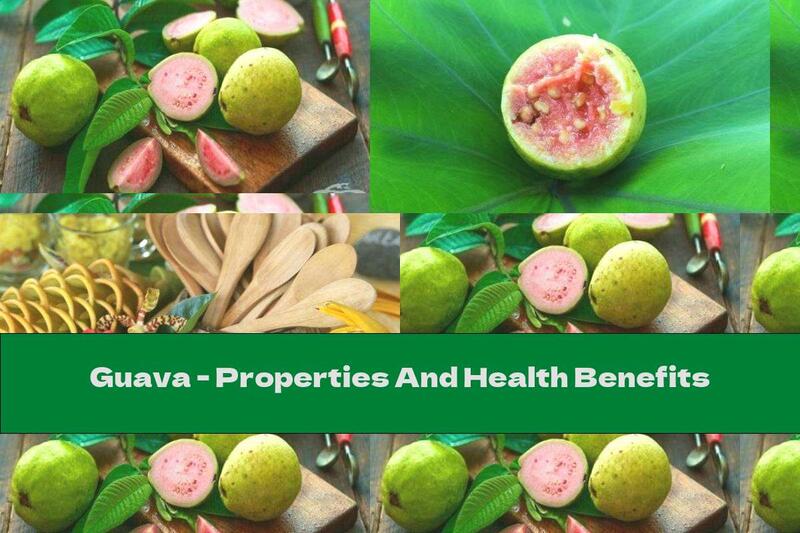
Guava is an exotic fruit that is not yet common in our country. The bark is dark green or yellow, and the inside is pink and dense, resembling a watermelon.
Not only fruits but also leaves have many healing properties - they are used for various teas and extracts.
The fruits are incredibly rich in vitamin C, potassium and fiber. So it is not surprising to say that guava has very good health benefits, that's what they are.
Composition of guava
Guava is a fruit with a rich vitamin composition. It contains B vitamins (B1, B2, B5), vitamin A, as well as a lot of vitamin C, which is higher in fruits with lighter skin. In 100 grams of the fleshy part of guava can contain from 70 to 1000 mg of ascorbic acid, which is several times more than its amount in oranges. Red fruits are characterized by a high content of beta-carotene. Guava also contains 15 times more vitamin P than citrus fruits. The healing and prophylactic properties of the fruit are due to the large amount of these vitamins in it.
In the soft part of guava there are vegetable fats, proteins, fiber, carbohydrates. The mineral composition is also rich: potassium, iron, calcium, sodium, phosphorus and others.
Useful properties of guava
Fruit lowers blood sugar, as evidenced by studies conducted on a group of people who regularly consumed the fruit. Leaf tea lowers blood sugar levels after meals.
The fruit is useful for those suffering from heart disease. Because it contains a lot of fiber, vitamin C and potassium, it removes bad cholesterol from the body, lowers high blood pressure, and these are the two factors that significantly increase the risk of stroke and heart attack. In a 12-week study, it was found that taking guava before meals lowers overall blood pressure by 8-9 points, and total cholesterol by nearly 10%, and an increase in the good by 8%.
Guava improves digestion, thanks to the fiber it has. One fruit contains 12% of the recommended daily amounts of fiber. Guava leaf extract helps get rid of diarrhea.
Ripe guava fruit is taken with the peel for better digestion.
Although the bark has a slightly bitter taste, it helps keep the heart healthy and is helpful in stabilizing blood pressure.
The fruit has pronounced antimicrobial, antibacterial and antispasmodic properties. The high content of vitamin C is the reason for its ability to strengthen the defenses, the lymphatic system and increase the tone of the whole organism. In fact, guava does have a lot of vitamin C, much more than in oranges, for example. Antimicrobial properties help to quickly get rid of colds and speed up healing.
In Europe, the fruit is defined as very useful for children and pregnant women. Guava not only perfectly restores strength, but also contributes to women's beauty and health. Guava also reduces malaise and relieves menstrual symptoms. Studies on nearly 200 women taking fruit leaf extract have reported significant pain relief.
Guava also gives us a better appearance of the skin, improving its health. Antioxidants protect the skin from damage and slow down the aging process. And the extract helps treat acne.
Guava fruits also have other health benefits:
- used as an aid in the treatment of inflammation of the throat, lungs, asthma and bronchitis;
- in India it is used as a means of combating seizures and epileptic seizures;
- Guava leaf tea is used:
- for the treatment of gastric disorders, dysentery, menstrual disorders;
- as a prophylaxis against vertigo.
- the leaves of the plant are chewed to eliminate toothache.
- Decoction of the leaves is taken for coughs, can be used in complex therapy of chronic respiratory diseases. Such a decoction fights inflammation and eliminates infections in the mouth and throat (by rinsing); used as a means of lowering body temperature; for the treatment of skin diseases.
Related Articles
- The Power of Honeysuckle: Health Benefits and Recipes
- The Ultimate Guide to Hickory Smoked Bacon in Nutrition and Healthy Eating
- Fruitskewers in Honey Syrup: Nutritional Benefits and Recipes
- The Ultimate Guide to Buffer 500 in Nutrition: Benefits and Usage
- Nutritional Benefits of Fruit Skewers in Honey Syrup: A Delicious and Healthy Recipe