How To Cook Forms For Baking - Characteristics And Types - Recipe
 Author: Nia Rouseberg
Time for reading: ~2
minutes
Last Updated:
August 08, 2022
Author: Nia Rouseberg
Time for reading: ~2
minutes
Last Updated:
August 08, 2022
CHAPTERS (Table Of Contents)
In this article, learn more about How To Cook Forms For Baking - Characteristics And Types - Recipe. Learn how to cook "Baking forms - characteristics and types". Delicious recipe..
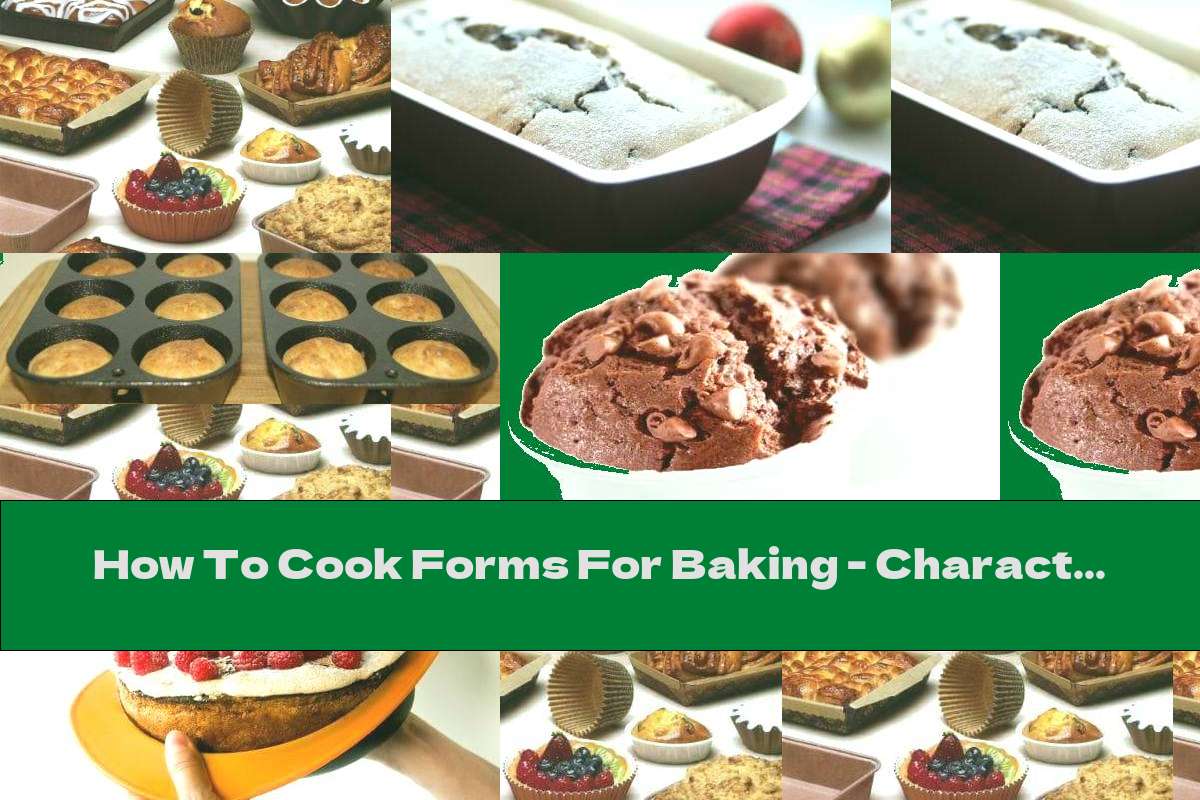
The variety of baking forms on the market can make you dizzy: all kinds of colors, a large selection of sizes, different materials. But what to choose to make the dishes and pastries delicious?
We will pay attention to the materials from which such dishes are made and the most characteristic properties, and we leave the judgment to you. We hope to be helpful in choosing the most suitable baking form.
We start with the fact that all the materials used to make such dishes are heat-resistant, of course. The difference between them is their resistance to mechanical damage and how safe they are for our health.
Teflon coated
These containers are preferred because of their non-stick properties and because a variety of options are available. Disadvantages: easily damaged by metal utensils or abrasives; in addition, such a coating is not suitable for too high temperatures (above 200 degrees).
Ceramic
Ceramic molds are suitable for baking on low heat: the clay is heated long enough and the dish is heated gradually, thanks to which it retains its nutrients. The shapes are beautiful in appearance and food can be served directly in them. The bad thing is that ceramic products break easily, clay pots are afraid of moisture - the liquid penetrates through the micro-cracks and destroys the ceramic inside. Porcelain and glazed products are much more durable. It should be noted that ceramics do not respond well to changes in temperature, so the products that are placed in such a vessel, it is good to be at room temperature and the vessel should not be placed in a hot oven.
Glass
Glass baking tins for beautiful and food can be served directly in them, as well as in ceramic dishes. The unpleasant thing, in this case, is that the glass versions lose their attractive appearance due to frequent use. But the good thing is that they keep the natural taste of the products and the dishes in them stay warm for a long time. Let's not forget that glass can be very sensitive to changes in temperature, so in no case should the hot dish be placed in cold water.
Silicone
Silicone molds have excellent non-stick properties, just smear with oil or oil before using for the first time, then this is not necessary. The pastries are easily removed from these dishes, they can be placed in the oven, in the microwave, but the silicone is afraid of open fire. The disadvantages include too soft and flexible structure, which does not allow the use of hard and abrasive agents and objects when washing, as well as the use of a knife to remove the contents from them, as the material will be damaged.
Made of foil or parchment
The shapes of foil or paper vary in size and type, are easy to use, and do not need to be washed after cooking the dish, as they are disposable. The unpleasant thing that can happen is the moment you decide to prepare something in such forms, it turns out that they are just over and you have to run to the store.
As you can see, there is no universal form of baking, so we advise you to get from different types (both in shape, size, and material), you will certainly need them someday.
Related Articles
- The Power of Honeysuckle: Health Benefits and Recipes
- Fruitskewers in Honey Syrup: Nutritional Benefits and Recipes
- Nutritional Benefits of Fruit Skewers in Honey Syrup: A Delicious and Healthy Recipe
- Nutrition Guide: Fruitskewers in Honey Syrup - Benefits, Recipes, and More
- The Role of Flour in Nutrition: Types, Benefits, and Recipes
Top Nutrition Articles Today
- . Steak Label
- . Hydrochloric Acid in Nutrition: Importance, Effects, and Sup...
- . The Role of Carbohydrates and Lipids in Nutrition: Importanc...
- . Eating 5 Meals A Day
- . The Truth About Potato Chips: Health Effects and Alternative...
- . Winter Nutrition: Importance, Key Nutrients, Diet Tips & Rec...
- . Breastfeeding A Baby With Low Blood Sugar
- . Understanding E476 in Nutrition: Benefits, Foods, Concerns,...
- . List of Foods that Contain Carrageenan: A Guide to Avoiding...
- . Nutrition In Urethritis (inflamed Urethra / Urethra)