Problems At Work? Even 1% Dehydration Can Impair Our Brain Functions
 Author: Maryam Ayres
Time for reading: ~2
minutes
Last Updated:
August 08, 2022
Author: Maryam Ayres
Time for reading: ~2
minutes
Last Updated:
August 08, 2022
CHAPTERS (Table Of Contents)
Prolonged dehydration slows down the functions of the brain, makes it difficult to coordinate, remember and process information
Prolonged dehydration slows down brain function,
makes it difficult to coordinate, remember and process information
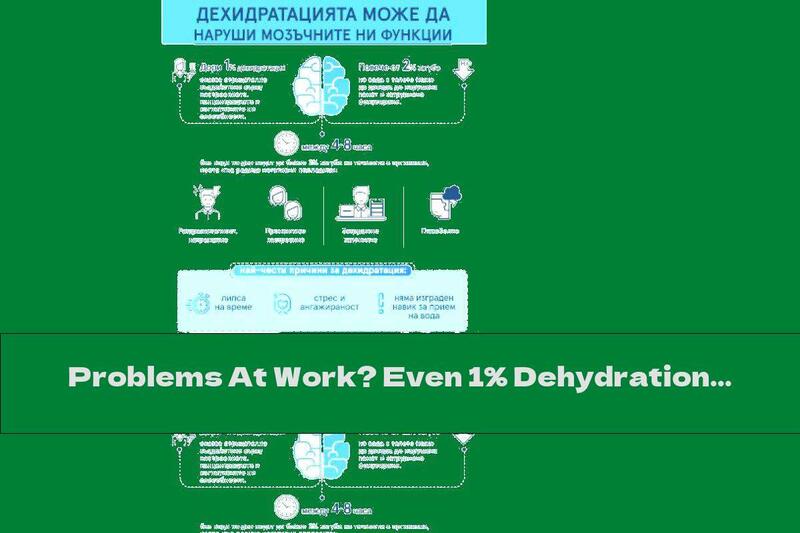
According to recent medical studies *, even 1% of dehydration has a negative effect on both mood and concentration and our ability to cope with daily tasks. More than 2% loss of water in the body can lead to impaired short-term memory, cause difficulty in focusing and coordinating work processes. If you have difficulty working, consider whether you drink enough water during the day. This can be key to your effective performance in the office.
By the time we feel thirsty, dehydration in the body has already occurred. Our body signals through a feeling of dry mouth, thirst and lack of energy. Between 4 to 8 hours without water a day leads to nearly 2% fluid loss in the body, which has a number of negative effects on our efficiency in the workplace. Prolonged dehydration makes it difficult to coordinate and process visual-spatial information, leads to irritability and tension, and can also cause headaches.
Among the most common causes of dehydration is lack of time or habit of water intake, stress, and commitment.
It turns out that in the absence of water in the body, the brain reacts not only through delayed reactions, but it is actually shrinking in volume. Examination of the gray matter and white matter volume of the brain before and after dehydration found that when the body was dehydrated, several areas decreased in volume, and a change in the volume of cerebrospinal fluid was also observed **. These changes are similar to those detected in a study of progressive Alzheimer's. This means that when we do not get enough water, our brain does not function at full capacity. That's why fluid intake throughout the day is critical to our efficiency and performance.
"Dehydration affects everyone, and maintaining proper hydration is just as important for those who work all day on the computer as it is for athletes who can lose up to 8% of their body weight as water." Lawrence E. Armstrong, one of the leading scientists in the study and an international expert on hydration ***.
The state of hydration can be easily traced by the color of urine. It should be very pale yellow if the body is well hydrated. Urine that is dark yellow or reddish shows a higher level of dehydration.
Proper hydration is especially important not only for high-risk groups such as the elderly (60+), people with diabetes, and young children but also for people who lead an active lifestyle and often forget to consume water in their daily lives. And it has a key role in the proper functioning of all processes in the body - to be healthy and fit all day!
Related Articles
- Understanding Emulsifier E471: Functions, Health Concerns, and Alternatives
- The Complete Guide to E 481 in Nutrition: Functions, Health Implications, and More
- E 340: Functions, Foods, Health Concerns, and Alternatives
- 10 Foods to Boost Brain Activity: Enhance Cognitive Function with These Nutrient-Rich Foods
- The Role of Water in Nutrition: Importance and Functions Explained
Top Nutrition Articles Today
- . Steak Label
- . THE EATING ORDER – FOOD SEQUENCE IS IMPORTANT
- . List of Foods that Contain Carrageenan: A Guide to Avoiding...
- . Nutrition and Albinism: Managing the Condition Through Diet
- . Understanding E476 in Nutrition: Benefits, Foods, Concerns,...
- . Diet for Fatty Liver and Alcohol-Induced: A Comprehensive Gu...
- . The Power of 100% Cocoa Dark Chocolate: Benefits and Uses
- . The Truth About Potato Chips: Health Effects and Alternative...
- . Nutrition and Aneurysm: Reducing Risk Factors and Supporting...
- . Hydrochloric Acid in Nutrition: Importance, Effects, and Sup...