Rhubarb (stems) - Nutrition
 Author: Marko Balašević
Time for reading: ~4
minutes
Last Updated:
August 08, 2022
Author: Marko Balašević
Time for reading: ~4
minutes
Last Updated:
August 08, 2022
CHAPTERS (Table Of Contents)
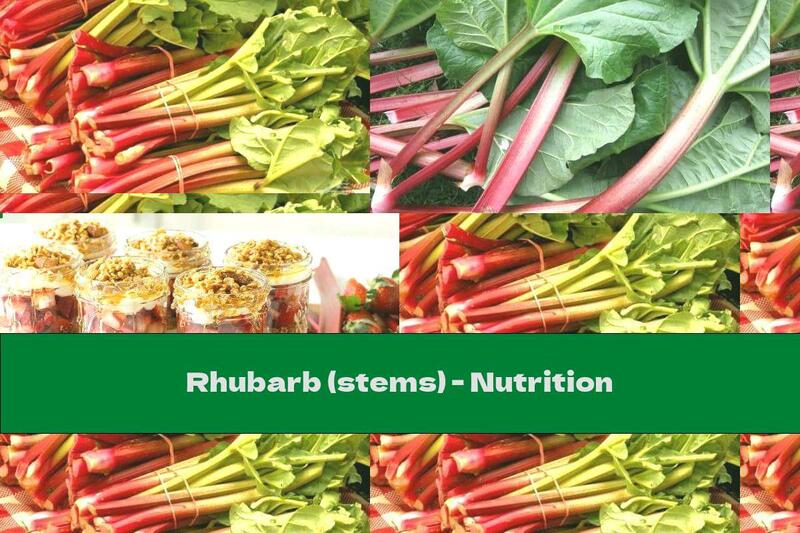
Rhubarb is a vegetable known for its sour taste and stems, which vary in color from red to pink or pale green and have a celery-like texture. Due to its sour taste, it is rarely eaten raw.
Rhubarb is a vegetable known for its sour taste and thick stems, which are usually cooked with sugar. The stems vary in color from red to pink and pale green and have a celery-like texture. This vegetable needs cold weather to grow, which is why it is found mainly in mountainous areas around the world, especially in Northeast Asia. A common garden plant is in North America and Northern Europe. Growing rhubarb in the dark makes it less sour and more brittle.
Rhubarb is an unusual vegetable, it is very sour and slightly sweet, which is why it is easily confused with fruit. It is officially classified as a fruit by the US Department of Agriculture. Due to its sour taste, it is rarely eaten raw, consuming only the stems most often in sweet soups, jams, sauces, pies, tartlets, cocktails and rhubarb wine. Because sweet rhubarb pies are a traditional dessert in the United Kingdom and North America, this vegetable is sometimes called the "pie plant." Apart from being very useful, it is also the basis of various delicious and not very sweet dishes.
It was not until the 18th century, when sugar became cheap and readily available, that rhubarb became a popular food. Previously, it was used mainly as a medicine. In fact, its dried roots have been used in traditional Chinese medicine for thousands of years.
Nutritional value
Rhubarb is not very rich in important nutrients and contains few calories. However, it is a very good source of vitamin K1, providing about 26-37% of the daily requirement in a 100 gram serving depending on whether it is cooked.
Like other fruits and vegetables, rhubarb is also high in fiber, providing similar amounts as oranges, apples or celery.
In 100 grams of cooked rhubarb with added sugar there are:
- 116 calories;
- 31.2 grams of carbohydrates;
- 2 grams of fiber;
- 0.4 grams of protein;
- Vitamin K1 - 26% of the daily requirement *;
- Calcium - 15% *;
- Vitamin C - 6% *;
- Potassium - 3% *;
- Folic acid - 1%.
Rhubarb contains a large amount of calcium, which unfortunately cannot be fully absorbed by the body. It is mainly in the form of calcium oxalate. In this form, the human body cannot absorb it effectively.
In addition, there is also rutin in vegetables; sugars (up to 2%); pectin substances; malic and other organic acids (2.3%); Vitamins C, A, B; mineral salts of calcium, magnesium and phosphorus. In general, rhubarb consists of water (95%). It is not a caloric product.
Health benefits
Rhubarb stems are a good source of fiber, which lowers cholesterol levels. Rhubarb is also a rich source of antioxidants, such as anthocyanins, which are responsible for its red color. The content of proanthocyanidins, also known as condensed tannins, is also high. These antioxidants are responsible for some of the health benefits of fruits, red wine and cocoa.
Rhubarb is probably the most acidic vegetable that exists. Its acidity is mainly due to its high levels of malic and oxalic acid. Malic acid is one of the most common acids in plants and contributes to the sour taste of many fruits and vegetables.
Use of rhubarb as:- laxative (with prolonged use, its laxative effect is reduced because the body gets used to it, so with regular constipation, it should be alternated with other products and means)
- tonic for anemia and tuberculosis, sclerosis and arthritis
Rhubarb has a positive effect on the gastrointestinal tract, helps the work of the respiratory organs. It accelerates the regeneration of the skin and the recovery of the body after illness. In addition, it reduces the risk of developing pneumonia and increases the body's resistance to various diseases. This plant has an extremely good effect on the cardiovascular system, preventing the development of heart attack and ischemic stroke.
Rhubarb roots are successfully used in various inflammatory diseases, for example: arthritis, rheumatism, pneumonia, bronchitis, furunculosis, psoriasis, cholecystitis.
How is it consumed?
Rhubarb can be consumed in many ways. It is usually used in jams and desserts that contain a lot of added sugar. It can be easily added to recipes with low or no sugar.
Contraindications
The use of rhubarb in large quantities is not recommended in acute inflammatory processes of the gastrointestinal tract, bleeding hemorrhoids (especially in the elderly), diabetes, gout, rheumatism, pregnancy; also, of those suffering from kidney disease with oxalate stones.
Rhubarb is one of the richest sources of calcium oxalate - the most common form of oxalic acid in plants. Levels of this acid increase from spring to summer, so it is not recommended to pick rhubarb in late June. Oxalic acid is especially abundant in the leaves, but depending on the variety it can be found in larger quantities in the stems.
Too much calcium oxalate can lead to hyperoxaluria - a serious condition characterized by the accumulation of calcium oxalate crystals in various organs. These crystals can form kidney stones. Prolonged hyperoxaluria can lead to renal failure.
Not every organism reacts to oxalate in the same way. Some people are genetically predisposed to oxalate-related health problems. Vitamin B6 deficiency and high vitamin C intake can increase the risk. Studies suggest that it affects more people who do not have certain beneficial bacteria in their gut. Some bacteria, such as Oxalobacter formigenes, break down and neutralize oxalates.
Although rhubarb poisoning is rare, it should be consumed in moderation and the leaves should not be eaten. When cooking vegetables, the oxalate content is reduced by 30% to 87%.
Related Articles
- The Ultimate Guide to Hickory Smoked Bacon in Nutrition and Healthy Eating
- Fruitskewers in Honey Syrup: Nutritional Benefits and Recipes
- The Ultimate Guide to Buffer 500 in Nutrition: Benefits and Usage
- Nutritional Benefits of Fruit Skewers in Honey Syrup: A Delicious and Healthy Recipe
- Nutrition Guide: Fruitskewers in Honey Syrup - Benefits, Recipes, and More
Top Nutrition Articles Today
- . Foods Containing Carrageenan: A Comprehensive Guide for Your...
- . Foods For A Regular Stomach
- . The Truth About Potato Chips: Health Effects and Alternative...
- . The Importance of Carotene in Nutrition: A Complete Guide
- . Medicinal Drinks For Colds
- . The Nutritional Benefits of Figs: A Fiber-Rich Fruit Packed...
- . How To Cook Pork Liver And Mushrooms In Cream Sauce With Che...
- . Camel Meat
- . List of Foods that Contain Carrageenan: A Guide to Avoiding...
- . The Ultimate Guide to Creating a Well-Structured Diet Plan f...