What Does Breast Milk Contain?
 Author: Alexander Bruni
Time for reading: ~7
minutes
Last Updated:
August 08, 2022
Author: Alexander Bruni
Time for reading: ~7
minutes
Last Updated:
August 08, 2022
CHAPTERS (Table Of Contents)
Breast milk is the perfect combination of fats, proteins, vitamins, minerals and carbohydrates. There is nothing better than it for your baby's health.
What is in the milk depends on the mother who produces it and the baby for which it is intended. The most wonderful quality of breast milk is the way it changes to meet the needs of the baby as it grows. The mother's milk produced for a premature baby differs from the milk for a full-term newborn, as well as for a child of 6 (and more) months. But each contains the nutritional and protective components needed for the baby according to his age.
The fact is, however, that a number of factors influence milk production:
- the mother's diet;
- the amount of fluids taken by the mother;
- physical activity (exercise, fitness);
- how often and for how long the baby is fed;
- the age of the baby.
The World Health Organization and the American Academy of Pediatrics (AAP) strongly recommend exclusive breastfeeding during the first six months of a newborn's life. It is also recommended that breastfeeding continue for at least 12 months. This is good for both babies and mothers. Children are more protected from infections and the risk of later health problems, including diabetes, obesity and asthma, is reduced.
The benefits of breastfeeding in the mother are that it helps to contract (shrink) the uterus and make the bleeding go away faster after birth. It can reduce the risk of breast and ovarian cancer, and also provides a great way for mothers to be in close contact with their babies.
The benefits of breastfeeding are numerous. Breast milk is ultimately the best source of food for the newborn. Many components in breast milk help protect your baby from infections and diseases. It is also much easier to digest, unlike the adapted formula or cow's milk.
Colostrum - this is the first milk that the breast produces after birth (you may have noticed drops of colostrum on your nipples in the last weeks of pregnancy). This fluid is pale yellow in color and is filled with high amounts of antibodies - which is why some people call it the baby's first immunization. Colostrum has a higher content of minerals, vitamins, white blood cells, protein, antibodies and less fat and sugar than mature milk. It also has a laxative effect and helps the newborn to defecate for the first time (waste product accumulated before birth). And although colostrum is produced in very small quantities, it is full of nutrients and protective components.
Mature milk- begins to be secreted approximately two to four days after the baby is born and depending on how often and for how long you breastfeed in the first hours and days after birth. It is produced in large quantities, unlike colostrum. In the beginning, in some mothers it is in too large quantities, until it begins to adjust according to the demand of the baby. Mature milk contains water, carbohydrates, fats, proteins, amino acids, vitamins and minerals, enzymes and white blood cells (leukocytes). During the feeding in its individual feeds the milk changes - in the beginning flows the so-called. front milk (high in water and lactose) and at the end - back milk (high in fat and calories). After the first few weeks, breast milk will contain fewer white blood cells and more levels than any other antibacterial enzyme (lysozyme).
Breast milk components
WaterBreast milk is more than 80% water, especially the breast milk that the baby drinks at each feeding. Therefore, when the mother thinks that her baby is thirsty, she can breastfeed him. This will quench your thirst, continue to protect your baby from infections and help him develop well. Babies do not need water before they are 6 months old, even in hot climates. This is one of the reasons why the World Health Organization recommends that children be exclusively breastfed for the first 6 months of life.
ProteinsIn breast milk, they are of two types - whey protein approximately 60% and 40% casein. This ratio allows for quick and easy absorption of breast milk. Due to the higher casein content in some formulas, they are more difficult for the baby to digest. Approximately 60-80% of the total amount of protein in human milk is whey protein. But in addition to it, breast milk contains other specific proteins such as:
- Lactoferrin
It inhibits (inhibits) the growth of iron-dependent bacteria in the gastrointestinal tract. This prevents some organisms (such as coliforms and yeasts) that need iron for their development.
- Imunoglobulin A (IgA)
Helps protect against viral and bacterial infections and possible allergies. In addition to this immunoglobulin, breast milk contains others (IgG and IgM), which also have an effect in the fight against infections. In order to increase the amount of immunoglobulins in breast milk, it is good for the mother to consume fish more often.
FatBreast milk also contains fats, which are essential for your baby's health. They are a major source of calories and are necessary for brain development and absorption of fat-soluble vitamins. Nerve cells in babies are coated with a substance called myelin, which helps transmit messages to other nerve cells in the brain and body. In order to develop high-quality myelin, the body needs certain types of fatty acids - linoleic and linolenic, which are found in large quantities in human milk. Usually, fat levels are low at the beginning of a meal and high at the end. The amount of fat in breast milk is constantly changing. Longer intervals between meals lead to a reduction in milk fat. This fact is one of the reasons why a strict 3-4 hour diet is biologically incorrect.
Vitamins and mineralsThe amount and type of vitamins and minerals in breast milk is directly related to the intake of such by the mother. That is why it is extremely important for her to eat adequately and to take the necessary amount, both during pregnancy and during breastfeeding. Advice from doctors and breastfeeding consultants will be in this direction. Fat-soluble (A, D, E, and K) and water-soluble (C, riboflavin, niacin, and pantothenic acid) vitamins are vital to children's health.
CarbohydratesLactose is the main carbohydrate in breast milk. It represents approximately 40% of the total calories provided with it. It helps reduce the amount of harmful bacteria in the stomach (which improves the absorption of calcium, phosphorus and magnesium), promotes the growth of beneficial and fights disease.
Composition of some of the essential nutrients found in breast milk
|
Component |
Mean values in mature milk (100 ml) |
|
Energy ( kJ ) |
280 |
|
Energy ( kcal ) |
67 |
|
Protein (g) |
1.3 |
|
Fat (g) |
4.2 |
|
Carbohydrates (g) |
7.0 |
|
Sodium (mg) |
15 |
|
Calcium (mg) |
35 |
|
Phosphorus (mg) |
15 |
|
Iron ( µg ) |
76 |
|
Vitamin A ( µg) |
60 |
|
Vitamin C (mg) |
3.8 |
|
Vitamin D ( µg ) |
0.01 |
What else is in breast milk?
Breast milk also contains important non-nutritional components - antimicrobial factors, digestive enzymes, hormones and growth factors, which are important for passive protection against infections and immune-mediated diseases, and also modulate the development of the immune system.
LysozymeAn enzyme that supports the growth of the intestinal flora, has anti-inflammatory functions and protects the baby from bacteria such as E. Coli and Salmonella.
Bifidus factorSupports the growth of lactobacilli (Lactobacillus). These are a group of beneficial bacteria that protect the infant from harmful bacteria by creating an acidic environment in which they cannot survive.
Each year, medical articles describe more valuable substances found in human milk. Scientists are just beginning to study other factors in breast milk that may be important for the growth and development of the baby. For example:
- enzymes other than lipase;
- epidermal growth factor, present in breast milk in significant amounts, which may promote the development of tissues in the digestive tract and elsewhere;
- other hormones in breast milk that affect the baby's metabolism, growth and physiology.
The effects may be subtle, but they can also have lasting effects. Science is at the very beginning of research and we will soon learn what the benefits really are.
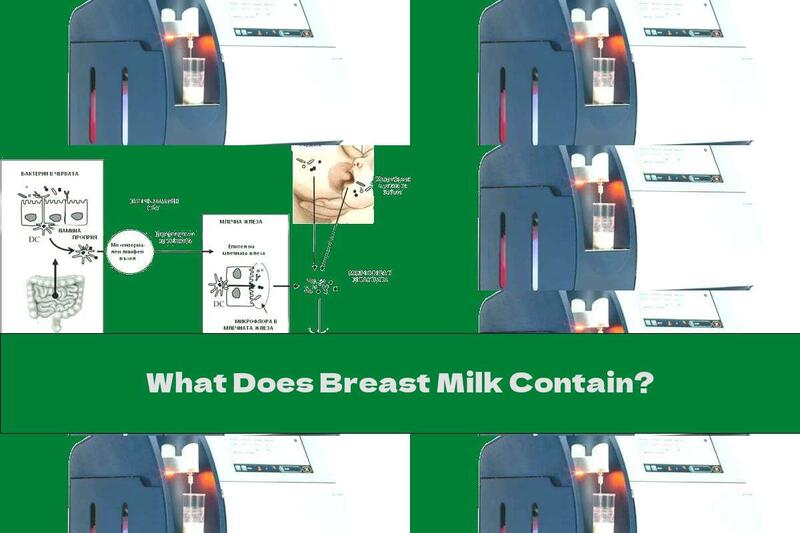
BacteriaIn August 2013, Swiss researchers published a study in the journal Environmental Microbiology, which found that the intestinal flora, which protects against gastrointestinal disorders and promotes good digestion, travels from the mother's intestines through breast milk into the baby's digestive system. The researchers found strains of several types of beneficial bacteria in breast milk and in mothers and in the feces of babies.
Stem cells
Stem cells were first identified in breast milk in 2007. The findings presented at the National Symposium in Support of Breastfeeding in London in October 2014 show that stem cells in breast milk actually play a role in the development of a number of organs, including the brain, pancreas, liver, spleen and kidneys. Many of them integrate into the body and become functional cells.
These results, as well as the demonstrated role of stem cells in the development of the baby, show that they can be useful in therapeutic applications.
Breast milk is best for your baby
Breast milk is the perfect combination of fats, proteins, vitamins, minerals and carbohydrates. There is nothing better than it for your child's health. In the breast there are living cells (leukocytes) that fight infections. Together with more antibodies, enzymes and hormones, they make it the perfect food. These extremely useful protective components cannot be added to formulas.
Although there are reasons why some women are unable to breastfeed, many others, for unexplained reasons, also believe that they cannot. Therefore, in case of difficulties, seek help from breastfeeding consultants. They will support, advise and provide the necessary information. For those who are really unable to breastfeed, breast milk banks can be a good alternative.
Related Articles
- The Power of Milk: Nutritional Benefits for Health and Wellness
- The Ultimate Guide to Milk Powder in Nutrition: Benefits, Recipes, and More
- The Ultimate Guide to Shaken Espresso Oatmilk: Benefits and Recipe
- The Importance of Breast Milk Color in Nutrition: Understanding Nutritional Insights
- Nutritional Benefits of Cow Milk: Importance of Calcium, Vitamins, and Protein