Why Should Magnesium Appear On The Plate?
 Author: Nia Rouseberg
Time for reading: ~2
minutes
Last Updated:
August 08, 2022
Author: Nia Rouseberg
Time for reading: ~2
minutes
Last Updated:
August 08, 2022
CHAPTERS (Table Of Contents)
Magnesium is valuable no less than the famous calcium and the popular vitamin D.
Why do we need magnesium and it is mentioned more and more often among the obligatory essential minerals? Magnesium is important for many processes in the body, which is also true for many other vitamins and trace elements. Including involved in the construction of proteins, bones and DNA. In addition, magnesium is important for the regulation of muscle and nerve function, blood sugar and blood pressure.
Magnesium is involved in over 600 metabolic processes in the body , which means that its deficiency negatively reflects on a number of basic functions, from protein synthesis to energy production.
There is evidence that adherence to a magnesium-poor diet increases the risk of developing type 2 diabetes . This is due to the involvement of the element in the control of blood sugar, which prevents the risk of the associated loss of insulin sensitivity. Unexpectedly, magnesium is a mineral that helps prevent osteoporosis and is no less necessary than the well-known calcium and recently popular vitamin D.
The need for magnesium for women is about 100 milligrams less than for men. Ladies should get between 310-320 mg with the daily menu, gentlemen - 400 - 420 mg.
In children, of course, the needs are different and vary from the age of 30 mg in the first six months to 240 mg for 9-13 years of age.
While for boys after 14 years the needs for magnesium are close to those of older men - 410 mg, for girls from 14 to 19 years they are the highest and amount to 360 mg. Its needs are increased during pregnancy and lactation.
What else do we need to know?
Curiously, chronic stress "spends" magnesium in our body and therefore its intake during a stressful period should not just be necessarily provided, but probably a little higher. Magnesium requirements are also higher with alcohol abuse and the intake of certain medications , such as diuretics, blood pressure medications , and proton pump inhibitors used in gastroesophageal reflux disease and heartburn.
In recent decades, it has been found that the population is massively deficient in magnesium, which ultimately has adverse health consequences. There may be at least a few reasons for this. One is that the absorption of magnesium is impaired by a predominant diet of calcium- rich diets .
Which foods are rich in magnesium?
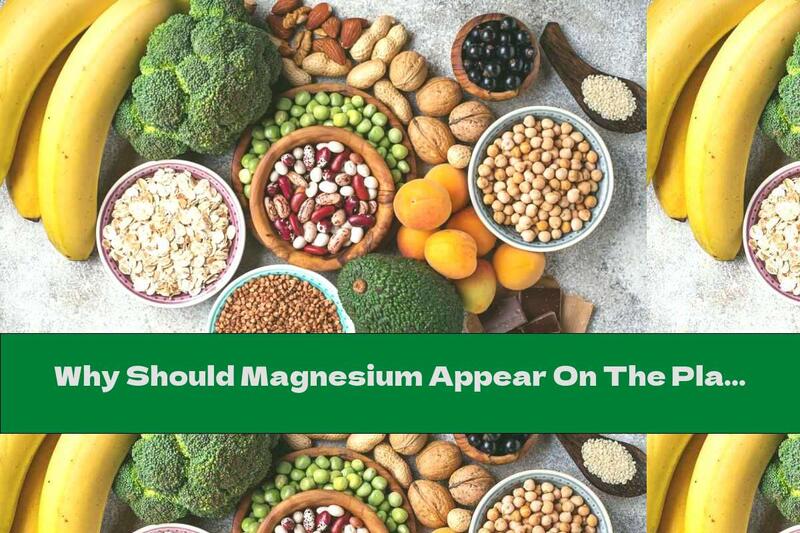
For example: legumes, including chickpeas, nuts, seeds, whole grains, green leafy vegetables, milk and dairy products, oily cold-water fish - mackerel.
Based on material by Elaine K. Howley, published in US News Health
Related Articles
- The Ultimate Guide to Magnesium Chloride in Nutrition: Benefits, Sources, and Recipes
- The Ultimate Guide to Magnesium Carbonate in Nutrition
- The Essential Minerals: Potassium, Magnesium, and Sodium in Your Diet
- The Ultimate Guide to Magnesium Chloride in Nutrition: Sources, Benefits, and Recipes
- The Ultimate Guide to Magnesium Chloride in Nutrition: Sources, Benefits, Supplements, Recipes
Top Nutrition Articles Today
- . Diet After Surgery Of The Small And Large Intestine
- . The Importance of Food Labels in Nutrition: A Comprehensive...
- . Jam For Breakfast To Lose Weight? Why Not?
- . How To Reduce Appetite
- . The Role of Sodium Bicarbonate in Nutrition: Benefits and Us...
- . Diet to Lower Cholesterol and Triglycerides: A Comprehensive...
- . The Role of Sodium in Soups: Impact on Health and Tips for H...
- . The Ultimate Guide to Creating a Well-Structured Diet Plan f...
- . THE EATING ORDER – FOOD SEQUENCE IS IMPORTANT
- . Crohn Pain And Ulcerative Colitis