Constipation In Breastfed Babies
 Author: Ivan Red Jr.
Time for reading: ~7
minutes
Last Updated:
August 08, 2022
Author: Ivan Red Jr.
Time for reading: ~7
minutes
Last Updated:
August 08, 2022
CHAPTERS (Table Of Contents)
Constipation can indicate a serious health problem in infants, so it is important to diagnose and treat it.
A valuable indicator of a baby's well-being is the amount and frequency of wet diapers and bowel movements.
Reducing the frequency of bowel movements in babies is considered by parents as a signal of constipation and with that the worries begin. The good news, however, is that exclusively breastfed babies rarely suffer from constipation - even when their bowel movements suddenly stop for an extended period of time.
Constipation can indicate a serious health problem in infants, so it is important to diagnose and treat it.
What exactly is constipation?
Constipation (constipation) is a thickening of the stool, which leads to severe difficulty in defecation, rather than a change in the number of bowel movements. The stools are small, dry and hard.
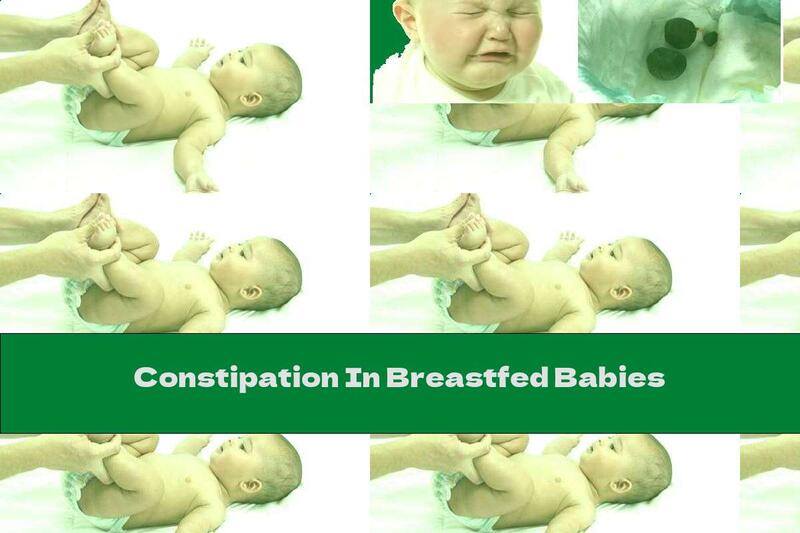
Babies with constipation experience pain during defecation, their faces turn red from straining, they bend their legs to their stomachs and cry.
The frequency of defecation in breastfed babies has long been a misunderstood aspect. In some cases, more frequent bowel movements and softer stool consistency are mistaken for diarrhea and treated as such, and normal-looking stools and infrequent bowel movements are mistaken for constipation.
For years, breastfeeding support associations (La Leche League and other supporters) have been spreading information about different types of stools in healthy babies to reassure worried parents and protect infants from unnecessary interventions. And there is still a need for this to continue!
Generally speaking, newborns pass stools several times a day and their stools have a soft, grainy consistency - if they are breastfed. Artificially fed feces are less frequent and their stools are harder. But there are children who, regardless of their diet, defecate once every few days.
As long as the faeces are easily excreted and do not cause discomfort, the condition is not considered constipation!
Why not worry?
According to La Leche League, the number of bowel movements in breastfed babies can drop dramatically at around 6 weeks of age and they may even be absent within a week or two. This is due to the fact that breast milk is optimally formulated for the needs of the child and he fully absorbs it - therefore there is nothing to get out. In addition, colostrum has already become mature milk during this period, and the baby must learn to pass stool without the help of its laxative effects.
If after the sixth week your baby looks happy, gains weight, urinates normally and passes soft stools, although rare in frequency - it is unlikely to have constipation.
What are the signs of constipation:
- defecation of dry and hard stools;
- abdominal pain and contraction of the legs to the stomach, accompanied by crying;
- sometimes the presence of blood in them is possible;
- the baby may start vomiting.
What could be the real causes of constipation?
DehydrationThis is the most common reason. Decreased urine output, dry mouth in the baby's mouth, sunken eyeballs are signs of dehydration. Usually, while the baby is about 6 weeks old, the mother's breast milk is 90% water. So, more frequent placement of the baby on the breast hydrates him. While small extra amounts of water are safe for infants, larger ones are unnecessary and can cause electrolyte imbalance.
Changes in the baby's dietInclude formula, other liquids or solid foods. Foods that can cause constipation include: bananas, apples, rice, cereals, carrots, zucchini, cow's milk.
Food allergiesFoods consumed by breastfeeding mothers can lead to allergic reactions and sometimes constipation in babies.
Congenital diseasesIn rare cases, constipation can be caused by a small rectal opening. Hirschsprung's disease can also be a probable cause of constipation.
Other health problemsPhysical health problem or emotional-mental temporary illness.
What to do if the baby really has constipation?
- breastfeed more often - breast milk is a natural laxative;
- offer juices - if the baby is over 4 months, you can offer him small amounts of pear, peach, plum or apple juice;
- try warm water baths while the child is trying to defecate. They would help him relax;
- massage the abdomen - you can do it through the clothes, but it is better to use a little baby oil and massage directly on the skin. Your warmth and skin contact can be very helpful. Put a small drop of oil in your hands and rub to warm. Then place your palms on your abdomen and massage clockwise in a circular motion. You can also move your legs in a circular motion. This is especially useful for children with constipation.
If the above doesn't help, you can mix half a teaspoon of unprocessed bran in your baby's diet twice a day for babies over 4 months.
Another thing you could try with 1 teaspoon of corn syrup in 2 g of water. It is an effective laxative, but should only be used if the baby has severe constipation and after you have tried all other possible ways.
When defecation has started but the baby has difficulty passing stools, you can apply a small amount of Vaseline to the inside of the anus to help.
In case of repeated constipation, seek medical attention.
Appearance of feces
The first few daysNewborns in the first days after birth pass dark, resinous stools called meconium (these are the waste products that are stored in the intestines during pregnancy). Within a few days, the baby clears the meconium and the stools become softer and much lighter (usually yellow, yellow-green or yellow-brown). It is not uncommon for faeces to be green. However, their smell should be light and not very pleasant. Their density can be described as cream, pea soup or scrambled eggs. Small solid particles are often seen in the stool.
The first six weeksAfter the first few days, most babies have between two and five bowel movements a day until they are about 6 weeks old. This does not mean that if there is only one bowel movement, there is a problem, as long as the child has a sufficient number of wet diapers, everything is fine. It's just that the stools that are excreted will be in a larger volume. During this period, the stool is a brownish smooth substance with a slight odor. The frequency with which the baby is breastfed will speed up the process of changing the color of the stool. If the faeces are watery, this indicates that the baby is consuming more front and less back milk, so it is a good idea to adjust the breastfeeding posture so that the baby can also receive back milk.
In six weeksIt is normal for bowel movements to decrease in frequency when colostrum (which has laxative properties) is already depleted after about six weeks of age. Babies at this age may continue to defecate five times a day or even after each breastfeeding, but it is also normal to do so once every few days. Some healthy babies even defecate once a week. When the frequency of bowel movements is so low, the amount of faeces should be more abundant.
As long as the baby is gaining weight well, urinating normally, looking happy and satisfied, there is no reason to worry about the infrequent frequency of bowel movements and there is no need to give the baby a laxative, fruit juice or other alternatives.
In fact, trying to induce defecation can have adverse consequences for the child.
Some mothers will probably ask how to assess whether the child is urinating normally. Once the baby is over six weeks old, he can have 5-6 wet diapers a day. As the baby's bladder grows rapidly, it produces and retains more urine. To assess how wet an older baby's diaper is, pour 8 tablespoons (about 120 ml) of water over it. This can give you an idea of the weight that wet diapers should have.
Once the baby is fed solid foods and other liquids, you will notice many changes in the appearance of the stool (color, texture, smell) and the frequency of his bowel movements. The excreted faeces will have a stronger odor, different color and texture. It is normal to notice even pieces of vegetables in the diaper (because even when cooked they are more difficult to process). It is now really possible for a child to get constipation or diarrhea, which is a sign of poor tolerance to the new food or juice.
Top Nutrition Articles Today
- . The Complete Guide to E120i in Nutrition: Origin, Health Con...
- . How To Cook Beets So That They Do Not Lose Color
- . The Complete Guide to E150a: Safety, Health Effects, and Alt...
- . List of Foods that Contain Carrageenan: A Guide to Avoiding...
- . The Health Benefits of Nori: A Nutritious Seaweed for Thyroi...
- . The Nutritional Benefits of Raisins for Brain Health
- . The Ultimate Guide to Emulsifier E481 in Nutrition and Cooki...
- . The Truth About Disodium Inosinate: Uses, Safety, and Altern...
- . The Role of Lectins in Nutrition: Positive and Negative Effe...
- . All You Need to Know About E635: Uses, Safety, and Health Im...