E226 - Calcium Sulphite
 Author: Karen Lennox
Time for reading: ~1
minutes
Last Updated:
August 08, 2022
Author: Karen Lennox
Time for reading: ~1
minutes
Last Updated:
August 08, 2022
CHAPTERS (Table Of Contents)
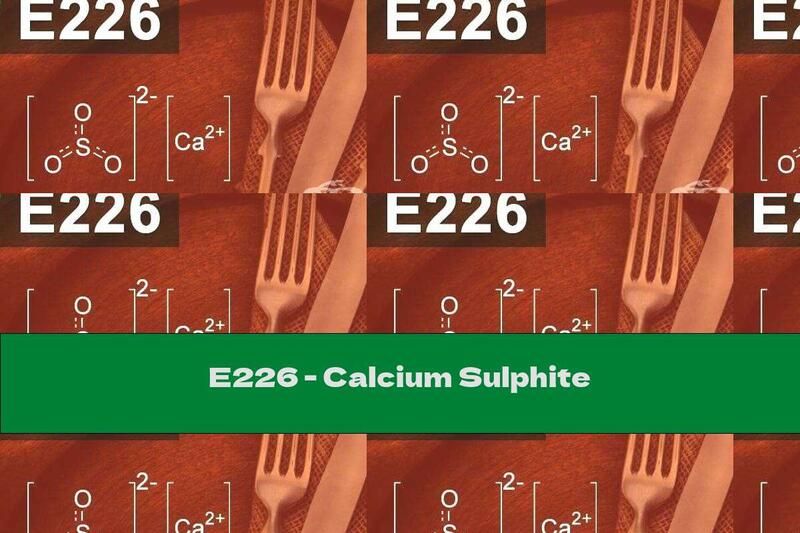
Characteristic: Food additive E 226 is a crystalline unstable white powder that reacts with oxygen to convert it to calcium sulfate. For example, in an acidic environment from it
Characteristic
Food additive E 226 is a crystalline unstable white powder that reacts with oxygen to convert to calcium sulfate. For example, in an acidic environment, sulfuric acid is obtained from it, which is used as a preservative.
E 226 does not dissolve well in water, reacts to acids and many other sulfites, releasing water and sulfur dioxide.
Calcium sulphite is chemically produced by passing sulfur dioxide through an aqueous suspension of calcium carbonate. As a result of this reaction, calcium hydro sulfite is obtained, which, when continuously evaporated to complete drying, gives the final product - calcium sulfite. In the finished form it is characterized by a faint odor of sulfur dioxide.
Food additive E 226 stops the growth of fungi and bacteria in food, is a disinfectant, belongs to the group of antioxidants and preservatives and is a medium-hazardous supplement.
Use
Because the chemical additive E 226 contains calcium, it is often added to canned vegetables and fruits to give firmness to plant fibers. It can be used in the production of sugar as a bleaching agent. It is actively used in the making of the following products: jam, marmalade, jelly, ice cream, low-sugar jam, dried fruits and semi-finished products. Calcium sulfite is used to prevent darkening of natural products, add it to grated horseradish, garlic, potatoes. E 226 can be used in the preparation of beer, wine, soft drinks, fruit juices, in the freezing of cephalopods and crustaceans.
Impact on humans
The preservative E 226 does not have a beneficial effect on human health, especially for asthmatics and allergic people, it causes severe allergic reactions. The substance can seriously affect the kidneys, cause disorders of the gastrointestinal tract.
Related Articles
- The Ultimate Guide to Calcium Carbonate in Nutrition
- Nutritional Benefits of Cow Milk: Importance of Calcium, Vitamins, and Protein
- Nutritional Benefits of Cottage Cheese: Protein, Calcium, and More
- The Ultimate Guide to Calcium Lactate in Nutrition: Benefits, Sources, and Recipes
- The Power of Calcium Lactate: Benefits for Nutrition