E321 - Butylated Hydroxy-toluene (BHT)
 Author: Victoria Aly
Time for reading: ~1
minutes
Last Updated:
January 27, 2026
Author: Victoria Aly
Time for reading: ~1
minutes
Last Updated:
January 27, 2026
CHAPTERS (Table Of Contents)
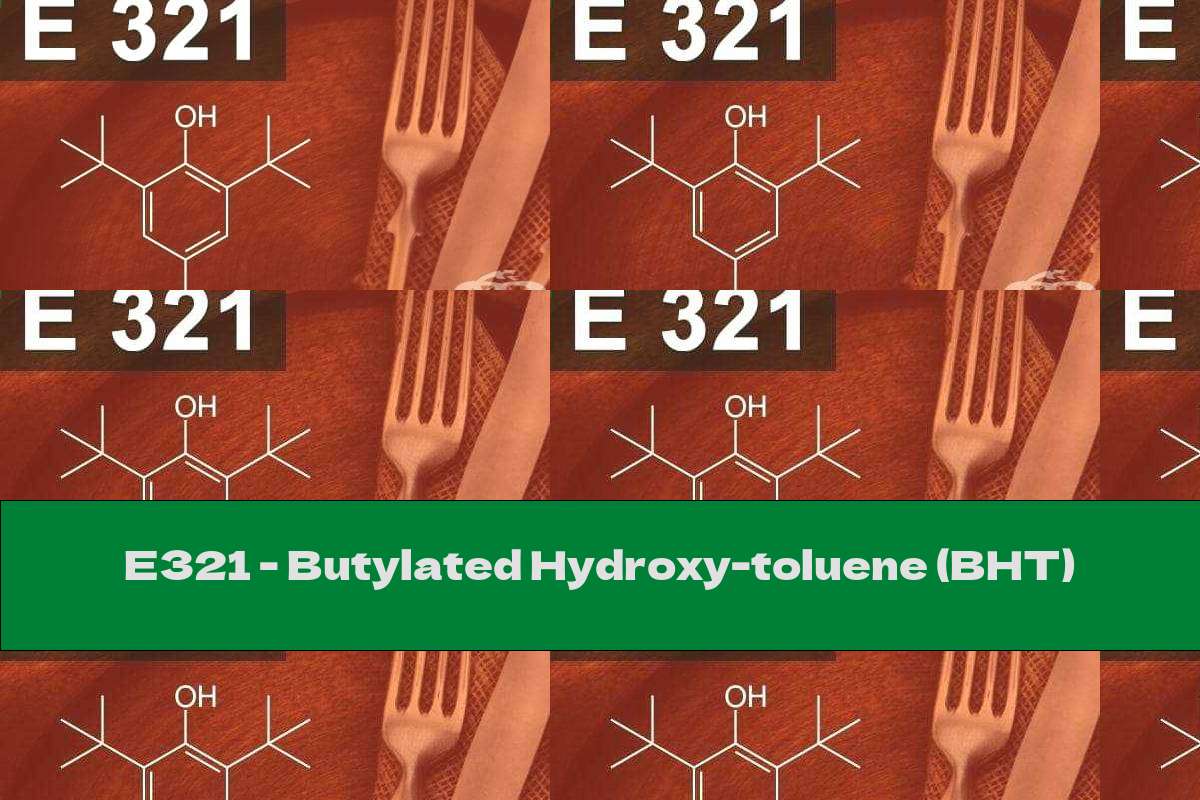
E 321 is a dietary supplement, a synthetic analogue of vitamin E. It is used as an antioxidant. It is a white crystalline powder with a very faint odor. It does not dissolve in water and glycerin, but in fats, acetone, alcohol and oils.
Characteristic
E 321 is a dietary supplement, a synthetic analogue of vitamin E. It is used as an antioxidant, whose properties appear due to stopping the self-oxidation of organic compounds, unsaturated with oxygen and other peroxide radicals. In appearance it is a white crystalline powder with a very faint odor that is insoluble in water and glycerin, perfectly soluble in fats and acetone, medium solubility in alcohol and oils. E 321 is obtained by the chemical reaction of paracresol with isobutylene. The process is catalyzed by sulfuric acid.
Use
Butyl hydroxy toluene is used as an antioxidant in food, medicines, cosmetics, fuels (reactive), rubber, petroleum products and transformer oils. It is widely used in medicine as an anti-inflammatory agent against burns (external). In the past, it has been used successfully to treat various lesions of the mucous membranes and skin, including cancer.
Food additive E 321 is found in biscuits; in vegetable and melted oils used for frying; in beef and lamb tallow, in the fats of fish and poultry; in the gum.
Impact on humans
Nutritional supplement E 321 is a carcinogen that can cause cancer. It is believed that in combination with vitamin C and L-lysine, it has an antiviral effect. The allowable daily dose that a person can take is 0.125 mg / kg body weight. But the substance should not be used for a long time, because it can lead to health problems.
As early as 1970, the E 321 was replaced by the E 320 in many countries around the world. The reason for this is the increased risk of developing cancer and hyperactivity in children. To date, this issue is being discussed.
- E320 Butyl hydroxy anisole (BHA)
- E319 Tert-Butyl Hydro Quinol (TBHQ)
- E464 Hydroxy propyl methyl cellulose
- E218 Methyl p-hydroxy benzoate
Related Articles
- The Role of E321 in Nutrition: Benefits, Controversies, and Safety
- The Ultimate Guide to E317 (BHT) in Nutrition: Benefits, Risks, and Safety
- The Role of E321 (BHT) in Nutrition: Benefits, Concerns, and Recipes
- The Role of E318 (Butylated hydroxytoluene) in Nutrition: Benefits, Foods, Risks
- The Role of E321 in Nutrition: Benefits, Concerns, and Alternatives
Top Nutrition Articles Today
- . Steak Label
- . One Meal a Day Menu: Benefits, Meal Planning, and Sample Men...
- . Nutrition In Cardiomyopathy
- . The Importance of Magnesium Chloride in Nutrition: Benefits...
- . 4 phases of digestion
- . Ligament Vitamins: Signs Of Deficiency And Daily Value
- . Black Chickpeas Nutrition
- . Understanding Emulsifier E471: Functions, Health Concerns, a...
- . The Power of 100% Cocoa Dark Chocolate: Benefits and Uses
- . List of Foods that Contain Carrageenan: A Guide to Avoiding...