E579 - Ferrous Gluconate
 Author: Mark Velov
Time for reading: ~2
minutes
Last Updated:
August 08, 2022
Author: Mark Velov
Time for reading: ~2
minutes
Last Updated:
August 08, 2022
CHAPTERS (Table Of Contents)
Iron gluconate (food additive E 579) is a fine powder or granules. It has a slight odor, similar to that of burnt sugar. It is used as an emulsifier and stabilizer, preserving the consistency and color of the products.
Characteristics of the additive E 579 / iron gluconate
Iron gluconate (food additive E 579) is a fine yellowish-gray, pale greenish or pale yellow powder or granules. It has a slight odor, similar to that of burnt sugar. Restores hemoglobin and replenishes the lack of iron in the body. The additive is a highly absorbable and well tolerated form of iron. As an important element in the human body, iron is part of hemoglobin, myoglobin and various enzymes. Iron gluconate improves the functioning of blood-forming organs. It is absorbed by the body better than other forms of iron. Does not precipitate proteins in the body. The supplement is absorbed in the duodenum, binds to proteins in the blood and reaches the liver, spleen, bone marrow. Excreted in urine and sweat. It can be both an emulsifier and a stabilizer, ie it is able to preserve the consistency of the products and increase their viscosity.
Iron gluconate is not stable, when exposed to air it oxidizes slowly. Dissolves in warm water, is practically insoluble in ethanol. It has a pH between 4 and 5.5 (10% solution). It is obtained by mixing barium sulphate and ferrous sulphate. In some cases, this dietary supplement may be genetically modified. In some countries it is prohibited for use.
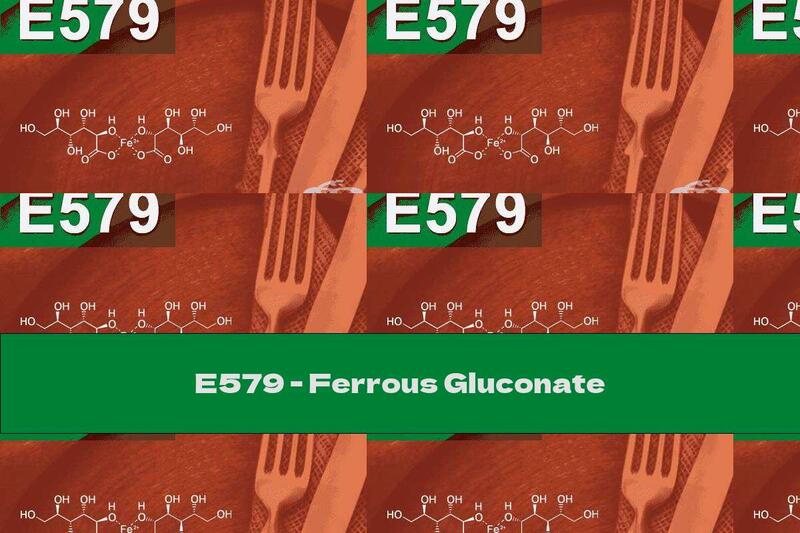
Other names: iron gluconate, E 579, ferrous gluconate. The chemical formula of iron gluconate is C12H24FeO14.
Use of additive E 579 / iron gluconate
The additive E 579 is used in the preservation of olives as a color stabilizer. It is part of vegetable oils to enrich them with iron.
In medicine, iron gluconate is used to prevent and treat iron deficiency anemia caused by an increased need for iron (during pregnancy and lactation, as well as after burns); bleeding (of any kind: frequent nosebleeds, duodenal ulcer, childbirth, surgery, hemorrhoids); insufficient intake of iron from food or impaired absorption of the mineral (due to chronic diarrhea, Crohn's disease, enteritis, malabsorption syndrome, etc.).
The maximum levels of use for the additive E 579 in food are 150 mg per liter or mg per kilogram.
Impact on humans
Side effects due to the use of the supplement E 579 are allergic reactions, abdominal pain, dizziness, itchy skin, erosive-ulcerative lesions of the gastrointestinal tract. As a supplement it can cause dyspeptic symptoms, diarrhea and have a toxic effect on the liver and stomach. It may cause allergic reactions, back pain, chest pain or toothache. With prolonged use promotes the development of erosive and ulcerative lesions of the gastrointestinal tract. In small quantities, iron gluconate is harmless.
Additive E 579 has been approved as safe by the Food and Drug Administration (FDA) and the European Food Safety Authority (EFSA). It can be added to infant formula, but it should be borne in mind that it can cause death in children up to 24 months in quantities of 1-2 grams. The additive is also used in animal medicines, feed and similar products.
- E576 Sodium gluconate
- E577 Potassium gluconate
- E172 Iron oxides and hydroxides
- E585 Iron lactate
Related Articles
- The Ultimate Guide to E579 in Nutrition: Benefits, Intake, Sources, Recipes
- The Ultimate Guide to E579 (Iron Gluconate) in Nutrition
- The Ultimate Guide to E579: Benefits, Sources, and Side Effects
- The Ultimate Guide to E579 in Nutrition: Benefits, Sources, and Recipes
- The Ultimate Guide to E579 in Nutrition: Benefits, Sources, and Side Effects
Top Nutrition Articles Today
- . Steak Label
- . How To Fry Porcini Mushrooms
- . The Ultimate Guide to Calcium Inosinate in Nutrition: Benefi...
- . Beer Also Protects Against Osteoporosis
- . The Importance of Supplements in a Healthy Diet - A Comprehe...
- . Understanding Gassy Foods: Impact on Digestion and Low-Gas D...
- . Net Zero
- . How To Cook Lunch For School: Meatballs, Babaganush, Sarma,...
- . How To Deal With Cancer Overweight
- . How To Cook Tacos With Fish Halibut And Vegetables - Recipe