GMOs - Need To Update Legislation
 Author: Leticia Celentano
Time for reading: ~2
minutes
Last Updated:
August 08, 2022
Author: Leticia Celentano
Time for reading: ~2
minutes
Last Updated:
August 08, 2022
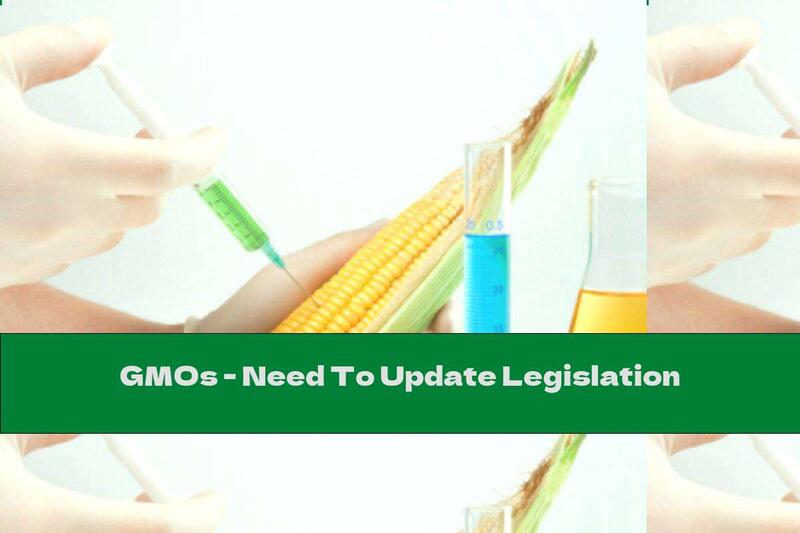
Most laws governing the field are morally outdated and written for completely different purposes.
In the emotional debate on the safety of genetically modified foods, one of the few consensus points is that the current regulatory framework is at best incomplete, inaccurate, and sometimes downright absurd.
According to experts, the Turkish delight may soon be stretched to the breaking point. This can leave many genetically modified foods unregulated - highly disturbing news for much of society. According to Jennifer Kuzma, a food policy expert at the University of Michigan, the current regulatory tangle refers to 10 different laws, each written for a very different purpose than regulating genetically modified foods. Most of them are "written in pieces" to solve sudden problems such as food contaminated with drugs; wheat contaminated with wood bran; industrial chemicals found in food products, etc.
Applying this regulatory framework to genetically modified foods often leads to "strange" results.
For example, genetically modified salmon, which is growing faster than usual due to an imported gene from another species of salmon, is a ' medicine for animals' under current legislation . A cotton plant that synthesizes pest-killing proteins through a bacterial gene is a type of pesticide under current legislation in many countries.
Perhaps the biggest absurdity is that many genetically modified plants, created precisely for the purpose of greater resistance to weeds and parasites, are today considered precisely as such by many legislations.
Experts have long warned that the regulatory framework is obsolete , complex, unclear and incomplete. Many foods are subject to regulation by more than one agency, which often comes out with opposing views. The oldest current law applicable to "regulation" of genetically modified foods applies in the United States - the Food, Drug and Cosmetics Act written in ... 1938, when the concept of genetically modified foods had not yet been introduced ...
A serious complication is that industrialists , consumers and biotechnologists often have different views on the question " What needs to be done ?". Companies are required to provide information about their products to regulators in the United States and Europe, but many analysts say that's not enough. According to Andrew Kimbrell, the only solution is in the mandatory testing of every genetically modified food product. He and his NGO, the Center for Food Safety , are currently suing the U.S. government over how it regulates genetically modified crops in the United States.
Recent efforts to improve the US legal framework date back to 1986, when the Ronald Reagan administration decided that there was nothing more to be done after the last law proposed and written by it.