Good Nutrition Starts With The Family
 Author: Karen Lennox
Time for reading: ~3
minutes
Last Updated:
August 08, 2022
Author: Karen Lennox
Time for reading: ~3
minutes
Last Updated:
August 08, 2022
CHAPTERS (Table Of Contents)
The family is a major factor in building good eating habits in children and teenagers
The greatest challenge for every parent is to raise a healthy, confident, calm and ready for the challenges of the world child. And despite the care, effort and love that the little ones receive every day, the parents fail in the most important battle - that of healthy eating.
Often, good intentions around the table sink into hectic workdays, burdensome commitments, and parents easily lose the battle to be an example at home in building healthy eating habits for the most important members of the family - children. Eating "on foot" at the sink, eating dinner, talking on the phone, ordering food for home ... Children are the first to detect all these small mistakes and absorb. And they follow.
And the statistics on the subject are alarming - one in four children in the EU is overweight and 50% of school-age children are physically inactive. A European study from 2018, conducted in six countries, including Bulgaria, showed that children aged 6 to 9 spend 26 hours a week in front of the screen. All this overloads their nervous system and steals from their sleep. At the same time, children from 6 to 9 years old consume foods high in fat, sugar and salt, and teenagers - energy drinks full of caffeine and a lot of sugar .
So, along with the questions of what and how to consume, the modern parent must respond to the growing need for a good role model in terms of nutrition. This seemingly innocent condition turns out to be a stumbling block in many families, who usually have dinner in front of the TV, tablet or everyone grabs something from the fridge and sinks into their room.
Is there a way back. Of course. However, effort and perseverance are needed, because what has been achieved today lasts a lifetime.
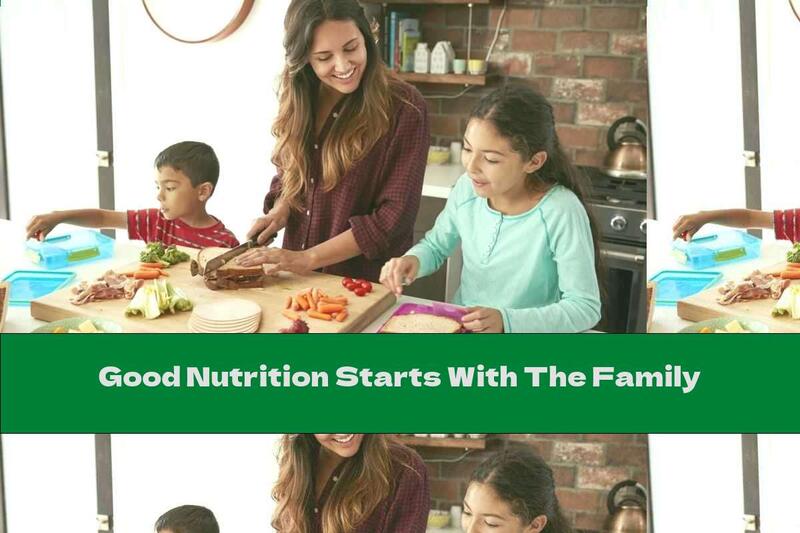
The whole family in the kitchen
This is the most important condition, which not only builds good eating habits, but also helps the family to communicate fully. Often both parents and children are overwhelmed by obligations, lessons, sports, and in fact eating at home becomes "our time".
"If your kids see you making homemade food instead of ordering it, they're more likely to do the same when they grow up and go their own way," says nutritionist Diana Rice. An even better option is to involve children in the process of cooking - this will allow them to get acquainted with the products, to feel useful and last but not least - will build trust at home.
Together at the table
How many times have you stood on the kitchen counter drinking a cup of coffee or a quick sandwich?Making an effort to eat together as a family is essential. Because eating together is much more than sharing food.
"This practice helps children develop speaking and listening skills. And it's another chance to find out what's going on in their lives, "Rice said. In addition, eating together is a good time for parents to share their own joys and worries.
No screens
The rule "no screens" on the table is everyone - from parent to teenager. There is no Facebook status, Instagram photo or tweet more important than the time together!
Do not miss meals
Long breaks in the daily diet interfere with maintaining a healthy weight and most often lead to overeating with inappropriate foods. It has also been shown that skipping meals impairs attention and short-term memory, which is not good for teenagers overwhelmed by lessons.
A healthy bite for everyone
If the parents frown at the sight of a bowl of beets or a piece of melon, it is guaranteed that the children will do the same. Duty "I don't like" usually starts in childhood and maintains a lasting position in relation to certain foods in adulthood.
A good option is if everyone makes an effort at the table to try healthy food that they claim they do not like. Sometimes just one bite can cause completely new sensations.
Slow eating
According to a study published in December 2015 in the journal Pediatric Obesity, children who ate slowly, with breaks of 30 seconds between each bite, lost an average of 3.4% of their body weight. The long-term research project also proves that children who ate quickly gained 12.6% of their weight. It is a known fact that a slow diet consumes fewer calories, which causes a feeling of fullness and sends signals to the brain for satiety.
Source: Everydayhealth
Related Articles
- The Ultimate Guide to Hickory Smoked Bacon in Nutrition and Healthy Eating
- Fruitskewers in Honey Syrup: Nutritional Benefits and Recipes
- The Ultimate Guide to Buffer 500 in Nutrition: Benefits and Usage
- Nutritional Benefits of Fruit Skewers in Honey Syrup: A Delicious and Healthy Recipe
- Nutrition Guide: Fruitskewers in Honey Syrup - Benefits, Recipes, and More
Top Nutrition Articles Today
- . Breakfast Pizza
- . Night Nutrition: Importance, Benefits, and Best Foods to Eat
- . Calories In A Piece Of Bread
- . Health Benefits Of Vitamin C
- . The Ultimate Guide to Metataric Acid in Nutrition: Sources,...
- . Sushi For Beginners. How Easy It Is To Spin Sushi Rolls
- . How To Cook Spicy Green Tea With Turmeric, Lemon Juice And G...
- . When Is It Better To Eat Fruit?
- . The Essential Guide to Nutrients in Nutrition: Importance an...
- . How To Cook Mini Sandwiches With Cherry Filling - Recipe