How To Cook About Eating Disorders And How To Change Ourselves - Talk To Ines Subashka - Recipe
 Author: Marko Balašević
Time for reading: ~13
minutes
Last Updated:
August 08, 2022
Author: Marko Balašević
Time for reading: ~13
minutes
Last Updated:
August 08, 2022
CHAPTERS (Table Of Contents)
- Tell Us More About Yourself!
- Can A Person Help Himself To Get Out Of The Vicious Circle Of An Unhealthy Lifestyle And, Above All, To Get Rid Of Emotional Eating?
- And What Should A Healthy Portion Look Like?
- You Motivate A Lot Of People, Even Without Knowing Them! You Have Published 2 "Motivational" Books, Tell Us What People Can Find In Them And For Whom They Are Useful?
- What Would You Like To Tell Our Readers?
Learn how to cook "About eating disorders and how to change ourselves - talking to Ines Subashka". Delicious recipe.
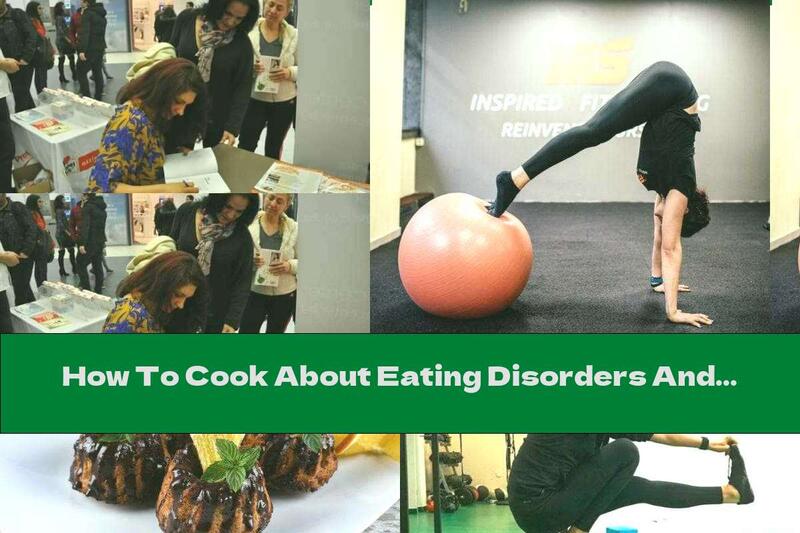
Today we meet you with Ines Subashka - known for sure to many of you. She is actively involved in sports, shows what strength of spirit is! Anyone who follows her on social media feels the unwavering spirit of this woman who has been through so much and is still on top! Not many people who had reached the "bottom" and would stand up and move on to get there would inspire others. Ines and I talk mainly about eating disorders, a problem that most Bulgarians have and part of her past. I will not waste your time anymore - here she is - Ines!
Tell us more about yourself!
My name is Ines and I deal with healthy eating and fitness training. I have dedicated my whole life to studying the human body and helping people achieve their goals. For me, the priority is the health and function of the body and as a former professional athlete, I appreciate how important it is not to waste your efforts, but to find the right method and use nutrition and training as a tool to achieve goals, not as a punishment for the body.
Your life is completely dedicated to sports and a healthy lifestyle. But here we will talk mostly about nutrition. You went through different phases, tell us more about your change in terms of food?
My change went from one extreme to the other, and then I put a lot of effort into regaining the balance. When I played basketball, even though I competed at a high level, I never paid attention to how I ate. I ate waffles, cakes, chips, pasta and drank a lot of soda. After several very serious injuries, I had to end my professional career as a basketball player. Then I lost myself. When I competed, I never associated myself with how I looked, but only with what I could do with my body. After the last injury, that changed and my focus became completely the vision. I started with restrictive diets - only chicken, lettuce, protein and here and there oatmeal. Then, I included emotional eating, which is a natural extension of restrictive diets. I went through the Paleo diet, BM-HBV (low carb-high fat diet), fasting (periodic fasting), then I got to anorexia, Finally I decided to take matters into my own hands and after a lot of effort, I got to where I am today. I am no longer afraid of food. I love a healthy lifestyle, but it does not exclude any macronutrients and instead of depriving myself of foods I love, I make an effort to prepare healthy pancakes, cupcakes, pizza, etc.
Eating disorders are a big problem for many people, and you pay serious attention to them. What are the most common disorders and how to distinguish them?
One of the most common is emotional eating (or so-called hyperphagia), which can be accompanied by bulimia and at some point develop into anorexia. I've been this way and none of this is foreign to me. At first, a person who has such a problem does not realize it at all until things get more serious. If we look at it from the side, everyone can realize that it is not normal to buy several bags of food and eat them at once (hyperphagia). It is not normal to eat half an egg per meal, to consume 1000 calories and to feel good about not eating (anorexia). It is not normal to look for a way after eating, to empty your stomach - through vomiting or laxative pills (bulimia). I would not like to focus on how to differentiate eating disorders, because I think there is enough information on the subject. Rather, I would like to emphasize that recovery from such a problem does not only happen through work on the psyche, but also on the physics. What I mean is that the fact of how nutrition can affect our biochemistry is quite underestimated. How each of these eating disorders is characterized by an imbalance of neurotransmitters that largely drive our behavior. And how each of these eating disorders deepens this imbalance. By changing our diet and focusing on quality and complete food, we change the biochemistry of our body, and when we take care of the physique, it is much easier to influence the psyche. The two go hand in hand. In fact, I dedicated my second book to just that - restoring the body from diets and restoring balance. that recovery from such a problem occurs not only by working on the psyche but also on the physics. What I mean is that the fact of how nutrition can affect our biochemistry is quite underestimated. How each of these eating disorders is characterized by an imbalance of neurotransmitters that largely drive our behavior. And how each of these eating disorders deepens this imbalance. By changing our way of eating and emphasizing quality and complete food, we change the biochemistry of our body, and when we take care of the physique, it is much easier to influence the psyche. The two go hand in hand. In fact, I dedicated my second book to just that - restoring the body from diets and restoring balance. that recovery from such a problem occurs not only by working on the psyche but also on the physics. What I mean is that the fact of how nutrition can affect our biochemistry is quite underestimated. How each of these eating disorders is characterized by an imbalance of neurotransmitters that largely drive our behavior. And how each of these eating disorders deepens this imbalance. By changing our way of eating and emphasizing quality and complete food, we change the biochemistry of our body, and when we take care of the physique, it is much easier to influence the psyche. The two go hand in hand. In fact, I dedicated my second book to just that - restoring the body from diets and restoring balance. and on physics. What I mean is that the fact of how nutrition can affect our biochemistry is quite underestimated. How each of these eating disorders is characterized by an imbalance of neurotransmitters that largely drive our behavior. And how each of these eating disorders deepens this imbalance. By changing our diet and focusing on quality and complete food, we change the biochemistry of our body, and when we take care of the physique, it is much easier to influence the psyche. The two go hand in hand. In fact, I dedicated my second book to just that - restoring the body from diets and restoring balance. and on physics. What I mean is that the fact of how nutrition can affect our biochemistry is quite underestimated. How each of these eating disorders is characterized by an imbalance of neurotransmitters that largely drive our behavior. And how each of these eating disorders deepens this imbalance. By changing our way of eating and emphasizing quality and complete food, we change the biochemistry of our body, and when we take care of the physique, it is much easier to influence the psyche. The two go hand in hand. In fact, I dedicated my second book to just that - restoring the body from diets and restoring balance. How each of these eating disorders is characterized by an imbalance of neurotransmitters that largely drive our behavior. And how each of these eating disorders deepens this imbalance. By changing our diet and focusing on quality and complete food, we change the biochemistry of our body, and when we take care of the physique, it is much easier to influence the psyche. The two go hand in hand. In fact, I dedicated my second book to just that - restoring the body from diets and restoring balance. How each of these eating disorders is characterized by an imbalance of neurotransmitters that largely drive our behavior. And how each of these eating disorders deepens this imbalance. By changing our way of eating and emphasizing quality and complete food, we change the biochemistry of our body, and when we take care of the physique, it is much easier to influence the psyche. The two go hand in hand. In fact, I dedicated my second book to just that - restoring the body from diets and restoring balance. and when we take care of the physics, it is much easier to influence the psyche. The two go hand in hand. In fact, I dedicated my second book to just that - restoring the body from diets and restoring balance. and when we take care of the physics, it is much easier to influence the psyche. The two go hand in hand. In fact, I dedicated my second book to just that - restoring the body from diets and restoring balance.
Can a person help himself to get out of the vicious circle of an unhealthy lifestyle and, above all, to get rid of emotional eating?
People are different. I cannot give an unequivocal answer. Personally, I came out of this vicious circle on my own, but it took me a lot of time, a lot of self-analysis and a lot of learning about how the body works and why it all happens. There are people who respond better to outside help. Everyone needs to know what works for them and look for these sources of help. But, even if we get help from outside, we must be ready to accept it, because at the end of the day, we are the ones doing the work. No piece of advice would help if we did not integrate it into ourselves and our lives.
And what should a healthy portion look like?
On the food, you should not look at feeding for meals. You need to look more globally - what you eat all day and what you eat for a week. You may not have a source of carbohydrates in your particular diet and you may have mainly protein and fat, but you can include a carbohydrate in one of the other meals and have enough of all the macronutrients at the end of the day. People need to realize that what we do today can affect our diet, appetite and mood tomorrow and not look at things in isolation.
A healthy portion also depends on the lifestyle - whether a person has a more sedentary lifestyle (which is not recommended :)), whether he is physically active or very physically active. For each of these people, the healthy portion is different. But, macronutrients should certainly not be excluded and the food should be in quantities that bring satiety - not to think immediately when the next meal is, but also not to feel heavy.
What are the basic rules we must follow in order not to deviate from our regime? How to believe that what we eat now is delicious and how to take it forever? I really hate to hear that chips are replaced with raw vegetable salads… nice, but it's not the same - how do you do that? :)
Yes, and many people think like you. :) Because we are not looking for a long-term change, but a short-term patch in our lifestyle. If someone had told me 10 years ago that carrots tasted sweet or that a banana could be something to satisfy my craving for sweets, I would have laughed at them. But then there was the period when I ate whatever I wanted and my taste buds were used to the superstimuli of unhealthy food. When a person starts eating better quality food and the other is reduced to the minimum allowed, taste buds change. We begin to feel the true taste of food and at some point, the chips taste only salt, not the delicious chips we remember. The biscuits bought from the store taste only like sugar and then one realizes that one has changed. Healthy becomes a choice, not an obligation. Healthy becomes delicious. Healthy is also delicious when we make an effort to prepare the things we love. We should not give up pancakes, candies, cakes, etc. We just have to prepare them with quality products. For most people, health is tasteless because they think it comes down to eggs, meat, vegetables and fruits. But we forget that these can only be the ingredients to use to make something tasty and favorite.
If you want to turn healthy into a way of life, accept it as a long-term change and move towards it in a balanced way, rather than jumping from one extreme to the other. Do not ban foods, but rather change their quality. Accept that the diet is not static but dynamic and that you do not need to eat the same thing every day. Learn to listen to your body and understand what hunger for sweets means; what does increased appetite mean; what it means is that the food seems to lose its taste and what was delicious yesterday is not today. There is a reason for everything and it is just a signal from the body for some lack.
You motivate a lot of people, even without knowing them! You have published 2 "motivational" books, tell us what people can find in them and for whom they are useful?
In fact, I have 4 books. J I would not call them motivational, because three of them are for nutrition and one is for movement. I'm not trying to give people ready-made recipes, I'm trying to help them learn more about their body and how it works. When you understand something, you can take care of it in all conditions. My first book (The IFS Gene: A Vision for Health) is about healthy eating in general - how our body works, what it needs and why. The second book (Say No to Hunger: Restore Your Metabolism from Diets) is dedicated to restoring the body from restrictive diets. There I described each regime I followed - advantages and disadvantages and what I would change if I had the current knowledge then. I followed the whole process to emotional nutrition and then anorexia, and the path to recovery of health, and metabolism. The third book (In the kitchen with Ines: 55 IFS recipes) has healthy recipes, but there are also instructions on how to structure our menu, as well as a seven-day diet, only with recipes from the book. And last but not least, my latest book, The IFS Method: The Art of Training. I always say that movement is my art. Through the information in the book, I hope to show more people that movement is not just about vision. I want to pass on what I have learned about how the body functions, how important it is to pay attention to posture, gait and realize that pain is not a sentence, but usually just a signal that we are using our body incorrectly. Also, people will learn from her how to structure their workouts in order to get the desired results,
What would you like to tell our readers?
I would like to tell them that the body is the most valuable tool we have. Exercise and nutrition are information that we send to our body, which it interprets and always returns a response that is directly proportional to the quality of the information sent. You have no idea how many of the conditions you don't like are due to not moving enough and not eating quality food. Every emotion is born on a biochemical level. We feel it physically, it manifests itself as the concrete emotion, it is transferred into thought, then into action, choice and we reach the end result, which is our reality and our life. If you want to live better, you need to change your attitude towards your body.
And here is what recipe Ines gave us.
- A short glossary of cooking terms
- Tricks in the kitchen - Part two
- Tricks in the kitchen - Part One
- Accidents in the kitchen
Related Articles
- The Power of Honeysuckle: Health Benefits and Recipes
- The Ultimate Guide to Hickory Smoked Bacon in Nutrition and Healthy Eating
- Fruitskewers in Honey Syrup: Nutritional Benefits and Recipes
- Nutritional Benefits of Fruit Skewers in Honey Syrup: A Delicious and Healthy Recipe
- Nutrition Guide: Fruitskewers in Honey Syrup - Benefits, Recipes, and More
Top Nutrition Articles Today
- . Nutrition In Cardiomyopathy
- . The Complete Guide to the Diabetic Diet: Key Components, Ben...
- . The Truth About Potato Chips: Health Effects and Alternative...
- . Sardines - Good For Bones
- . List of Foods that Contain Carrageenan: A Guide to Avoiding...
- . The Importance of Magnesium Chloride in Nutrition: Benefits...
- . Understanding Emulsifier E471: Functions, Health Concerns, a...
- . How To Deal With Cancer Overweight
- . The Ultimate Guide to Bolay Nutrition Calories: Balancing, M...
- . 7 Foods That Stimulate The Release Of Serotonin And Dopamine