How To Cook Make A Cup Of Tea In Different Parts Of The World - Part One - Recipe
 Author: Victoria Aly
Time for reading: ~1
minutes
Last Updated:
August 08, 2022
Author: Victoria Aly
Time for reading: ~1
minutes
Last Updated:
August 08, 2022
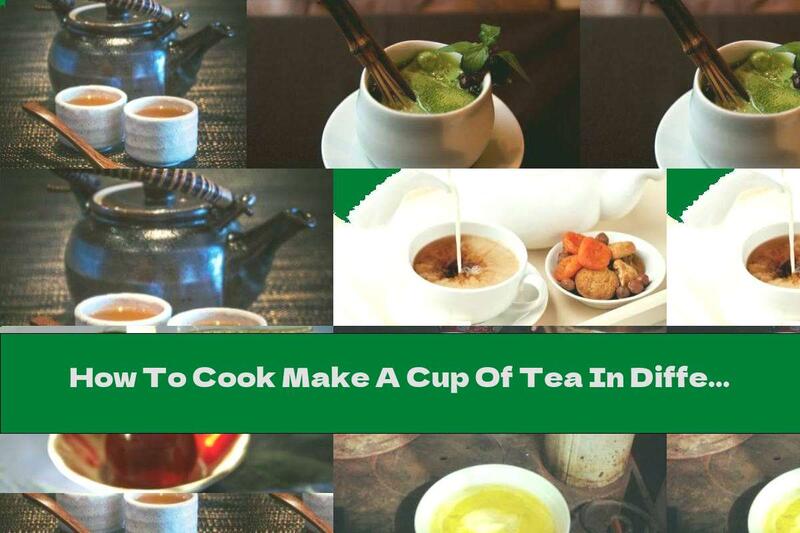
Learn how to cook "Making a cup of tea in different parts of the world - Part One". Delicious recipe.
Tea seems to be a favorite beverage around the world. However, its preparation and serving is different everywhere and even in some places it is becoming a tradition.
We offer you to brew a cup of tea in different parts of the world and enjoy the fragrant hot drink together.
We start with Japan. Matcha tea is made from high quality green tea leaves.
We are going to India to show you Darjeeling tea. The plant for its production grows in the mountainous parts of the country in the Himalayas.
For the British we will say that they like to add milk to black tea to get a nice creamy color.
In Turkey, the drink is served in small tall glass cups with a lump of sugar.
Tibetan tea is salty and is made with strong milk and butter. It has a bitter taste.
In Morocco, people love to drink green tea with mint.
In Hong Kong, condensed milk is added to the drink. Serve chilled or with ice cubes.
In Taiwan you can enjoy both hot and cold tea. Tapioca balls are important.
In the United States, they prefer the drink with sugar and lemon, and for more tenderness they can add soda. They love black tea.
The Russians' favorite tea is also black. And to be stronger ...
Stay with us in the second part of our tea trip, when we will visit Qatar, Kuwait, Mauritania and other interesting places :)
Related Articles
- The Power of Honeysuckle: Health Benefits and Recipes
- Fruitskewers in Honey Syrup: Nutritional Benefits and Recipes
- Nutritional Benefits of Fruit Skewers in Honey Syrup: A Delicious and Healthy Recipe
- Nutrition Guide: Fruitskewers in Honey Syrup - Benefits, Recipes, and More
- The Role of Flour in Nutrition: Types, Benefits, and Recipes
Top Nutrition Articles Today
- . Steak Label
- . Healthy Food For Modern Man
- . How To Know The Real Ice Cream?
- . Amino Acids in Nutrition: Importance, Types, and Optimizatio...
- . How To Fry Porcini Mushrooms
- . The Ultimate Guide to Calcium Inosinate in Nutrition: Benefi...
- . The Diet �������� 7: A Comprehensive Guide to Nutrition and...
- . Net Zero
- . Lychee - A Small Fruit, But Useful And Tasty
- . Beer Also Protects Against Osteoporosis