Predisposition To Overweight Is Genetically Determined
 Author: Maryam Ayres
Time for reading: ~3
minutes
Last Updated:
August 08, 2022
Author: Maryam Ayres
Time for reading: ~3
minutes
Last Updated:
August 08, 2022
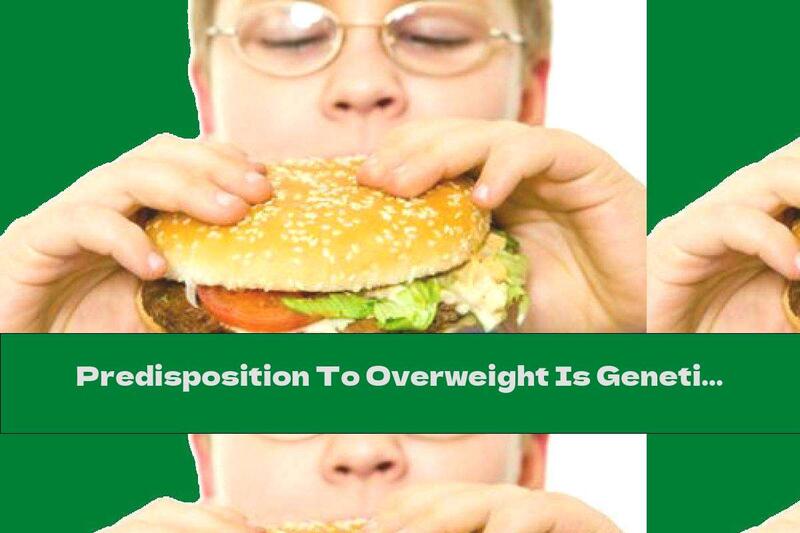
In this article, learn more about Predisposition To Overweight Is Genetically Determined. What is the severity of heredity?.
Overweight and obesity are socially significant conditions of the human body. A significant part of the thoughts, actions, financial, energy and time resources of a large percentage of the population are aimed at reducing and maintaining a certain healthy body weight.
This has its reason. There is no denying the leading role of aesthetic and narcissistic motives as the engine of all procedures and regimes for weight loss. On the other hand, there is a health reason to strive for the norm and this is the fact that overweight and obesity are a risk factor and are associated with the onset of various pathologies .
There are countless discoveries, studies, tips and recommendations for normalizing or reducing weight. As one of the iconic sciences of our century, genetics also has a share in the overall picture of scientific knowledge in the field of obesity.
The genetic basis is the soil on which the pathology grows. Genes have been found in which mutations have a 100% evidence value for a strong predisposition to the development of overweight and obesity. Weight-related genes have different weights. Sometimes a mutation in one of them is enough to develop a severe form of obesity. These forms of obesity are defined as monogenic .
Other times, multiple mutations in different genes with less relative weight are needed to upset metabolism and accumulate more adipose tissue. These forms are called polygenic .
Leptin is a hormone. It is produced from adipose tissue . Through the blood, this hormone reaches the brain, where certain brain structures have receptors for it. The interaction of leptin with these receptors unlocks a whole chain of physiological and biochemical processes, the end result of which is a decrease in appetite and food intake and an increase in energy expenditure. Genetic mutations can strike any link in this chain, and the result will be the same - the inability to maintain the norm and the flourishing of the pathology.
For example, if the leptin gene is damaged, the hormone will either not be produced, or will be produced damaged, or in small amounts. The result is that no one will unlock the described circuit and this system will not work at all or will work inefficiently. The advantage of this mutation, from a therapeutic point of view, is that recombinant leptin can be introduced into the body and with the integrity of the brain system preserved, everything works as if there was no problem.
The mutation may also be in the leptin receptor gene . In this case, no treatment has been developed because the receptor cannot be inserted artificially into the brain. Gene damage can affect any key leptin chain molecule in the brain in isolation. The forms of genetically determined obesity described so far are monogenic, i. the damage affects a gene and it is identified.
In monogenic forms of obesity, the causal relationship is obvious. This is not the case with polygenic forms. They have also proven the importance of the genetic terrain. There, however, this terrain extends to many areas of the genome, with each individual gene affected having little weight in the general condition, but the cumulative effect of the damaged genes is a slow metabolism.
Genes associated with obesity and entering the polygenic complex encode a variety of proteins involved in the body's metabolism, energy intake and energy expenditure . Such a gene is FTO (fat mass and obesity) . The product of this gene affects the process of fat breakdown. In this line of thinking, inactivation of the gene stimulates the reverse process of fat accumulation. The difference with monogenic forms of obesity is that in this case the inactivation of the gene cannot lead to obesity on its own.
Obesity is a multifactorial disease. Whether one or more genes will lead to a predisposition to fat accumulation, environmental factors and lifestyle are always included in the genesis of obesity. Therefore, although sometimes leading, genetic inheritance is not the only factor in the pathogenesis of obesity.
Top Nutrition Articles Today
- . The Role of Nitrogen in Nutrition: Importance and Sources
- . Nutrition In Hyperopia (farsightedness)
- . What To Cook With Sweet Potato
- . 5 Recipes For Potato Casserole In The Oven
- . How To Cook Lunch For School: Pizza, Salad, Raw Candy, Pear,...
- . Cooking A Festive Dinner In A Slow Cooker
- . How To Make Easy Potato Salad
- . How To Fry A Potato With A Crust
- . Nutritional Benefits of Fruit Skewers in Honey Syrup: A Heal...
- . Understanding Cholesterol in Nutrition: Impact, Types, and R...