Soy Protects Against Cancer And Osteoporosis
 Author: Leticia Celentano
Time for reading: ~3
minutes
Last Updated:
August 08, 2022
Author: Leticia Celentano
Time for reading: ~3
minutes
Last Updated:
August 08, 2022
CHAPTERS (Table Of Contents)
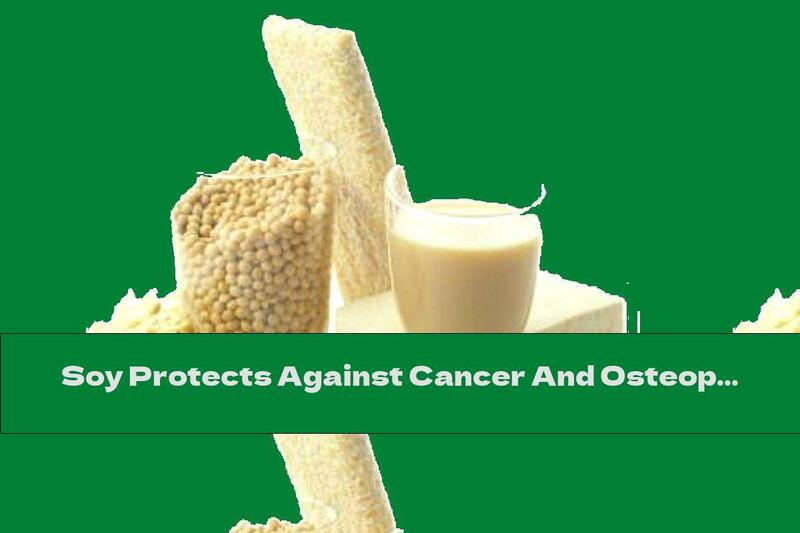
This legume is rich in protein, lecithin, omega-3 fatty acids, isoflavones and phyto-estrogens
Soy is a food product suitable for all people who want to eat healthily.
Studies show that this legume is rich in protein, lecithin, omega-3 fatty acids, isoflavones, and phytoestrogens. They are also a source of vitamins B6, B9, B12, H, minerals.
B12 - stimulates the production of red blood cells and thus increases the oxygen capacity of the blood. It is directly involved in protein synthesis, which is why its importance in bodybuilding is very important.
B6 - is particularly active in protein metabolism. This makes it indispensable in bodybuilding to increase muscle mass. It has been found to improve muscle metabolism and especially that of the myocardium.
H - It is a coenzyme that acts as a particularly strong stimulator of muscle cell growth. It actively participates in the breakdown of carbohydrates and fatty acids and therefore in the energy supply of the body.
B9 - participates in the metabolism of amino acids and nucleic acids. In addition, it has a great hematopoietic effect and promotes the maturation of red blood cells in the bone marrow. For this reason, its deficiency manifests itself with the development of megaloblastic anemia (lack of red blood cells).
Studies conducted several years ago found that soy contains the antitumor ingredient genistein. Genistein has been shown to prevent the development of cancer cells, leading to new and in-depth research and drugs. The best source of genistein are soy sprouts and ponies. The components of soy protein that science is most interested in are its bioactive ingredients isoflavones, in particular genistein, daidzein and glycithin.
Isoflavones are the best-studied plant-derived by-products. They are often called phytoestrogens because they closely resemble the structure of the female hormone estrogen, but are not steroids. They are found in flowers, leaves and fruits. They protect the plant mostly from free radicals, which damage the cell permanently.
Contained in the largest quantities in soybeans and red clover. The phytoestrogens in clover have the best effect because they are very similar to the hormones in the human body. They are taken with food and can be easily absorbed by the body, of course, in the presence of an intact intestinal environment.
Soybeans contain mainly two isoflavones:
genistein and daidzein, as well as a very small portion of glycyrrhizin.
Whole soybeans and unfermented soy nutrients are rich mainly in isoflavones in glycosylated form, i. are bound to one molecule of glucose. Fermented soy products in most cases contain aglucones, which are isoflavones, but without glucose residue.
High serum estrogen is one of the main causes of breast cancer. The isoflavone genistein prevents the growth of the tumor. The positive action of genistein is based on its antiestrogenic action. In Asian countries, breast cancer mortality is 10 times lower and prostate cancer mortality 30 times lower than in the United States. But the action of isoflavones is not only prophylactic, they also affect tumors that have already appeared.
According to consumer research, most consumers prefer foods that have health benefits.
About 25 percent of the European population over the age of 15 consumes soy because of its health effects.
Soy products are a perfect, non-stressful alternative for people who have an intolerance to milk and dairy products. It may be due to the body's reaction to lactose or cow's milk protein.
Thanks to its plant proteins and the higher number of unsaturated fatty acids, soy foods provide a sufficient amount of isoflavones. No other culture provides so much valuable protein for humans.
A balanced diet, including soy intake, has a beneficial effect on a number of diseases and conditions. Here are some of them:
Menopause
The positive effect of the action of the phytohormone isoflavone is expressed in the reduction of various complaints and ailments during menopause.
Metabolism
Soy helps enzymes in the body eliminate toxins.
Cardiovascular diseases
Soy has very little fat. It does not contain cholesterol, so it has a positive effect on fat metabolism. Phytohormones also protect women from cardiovascular disease.
Cancer
Prophylactic action against breast and prostate cancer has been proven. In addition, phytohormones have a positive effect on newly formed tumors.
Osteoporosis
60 to 100 mg of isoflavones daily improve bone density.
Inflammatory processes
Soy has anti-inflammatory action. Chronic inflammation has been shown to significantly reduce the level of "good" cholesterol in the blood.
Related Articles
- How To Protect Yourself From Five Types Of Cancer: Instructions For Women
- Peanuts For The Heart, Against Stroke And Cancer: 13 Scientifically Proven Facts About The Benefits Of Peanuts
- Social Initiatives In The Fight Against The Coronavirus
- A Popular Drink Against Cancer, Stroke, Obesity And Diabetes: 10 Useful Properties Of Green Tea
- When Does Cancer Spread To Bone Tissue?
Top Nutrition Articles Today
- . Calcium In Lentils
- . Beef (veal) Tongue - Health Benefits For The Body And Use In...
- . The Nutritional Benefits of Scotch: Improving Cardiovascular...
- . The Power of Red Foods: Health Benefits and Nutrition Guide
- . How To Cook Puff Pastry Hot Dog Pie - Recipe
- . How To Reduce Appetite
- . How To Cook Risotto With Tomatoes, Parmesan And Basil - Reci...
- . Nutrition Boost: Functional Properties in Muffins for Health...
- . The Ultimate Guide to Using Ammonium Carbonate in Baking
- . The Ultimate Guide to Creating a Well-Structured Diet Plan f...