E171 - Titanium Dioxide
 Author: Nia Rouseberg
Time for reading: ~2
minutes
Last Updated:
August 08, 2022
Author: Nia Rouseberg
Time for reading: ~2
minutes
Last Updated:
August 08, 2022
CHAPTERS (Table Of Contents)
Titanium dioxide is widely used in the food industry as a colorant additive E171. The color is a light, white compound. Gives brightness and texture to many foods, making them look more attractive.
Characteristic
Titanium dioxide is widely used in the food industry as a colorant additive E171 . The color is a light, white compound. Gives brightness and texture to many foods, making them look more attractive. It is often used as an anti-caking agent. The natural titanium dioxide used in food is the purified form of titanium oxide, the ninth most abundant element on the planet.
When heated, titanium dioxide acquires a pale yellow hue. It is widely used in the production of ointments against allergies. It is chemically inert and does not dissolve in water. It is used as a colorant in the preparation of milk powder and as a bleaching agent in the composition of chewing gum. It is used in the food industry mainly because of its whitening properties.
Use
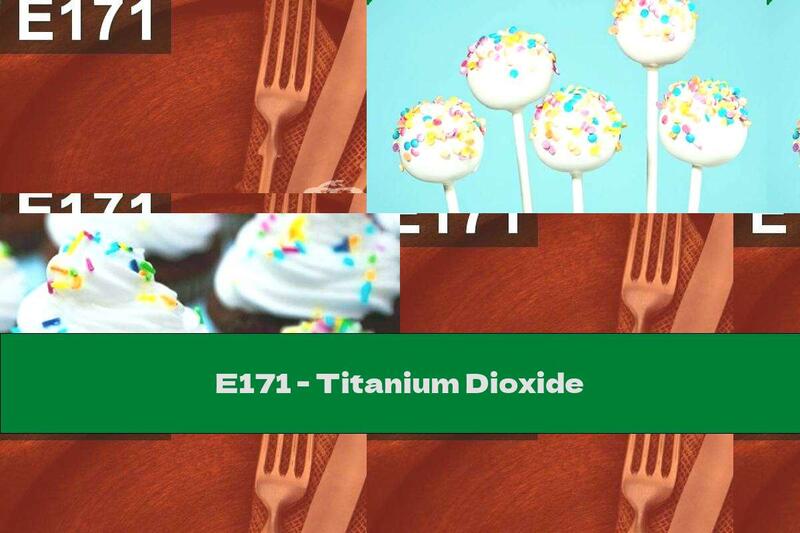
Titanium dioxide is widely used as a pigment for food additives in confectionery, such as chocolates, candies, pastries, snacks, pastries, cheeses and chewing gum due to the fact that it has lightening and whitening properties. Studies show that consumers are more likely to buy and eat brighter and more saturated foods that attract the eye because they look fresher. Titanium dioxide is often used to impart natural whiteness and opacity to foods such as ice cream, cake icing and cupcake creams.
E 171 is widely used in the food industry for the preparation of various coloring agents. The substance is a good helper in protection from harmful sun rays and protects against skin cancer. In the European Union, it is listed as a supplement E171 without a maximum level of intake. The Expert Committee on Food Additives of the World Health Organization did not establish an acceptable daily intake of tinan dioxide, as its amount of oral absorption is extremely low (maximum 0.1%). In the United States, the food supplement E171 has been used since 1966, and the Food and Drug Administration (FDA) recommends that its concentration be generally below 1% of the weight of the food per day.
Impact on humans
Known as food coloring E171 in food, titanium dioxide complies with current European legislation, which means that it does not contain substances that are considered dangerous to consumers.
When used in food, titanium dioxide does not enter the bloodstream and passes through the digestive system unchanged and undigested. E171 undergoes rigorous European tests and classifications that demonstrate that titanium dioxide does not remain or accumulate in the human body or in the environment.
Titanium dioxide overdose is not desirable, especially for people with reduced immunity. Inhalation of the dust can lead to cancer, liver and kidney problems.
E171 is the most effective white food coloring. In fact, it is up to 5 times more effective than alternatives such as silica or calcium carbonate. Replacing it with an alternative could lead to new, unexplored dangers.
tdma.info
- E926 Chlorine dioxide
- E551 Silica
- E220 Sulfur dioxide
- E290 Carbon dioxide
Related Articles
- The Role of E 290 (Carbon Dioxide) in Nutrition: Benefits, Sources, and Effects
- The Role of E171 in Nutrition: Health Concerns, Regulatory Status, and Alternatives
- The Role of E171 in Nutrition: Potential Health Risks, Regulations, and Alternatives
- The Role of E171 in Nutrition: Health Concerns, Alternatives, and More
- The Role of E171 in Nutrition: Health Concerns, Regulations, and Alternatives
Top Nutrition Articles Today
- . Nutrition In Cardiomyopathy
- . The Truth About Potato Chips: Health Effects and Alternative...
- . Sardines - Good For Bones
- . The Complete Guide to the Diabetic Diet: Key Components, Ben...
- . List of Foods that Contain Carrageenan: A Guide to Avoiding...
- . Understanding Emulsifier E471: Functions, Health Concerns, a...
- . The Importance of Magnesium Chloride in Nutrition: Benefits...
- . How To Deal With Cancer Overweight
- . The Ultimate Guide to Bolay Nutrition Calories: Balancing, M...
- . 7 Foods That Stimulate The Release Of Serotonin And Dopamine