E312 - Dodecyl Gallate
 Author: Karen Lennox
Time for reading: ~1
minutes
Last Updated:
January 27, 2026
Author: Karen Lennox
Time for reading: ~1
minutes
Last Updated:
January 27, 2026
CHAPTERS (Table Of Contents)
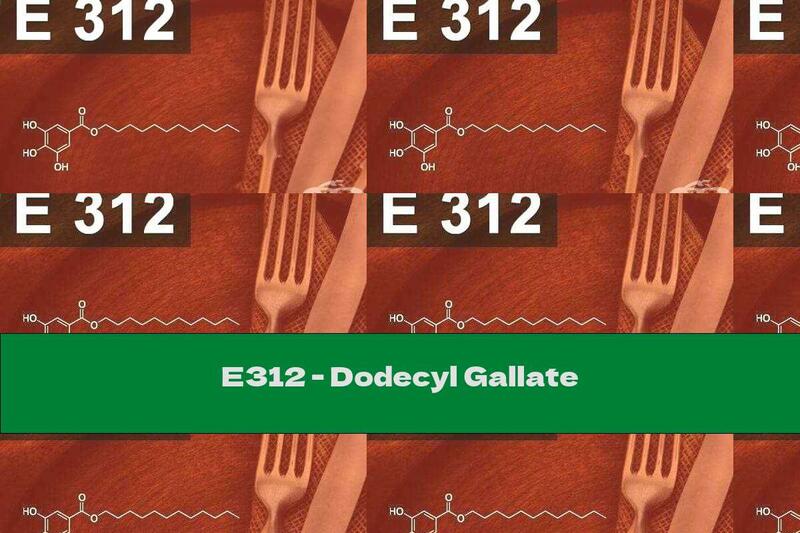
Characteristics: The food additive E 312 (dodecyl gallate, dodecyl gallate or lauryl gallate) is an antioxidant, it is a dodecyl ester of gallic acid, it is a white-creamy crystalline powder, without
Characteristic
Food additive E 312 (dodecyl gallate, dodecyl gallate or lauryl gallate) is an antioxidant, it is a dodecyl ester of gallic acid, is a white - creamy crystalline powder, odorless, but with a slight bitter taste. Dodecyl gallate dissolves well in alcohols (e.g. ethyl alcohol), glycols, ethers; fat solubility and medium, and insoluble in water. The substance is obtained artificially by esterification of gallic acid with dodecyl alcohol.
Use
The food additive E 312 is used as an antioxidant (together with or separately from the other gallates E 310 and E 311) to prevent the oxidation of fats of different origins. It is widely used in the food industry: it is added in the production of vegetable and animal fats, dry concentrates for confectionery, dry appetizers, concentrates for soups and broths, sauces and chewing gum. The substance is used for impregnation of food packaging containing fat (butter, margarine), in industry - to stabilize industrial oils and wax products.
Impact on humans
Dodecyl gallate is broken down in the intestines by gallic acid and lauryl alcohol. Gallic acid causes allergic skin reactions (rash, eczema), adversely affects the nervous system. High concentrations of acid irritate the gastric mucosa and lead to diseases of the gastrointestinal tract. With the addition of E 312 to the diet of rats, irreversible changes in the spleen, kidneys and liver were observed. People sensitive to aspirin should be careful when using the supplement. It is forbidden to add it to baby and baby foods, not to be taken by pregnant and lactating women.
There is information that the maximum permissible daily dose of the substance is up to 0.05 mg per kilogram of body weight, but recent studies make these claims untenable. The food supplement is currently being tested.
- E310 Propyl galate
- E311 Octyl gallate