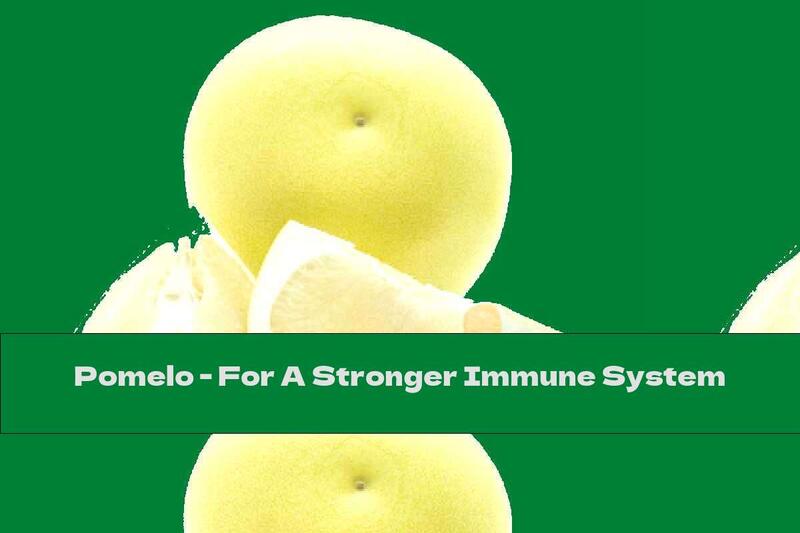
Pomelo - For A Stronger Immune System
 Author: Mark Velov
Time for reading: ~2
minutes
Last Updated:
January 27, 2026
Author: Mark Velov
Time for reading: ~2
minutes
Last Updated:
January 27, 2026
CHAPTERS (Table Of Contents)
In this article, learn more about Pomelo - For A Stronger Immune System. 7 of the greatest health benefits of pomelo.
Pomelo is one of the citrus fruits on our market, which until recently was unknown to many Bulgarians. Its different varieties look like a large orange or grapefruit, but they taste completely different. The fruit grows on a tree and in China is considered a vitamin aid in various conditions.
The exotic fruit with non-standard sizes is used as an immunostimulant and is great for consumption in winter, when our body is attacked by various viruses. This is due to its nutritional value - vitamins C, B12, A, B6, potassium , iron, magnesium, dietary fiber . The pomelo, which grows on a tree, is believed to ripen best in February. Then the concentration of nutrients in it is greatest.
Here are 7 health benefits of pomelo:
Strengthens immunity
Each fruit contains approximately 600% of our daily needs for vitamin C. Because pomelo is quite large even after peeling its thick skin, it can be divided into several portions depending on its size. It is a major source of ascorbic acid and is considered the number one immune system in Southeast Asia. Vitamin C acts as an antioxidant that increases the activity of white blood cells and attacks free radicals that cause problems in the body. Helps to overcome infections that lead to colds, coughs, fevers or more serious viral and bacterial infections.
Helps digestion
Most fruits contain large amounts of fiber, and pomelo is no exception. Its pulp contains about 25% of the recommended daily intake of fiber. They promote digestion and eliminate problems such as constipation and diarrhea. The large amount of fiber envelops the stool and makes it easier to move through the digestive tract. They also stimulate the secretion of gastric juices, which break down complex proteins that are more difficult to digest.
Regulates blood pressure
Pomelo is a very good source of the mineral potassium. Each fruit contains approximately 37% of the recommended daily intake. Potassium relieves tension in blood vessels, increases blood circulation and oxygen flow. It protects the heart from stress and reduces the risk of atherosclerosis, heart attack and stroke.
Prevents cramps
Potassium in pomelo is also involved in the balance of body fluids, which plays a key role in stiffness and muscle cramps. When its amount in the body decreases, these problems become more frequent.
Take care of bone health
The intake of potassium, which is contained in the pomelo, supports bone density and promotes the absorption of other important minerals to maintain healthy bones. Therefore, eating pomelo can prevent osteoporosis.
The skin glows with it
The high levels of vitamin C in pomelo act as antioxidants that attack dangerous free radicals. And one of the side effects of free radicals is the breakdown of the skin. This leads to its premature aging, the formation of wrinkles, fine lines, stronger pigmentation and more.
Melt fat
Most cultivated varieties of pomelo contain an enzyme that burns body fat. It is called carnitine palmitoyl transferase and is not found in many foods. Because of this, many nutritionists add pomelo as part of various diets and diets.
One of the disadvantages of pomelo is that it is not recommended for consumption in patients with low blood pressure, liver and kidney disease. The reason is the amount of vitamin C and potassium in the fruit.
Related Articles
- The Exchange System in Nutrition: A Guide to Healthy Eating
- The Power of Whey Protein: Benefits for Muscle Growth, Weight Management, and Immune Function
- Nutrition for Immunity: Boost Your Immune System with Key Nutrients and Foods
- The Power of L-Glutamine: Benefits for Gut Health, Muscle Recovery, and Immune Support
- Boost Your Immune System with 散兵 Foods: Benefits and Recipes