Alabash (German Turnip)
 Author: Victoria Aly
Time for reading: ~2
minutes
Last Updated:
January 27, 2026
Author: Victoria Aly
Time for reading: ~2
minutes
Last Updated:
January 27, 2026
CHAPTERS (Table Of Contents)
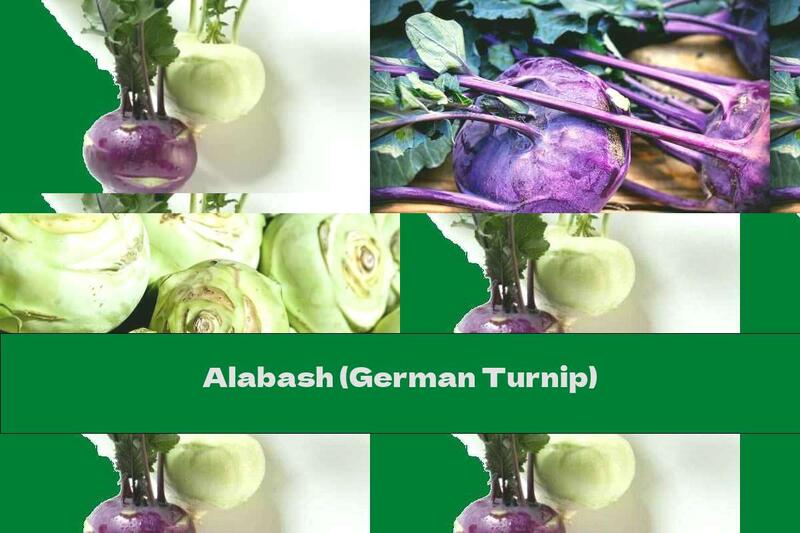
Alabash (German radish) has a taste and texture similar to the broccoli stalk, but is softer and sweeter. It is especially rich in vitamins and dietary fiber, low in calories (27 calories per 100 grams).
Alabash is also known as German or German radish. It is a round tuberous vegetable of the cruciferous genus (such as cauliflower, broccoli, Brussels sprouts).
Alabash is a perennial plant that is consumed during the cold period of the year. It is grown in all climatic zones because of its juicy round stem and radish-like leaves.
Alabash can last up to 30 days after detachment if stored cold.
The vegetable has a taste and texture similar to a broccoli stalk, but is softer and sweeter. Young plants are more crunchy.
There are two main varieties of alabaster - white and purple, but despite the differences in color, their core is the same - slightly yellowish.
Nutritional value
Turnip is a particularly rich source of vitamins and dietary fiber. 100 grams of vegetables contain 27 calories, a small amount of which is fat, and no cholesterol. Protein is 1.70 grams and carbohydrates 6.20 grams, of which 3.6 grams of fiber.
Source of vitamin C: provides 62 milligrams of the valuable vitamin. Vitamin C is an antioxidant, it helps the body maintain healthy connective tissue, teeth and gums. Contributes to the body's fight against various diseases and infections, helps prevent cancer by clearing harmful free radicals from the body.
Alabash , like other cruciferous vegetables, contains healthy phytochemicals such as isothiocyanates, sulforaphane and indole-2-carbinol, which are thought to protect against colon cancer.
It contains many B vitamins, such as niacin, vitamin B6, thiamine, which act as cofactors for enzymes during various metabolic functions in the body.
German radish has good levels of minerals: copper, potassium, calcium, manganese, iron and phosphorus are particularly concentrated in it. Potassium is an important component in building cells and controlling body fluids that help control heart rate and blood pressure.
Vegetable stalks are very useful and nutritious, they contain carotene, vitamin A, vitamin K, minerals and B-complex vitamins.
Method of preparation
Alabash should be washed thoroughly under running water and soaked in salt water for 14-15 minutes to clean it of all soil residues. Just before you cook it, peel it.
Health benefits
1. Improves digestion
Like most cruciferous vegetables, alabaster is a source of fiber that can improve digestion.
2. Supports weight lossAlabash is the perfect diet food because of its low calorie and high fiber content. Fiber makes us feel full, which reduces the amount of food consumed and thus prevents overeating.
3. Increases energyDue to the high content of potassium, vegetables play a major role in the muscular and nervous behavior of the body. It supports the movement, breathing, reactions and functioning of our body every day. Potassium is a great addition to your diet to stay alert and energetic.
4. Regulates blood pressurePotassium content also helps reduce pressure on the cardiovascular system and relieves pressure in blood vessels and arteries, which helps blood circulation.
5. Reduces the risk of anemiaCalcium, found in alabasha, aids in the absorption of iron, which helps prevent anemia.
6. Improves bone densityWith age, bones weaken, and one of the best ways to prevent this is to eat mineral-rich foods high in manganese, iron and calcium.
7. Eye careTurnip is a rich source of carotene, including beta-carotene, which acts as an antioxidant in the body, especially in the eye area. Vitamin A can help prevent macular degeneration and slow down or prevent cataracts.
8. Accelerates metabolismMost people who want to regulate their metabolism should consume foods rich in B-complex vitamins, which play a key role in enzymatic processes in the body.
Contraindications
Alabash contains gyotrogens, which are harmful to people with impaired thyroid function. They can cause swelling and edema.