Breastfeeding A Baby With A Short Bridle On The Tongue
 Author: Alexander Bruni
Time for reading: ~5
minutes
Last Updated:
August 08, 2022
Author: Alexander Bruni
Time for reading: ~5
minutes
Last Updated:
August 08, 2022
CHAPTERS (Table Of Contents)
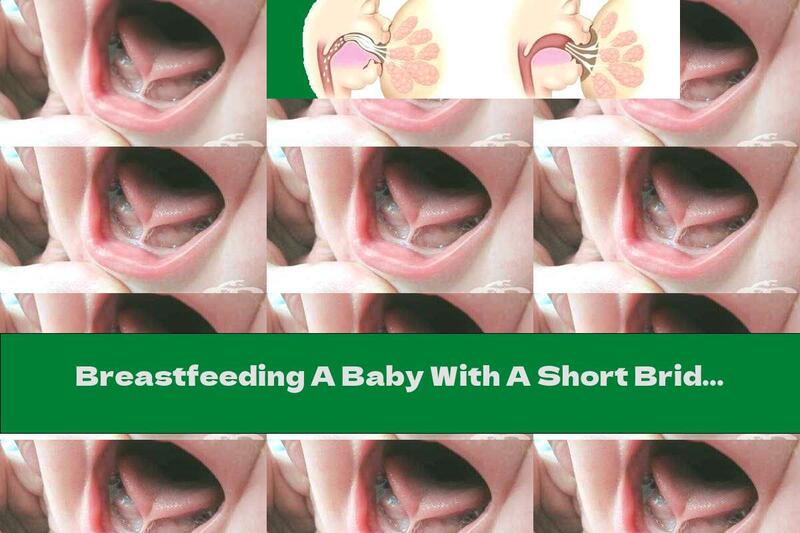
The bridle of the tongue, referred to as the frenulum, is a small mucous fold (ligament) that connects the lower part of the tongue to the base (floor) of the oral cavity.
What is a short bridle on the tongue?
The bridle of the tongue, referred to as the frenulum, is a small mucous fold (ligament) that connects the lower part of the tongue to the base (floor) of the oral cavity.
Normal frenulum Short frenulum
The short bridle is a congenital condition, which is denoted by the medical term ankyloglossia. It is characterized by a shorter sublingual connection, which disrupts the normal movement of the tongue.
The condition is diagnosed during a routine examination of the newborn, but can sometimes go unnoticed. It may not be detected until eating problems occur.
Statistics show that between 4 and 11% of newborns are affected. It is more common in boys than in girls.
What are the signs of a short sublingual relationship?
In the baby:- the baby cannot take the breast properly and often drops it;
- chew or bite the nipple
- does not get enough milk
- rarely swallows;
- makes unusual rattling sounds while sucking;
- falls asleep on the breast;
- does not gain weight well.
- nipple pain or injuries;
- crushing the grain;
- vasospasm;
- Clogged milk ducts;
- mastitis.
The process of breastfeeding
Milk is formed in the mother's breast after birth, but to sustain and increase its amount requires vigorous sucking by the baby. If it cannot breastfeed properly, the amount of breast milk will decrease and it is very likely to stop.
The baby should open his mouth wide enough to allow the tongue to protrude over the edge of the gums, then take over the breast as part of the areola. This ensures that:
- the mammary sinuses are well massaged by the movements of the baby's tongue and by the pressure from the lower alveolar ridge, which leads to the release of milk through the nipple;
- the tongue passing over the edge of the gums prevents the nipple from being painfully crushed;
- the peristaltic movements of the tongue (starting from its tip to the root) maintain the flow of milk;
- these movements also stimulate the nipple to lengthen and point down to the baby's throat as the milk enters the esophagus. Most babies can empty their breasts with 10 to 15 minutes of effective sucking.
Short bridle
In most cases, the frenulum lengthens on its own during the first year and does not cause any problems with nutrition or speech development. But it also depends on the severity of the condition.
However, when the short bridle of the tongue causes breastfeeding problems, the baby often does not open his mouth wide, thus not taking the breast at the right angle. Instead, it absorbs the nipple, "chewing" only it, causing severe pain and eventually damaging it (cracks, bleeding, deformity can be found on it, and mastitis can develop later).
The shorter frenulum prevents the tongue from protruding above the gingival margin, thus preventing the nipple from being injured. It is also the reason why peristaltic movements are not performed or performed incorrectly (only on one side of the tongue or vice versa from the back of the tongue to its tip).
In this way, the nipple does not lengthen and the milk is not directed properly to the esophagus, which can lead to choking, fluid aspiration, coughing, vomiting or suffocation.
Because the baby cannot absorb the breast properly, the milk sinuses are not stimulated well and not enough milk is released. In addition, due to the severe pain of crushing the nipple, mothers often experience the horror of breastfeeding and give it up.
These problems may persist despite the help of breastfeeding specialists. Unfortunately, the pain will only decrease if the structural problem is removed.
Like mother and baby, they will experience discomfort - hunger, malnutrition, swallowing, vomiting and reflux.
Breastfeeding in these circumstances will be anything but pleasant or satisfying. It will lead to frustration, feelings of sadness and guilt on the part of the mother and poor weight gain or stunted growth in the baby. All this will most likely prompt you to stop breastfeeding and wean early.
Some babies with short bridles are able to breastfeed effectively, depending on the way the frenulum is attached and the individual variations on the mother's breasts. If the mother has small or medium nipples, the baby can extract milk quite well. On the other hand, if the nipples are large, flat or inverted, then even a slight degree of short bridle can cause breastfeeding problems.
Can the short bridle be adjusted?
Yes! If a short frenulum is found, which causes difficulties with natural nutrition, it will be necessary to perform a light manipulation called a frenulotomy. It is relatively painless and provides full mobility of the tongue. This is a procedure in which the mucous membrane is cut and lasts only a few seconds. It is performed with the help of surgical scissors, a scalpel or a laser and local anesthesia. It causes minimal discomfort and bleeding (just a few drops), several stitches are needed when using a scalpel, and when using a laser they are not needed.
Some babies do not feel pain, and in others it can be compared to vaccination. Parents often report that their babies do not even cry during the procedure. The risk of infection is minimal.
Immediately after the procedure, the baby can be placed on the breast to feed (and this could also relieve the pain).
In most cases, the mother notices an immediate improvement in both her own comfort and the baby's ability to breastfeed more efficiently. The earlier the problem is detected and a frenulotomy is performed, the better, as older babies will need more time to get used to the freer movements of the tongue and learn to breastfeed normally.
However, if this condition does not affect breastfeeding and is not detected at an early age, it can be diagnosed later if the child begins to develop speech problems.
More information on breastfeeding babies with a health problem can be found in: "Breastfeeding a baby with special needs".
- How to feed a breastfeeding woman
- Diarrhea in breastfed babies
- How to eliminate nighttime breastfeeding
- Natural means of stopping breast milk
Related Articles
- Nutrition for Respiratory Health: Supporting Your Lungs with the Right Foods
- Boost Digestive Health with Buffer 500 - Benefits & Recipes
- Nutritional Benefits of Millionaires Shortbread: A Delicious and Balanced Treat
- Boost Your Health with Buffer 500: Benefits, Recipes, and More
- Nutrition and Libido: Enhance Your Sex Drive with the Right Foods
Top Nutrition Articles Today
- . Foods High In Folate And B12
- . Chicory: 15 Health Benefits, How To Drink, Contraindications...
- . Dishes From Neighboring Countries That We Love: Potato Panca...
- . The Ultimate Guide to Vitamin E in Nutrition: Sources, Benef...
- . What To Cook With Sweet Potato
- . The Essential Role of Copper (Cu) in Nutrition: Sources, Ben...
- . Nutritional Benefits of Pizza: Key Nutrients, Healthier Opti...
- . The Role of Samarium in Nutrition: Benefits and Food Sources
- . The Delicious and Nutritious World of Minibrownies: A Guide...
- . The Complete Guide to E339ii in Nutrition: Benefits, Regulat...