E141 - Copper Complexes Of Chloropyll And Chlorophyllins
 Author: Alexander Bruni
Time for reading: ~1
minutes
Last Updated:
August 08, 2022
Author: Alexander Bruni
Time for reading: ~1
minutes
Last Updated:
August 08, 2022
CHAPTERS (Table Of Contents)
Characteristic: The additive E 141 belongs to the dyes with a green tint. It is a natural colorant and 2 types are determined: copper complex of chlorophyll (i) and sodium and potassium acid of the copper complex
Characteristic
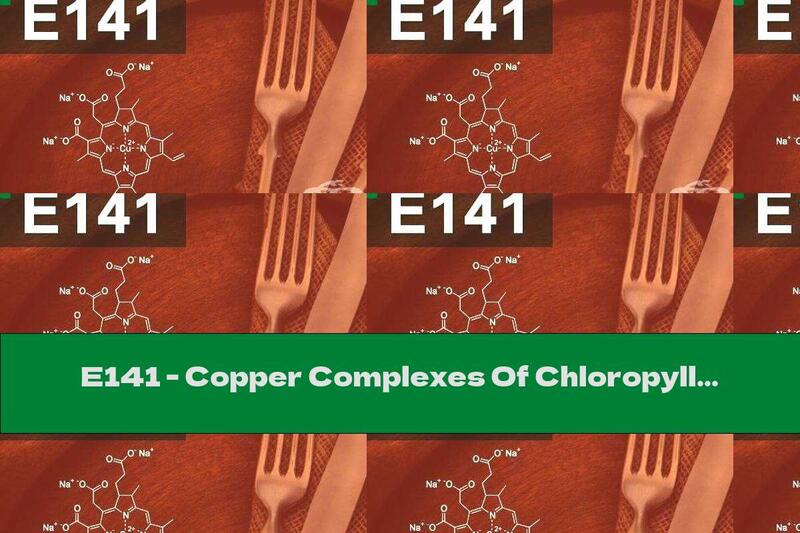
Additive E 141 belongs to the dyes with a green tint. It is a natural colorant and 2 types are determined: copper complex of chlorophyll (i) and sodium and potassium acid of copper complex chlorophyllin (ii).
The copper complex of chlorophyll, in consistency, resembles wax; the color is from blue-green to dark green; it is extracted from edible algae and plants (nettle, alfalfa, broccoli, etc.) with the help of permitted solvents (methanol, hexane), then copper salts are added to the obtained extract. It dissolves in the interaction of many liquids, with the exception of vegetable oils, because it is extremely sensitive to acids. The additive is not susceptible to bright light and temperature changes.
As for the second type (ii), it is obtained by adding honey and then one of the solvents to the extract of edible plants obtained by saponification. This additive has a powdery consistency from deep green to olive green color, dissolves in water and in ethyl alcohol, insoluble in oils, responds well to bases.
Use
Due to its heat resistance, E 141 (both types) is used in the production of ice cream and other dairy products. Chlorophyll copper complexes can also be found in chewing gum, semi-finished soups, canned fruits, sauces.
The copper complex of chlorophyll is added to canned fruits and vegetables, confectionery, some types of cheese, pharmaceutical ointments and cosmetics (creams, soaps).
The sodium and potassium acids of the copper complex of chlorophyllin are used in the manufacture of confectionery, jellies, liqueurs and in oral care products.
Impact on humans
The permissible daily dose of E 141 is up to 15 mg / kg body weight. The colorant does not harm health and does not cause side effects.
Related Articles
- The Role of Copper in Nutrition: Sources, Benefits, and More
- The Role of Copper (Cu) in Nutrition: Sources, Benefits, and Risks
- The Essential Role of Copper (Cu) in Nutrition: Sources, Benefits, and More
- The Role of Copper (Cu) in Nutrition: Sources, Benefits, and Risks
- The Role of Copper (Cu) in Nutrition: Sources, Benefits, and Deficiency
Top Nutrition Articles Today
- . Hydrochloric Acid in Nutrition: Importance, Effects, and Sup...
- . Breastfeeding A Baby With Low Blood Sugar
- . Eating 5 Meals A Day
- . The Role of Carbohydrates and Lipids in Nutrition: Importanc...
- . Steak Label
- . Nutrition In Urethritis (inflamed Urethra / Urethra)
- . The Truth About Potato Chips: Health Effects and Alternative...
- . Optimizing Nutrition with Freestyle Libre: Benefits, Meal Pl...
- . Diet After Pancreatic Surgery
- . List of Foods that Contain Carrageenan: A Guide to Avoiding...