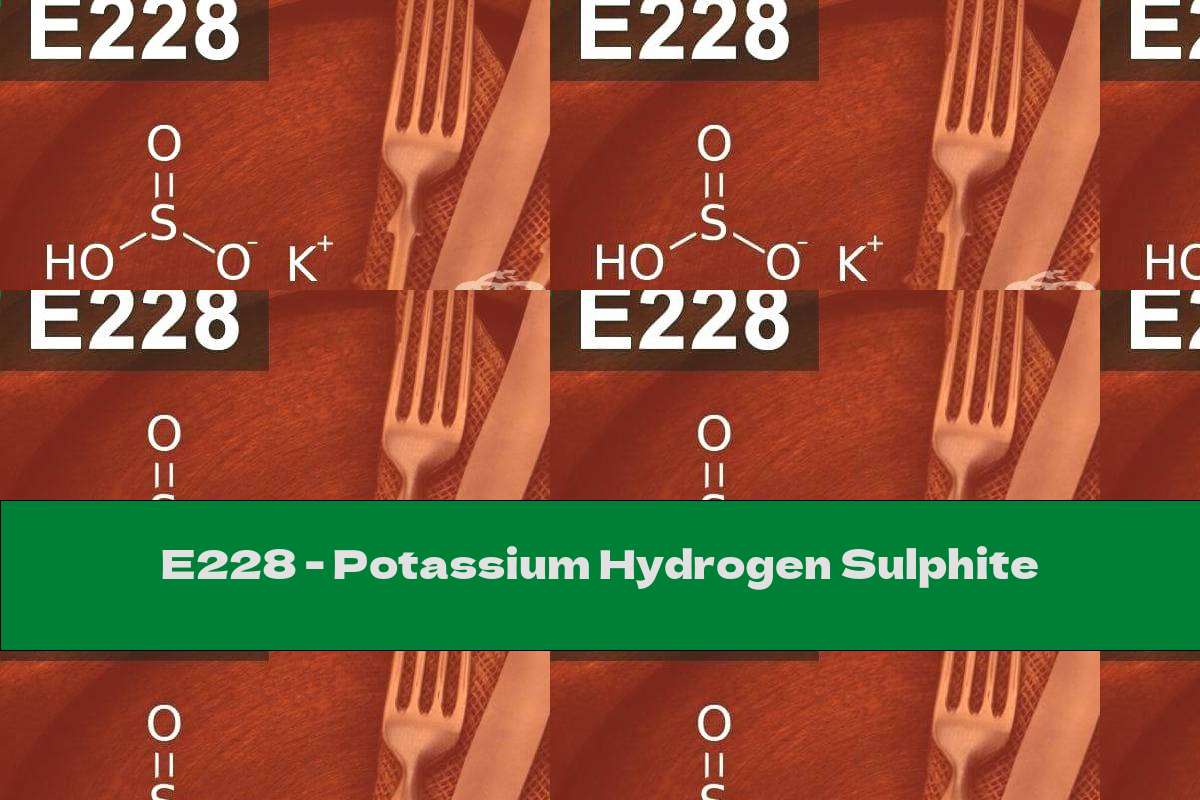
E228 - Potassium Hydrogen Sulphite
 Author: Mark Velov
Time for reading: ~1
minutes
Last Updated:
August 08, 2022
Author: Mark Velov
Time for reading: ~1
minutes
Last Updated:
August 08, 2022
CHAPTERS (Table Of Contents)
Characteristic: The food additive E 228 is called potassium bisulfite or potassium hydrosulfite, it refers to preservatives, bleaching agents, antioxidants and color stabilizers. Prevents
Characteristic
Food additive E 228 is called potassium bisulfite or potassium hydrosulfite, it refers to preservatives, bleaching agents, antioxidants and color stabilizers. Prevents the growth of bacteria and fungi in the products, is an antioxidant. The substance is a white powder with a brown or gray tinge, no taste and odor. It can exist only in aqueous solutions, when dried it produces potassium pyrosulfite. E 228 is obtained chemically by boiling potassium hydroxide or an aqueous carbonate solution with sulfur dioxide. The resulting additive contains many impurities: free alkalis and their carbonates, various sulfates and sulfites. It belongs to the substances dangerous for the human body.
Use
Potassium hydro sulfite is prohibited for use in basic food products: milk and dairy, meat, beer, fruit juices. It has been used in the preparation of low-calorie jam, to extend the shelf life and to improve the appearance of dried fruit. The additive is used in confectionery, starchy foods, fruit and vegetable semi-finished products. As a bleaching agent it is found in potato semi-finished products, it can be used in alcohol-based liquids and in alcoholic beverages, preventing them from acidification, fermentation and preserving their color.
Impact on humans
E 228 refers to substances dangerous to humans. It is forbidden to use because it has not passed all examinations, tests and checks. It has a strong adverse effect on the body: it can cause asthma, irritate the lining of the stomach, lead to skin problems. It affects the psyche, causing hyper activity in humans, especially in children. The supplement is oxidized in the body and excreted in the urine, but not all people have the right amount of enzymes. Destroys the important element thiamine (vitamin B1). The maximum permissible amount is 0.7 mg per kilogram of body weight.
Related Articles
- The Role of E 202 (Potassium Sorbate) in Nutrition: Benefits, Sources, and Concerns
- The Role of E924 (Potassium Bromate) in Nutrition: Health Risks, Regulations, and Alternatives
- The Essential Role of Potassium Carbonates in Nutrition
- The Ultimate Guide to E228 in Nutrition: Benefits, Recipes, and More
- The Power of Potassium Malate: Benefits for Nutrition and Health
Top Nutrition Articles Today
- . How To Cook Spinach Soup With Corn Flour, Parmesan And Garli...
- . Is It Filled With Carbonated Water?
- . The 123 Approach to Nutrition: Benefits, Implementation, and...
- . Water Protects Against Diabetes
- . E515: Potassium Sulphates and Potassium Bisulphates - Functi...
- . Hydrochloric Acid in Nutrition: Importance, Effects, and Sup...
- . The Role of Disodium Diphosphate in Food: Uses, Health Conce...
- . Understanding E476 in Nutrition: Benefits, Foods, Concerns,...
- . Steroids in Eggs: Separating Fact from Fiction | Nutrition a...
- . How To Cook Caramel Cream Mousse (for Cakes And Pastries) -...