Mozzarella
 Author: Marko Balašević
Time for reading: ~2
minutes
Last Updated:
August 08, 2022
Author: Marko Balašević
Time for reading: ~2
minutes
Last Updated:
August 08, 2022
CHAPTERS (Table Of Contents)
In this article, learn more about Mozzarella. Mozzarella - composition, useful properties and contraindications.
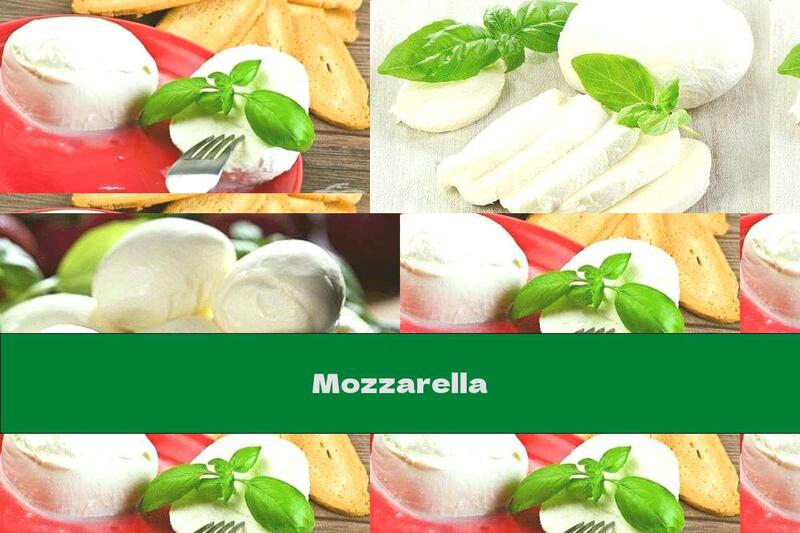
Mozzarella is an Italian soft cheese that contains fat-soluble substances that have a beneficial effect on the musculoskeletal system, promote the absorption of calcium and protect cell membranes from oxidative stress. These are vitamins A, D and E.
Regarding the microelements, we will say that a ball of delicious cheese contains over 18% of the recommended daily dose of calcium. It is especially important for the structural integrity of bones and protects tooth enamel. In addition, it contributes to weight loss.
The same amount of cheese gives a person up to 13% of the required daily dose of phosphorus. The element is useful both on its own and in combination with calcium.
Iodine, which is 10 mcg per 28 grams of product, is needed for healthy skin, hair and teeth. Selenium is also present in mozzarella (4 mcg per 28 grams of product), it plays a huge role in maintaining the body in the fight against inflammation and the destructive effects of oxidants.
Other nutrients that make up Italian cheese are: amino acids, molybdenum, potassium, magnesium, iron and sodium chlorides, Omega-3 and Omega-6 fatty acids.
Mozzarella is also an excellent source of protein, which is important for muscle function and energy production. Consumption (in reasonable amounts) can be a good prophylactic against the development of rheumatism caused by the accumulation of uric acid crystals in the joints.
Another useful property of the dairy product is that it protects against metabolic syndrome, which increases the risk of developing severe heart disease and can lead to a heart attack.
Zinc also finds its place in cheese. The element is necessary for protein synthesis, for the normal development and growth of cells, to strengthen immunity. Only one ball of mozzarella has 9% of the average daily dose for humans.
Useful properties
According to experts, a diet that includes cheese :
- prevents the development of osteoporosis;
- strengthens bones;
- helps with hypertension, lowers blood pressure;
- slows down the formation of cholesterol plaques;
- prevents the development of gout;
- contributes to faster healing of fractures;
- strengthens immunity;
- provides health of the nervous system;
- restores and protects vision;
- reduces the occurrence of premenstrual syndrome;
- fights migraines;
- protects against excessive blood clotting.
In addition to all the listed health benefits, mozzarella is also a dietary product , as the caloric content depends directly on the fat content of the milk base. Cheese made from whole milk contains at least 45% fat.
Lighter types are made from a mixture of whole and skimmed milk, thus the finished product contains between 30 and 45% fat.
Contraindications
Mozzarella may be unsuitable for consumption in case of individual intolerance to milk protein.
People suffering from chronic hypertension, gastric ulcer and glomerulonephritis should not take the product. The same is true for those who are prone to swelling of various origins.
Related Articles
- How To Cook Pizza Rolls With Mozzarella, Tomatoes And Basil - Recipe
- How To Cook Spaghetti With Tomatoes, Mozzarella And Basil - Recipe
- How To Cook Baked Mashed Potatoes With Mozzarella, Cheese And Bacon - Recipe
- How To Cook Eggs In Tomato Sauce With Mozzarella And Basil - Recipe
- How To Cook Potato Bombs With Mozzarella And Prosciutto In The Oven - Recipe