Wheatgrass Honey
 Author: Karen Lennox
Time for reading: ~1
minutes
Last Updated:
August 08, 2022
Author: Karen Lennox
Time for reading: ~1
minutes
Last Updated:
August 08, 2022
CHAPTERS (Table Of Contents)
In this article, learn more about Wheatgrass Honey. Wheatgrass honey.
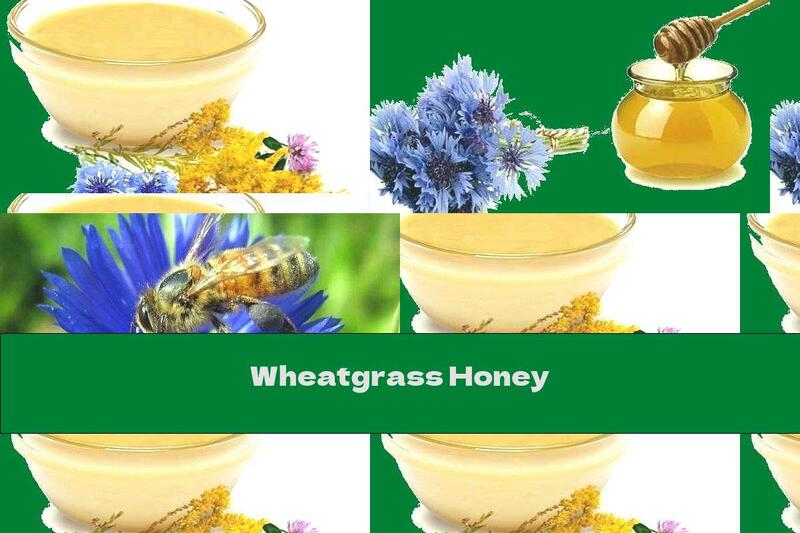
Wheatgrass honey has a greenish-yellow color, sometimes reaching greenish-white. Its taste is pleasant, but with a slight bitterness and is not pungent. The aroma resembles almond.
The healing properties of the bee product are many, so it is used for various health problems. It is suitable for consumption by both children (but not babies) and adults.
The honey collected from the corn does not crystallize much (this is normal), its aroma is preserved.
There is a large amount of fructose in the useful sweetness. It also contains a lot of vitamins (A, B1, B2, C, E, K, B6 and others), as well as about 300 trace elements (including potassium, calcium, copper, iodine ...), pantothenic and folic acids.
Healing effect
The honey from the herb helps with the following diseases :
- cardiovascular;
- of the gastrointestinal tract;
- of the respiratory system.
In moderation, the product is useful for diabetics. It is used for edema associated with kidney problems, as well as liver disease, biliary and urinary tract diseases.
Wheatgrass honey is used for eye inflammation, removing them and acting as a disinfectant.
It is also used for exhaustion of the body and impaired metabolism.
Adding a teaspoon of honey to morning tea recharges energy, fights depression, protects the body from colds.
Characteristic properties
- astringent;
- diuretic;
- choleric;
- healing wounds;
- anti-inflammatory;
- anesthetic.
This variety of honey helps with stomach ulcers, insomnia, childhood dysentery and others. It normalizes blood pressure in hypertension, removes toxins from the body. The sweetness is recommended for consumption by people with tuberculosis.
Honey is effective for various skin problems, cleanses the skin and rids it of wrinkles.
When taken daily, it improves good mood, strengthens sleep and eliminates fatigue.
Contraindications
Wheatgrass honey is an allergen. It should not be included in the menu of children under 2 years of age. It should not be overdone, even when it is for prophylactic purposes.
Related Articles
- The Power of Honeysuckle: Health Benefits and Recipes
- Fruitskewers in Honey Syrup: Nutritional Benefits and Recipes
- Nutritional Benefits of Fruit Skewers in Honey Syrup: A Delicious and Healthy Recipe
- Nutrition Guide: Fruitskewers in Honey Syrup - Benefits, Recipes, and More
- Nutritional Benefits of Fruit Skewers in Honey Syrup: A Healthy and Delicious Snack
Top Nutrition Articles Today
- . 7 Foods For Bigger And Firmer Breasts
- . The Ultimate Guide to Cod Liver: Benefits, Nutrition, and Re...
- . The Role of e633 in Nutrition: Enhancing Flavor in Food Prod...
- . Peanut Butter - Composition, Benefits And Harms Of Its Consu...
- . The Role of Water in Nutrition: Importance and Benefits
- . The Power of Spinach: Health Benefits and Recipes
- . The Impact of 1517 on Nutrition: Exploring Culinary Traditio...
- . The Health Benefits of Nori: A Nutritious Seaweed for Thyroi...
- . The Role of Cellulose in Nutrition: Benefits, Sources, and T...
- . Coriander Honey